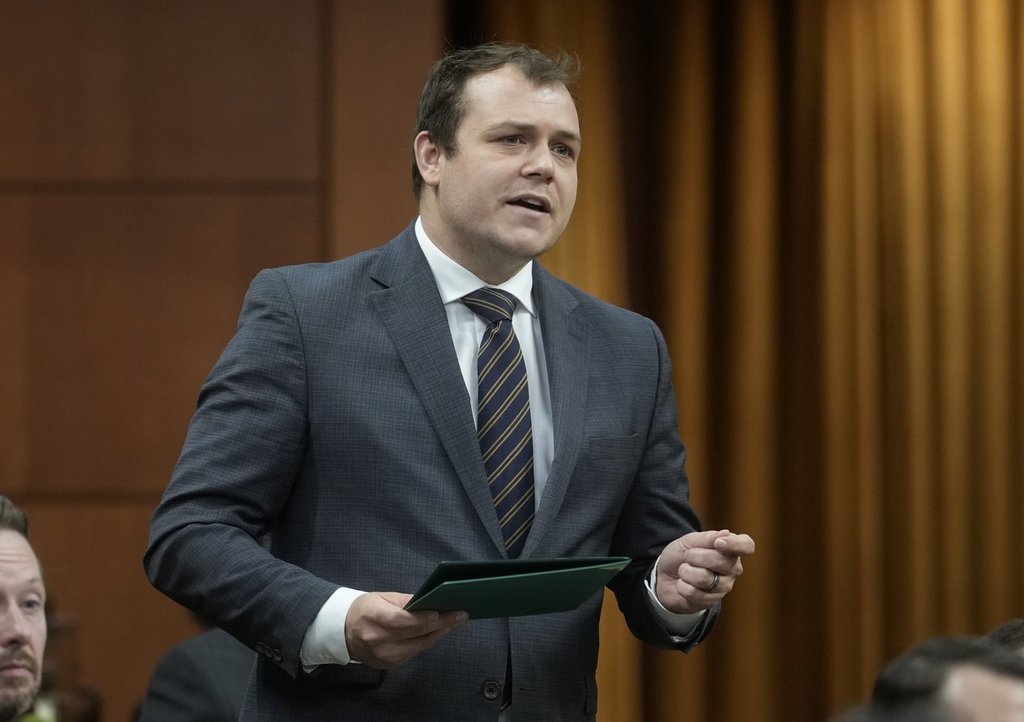
Federal Conservative Leader Pierre Poilievre just made a move that signals serious panic over the upcoming October vote in Alberta. He appointed Parkland MP Dane Lloyd as his official referendum lead for the province.
If you think this is just a standard, boring bureaucratic deployment, you're missing the bigger picture. Albertans are scheduled to head to the polls this fall to vote on whether the province should pursue a binding referendum on separating from Canada. Recent data shows that Alberta separatists are actually out-fundraising federalist groups ahead of the vote.
Poilievre knows a fractured conservative base in the west could completely derail his momentum. He doesn't want to lose Alberta, but he also cannot afford to look like he's scolding frustrated Albertans. By putting Dane Lloyd in charge of the ground game, Poilievre is attempting a delicate political balancing act. He wants to validate Alberta's anger while keeping the province firmly locked inside Confederation.
The Strategy Behind Picking Dane Lloyd
Dane Lloyd isn't a random choice for this high-stakes gig. He's been the MP for the Parkland region since 2017, taking over the riding after Rona Ambrose stepped down. He knows the territory, he understands the deep-seated resentment toward Ottawa, and he commands massive support locally, having cruised to re-election in 2025 with over 75% of the vote.
Lloyd has built a reputation on law-and-order issues, national security, and standing up for the energy sector. He isn't a soft, centrist outsider telling Albertans to calm down. He's an army reservist who speaks their language.
Poilievre made his intentions clear in an open letter to the Conservative caucus. He explicitly stated that the party cannot pretend Albertans don't have legitimate grievances. He pointed to the standard economic pain points: skyrocketing grocery prices, housing costs, and federal policies that have spent years choking the provincial energy sector.
The line that reveals the entire strategy is Poilievre's insistence that those who have lost hope in Canada are not the enemy. The goal here isn't to launch an aggressive, patronizing anti-separation campaign that lectures voters. The goal is to absorb that anger and channel it into voting for a federal Conservative government instead of a clean break from Ottawa.
Why the Federal Conservatives are Terrified of an Alberta Exit
Let's look at the raw mechanics of Canadian federal politics. Alberta is the financial and electoral engine of the modern Conservative Party. If a significant chunk of the Alberta electorate breaks off into a provincial separatist movement, it fractures the coalition Poilievre needs to build a stable majority.
There's also a massive narrative risk. If the province most associated with the federal Conservative base decides that Canada is fundamentally broken beyond repair, it weakens Poilievre's core message that he can fix the country.
Separatist groups are gaining real financial traction. This isn't a fringe movement confined to internet forums anymore. People are opening their wallets, and that means field organizers are hitting the pavement.
Poilievre spent his summer campaigning across the province, explicitly testing out his anti-separation rhetoric at events like the Calgary Stampede. His pitch is simple: hold on a little longer, don't throw away the country, and wait for a federal election to change the rules of the game.
What Happens Over the Next Few Weeks
As the October vote approaches, expect to see Dane Lloyd deployed heavily across rural and suburban Alberta. His job isn't to defend the current state of Canada. Honestly, that would be a losing strategy in most of his riding. Instead, his job is to convince voters that a Poilievre-led government will deliver exactly what they want: more pipelines, fewer federal regulations, and lower taxes.
If you live in Alberta, watch your mailbox and your local community halls. The Conservatives are going to flood the province with a message of frustrated federalism. They'll try to prove that you can hate the current government in Ottawa without hating the country itself. Whether an angry electorate buys that distinction remains to be seen.