The transition room at television networks always smells faintly of stale coffee, expensive leather, and the unique, high-octane anxiety of people who live under the gaze of millions.
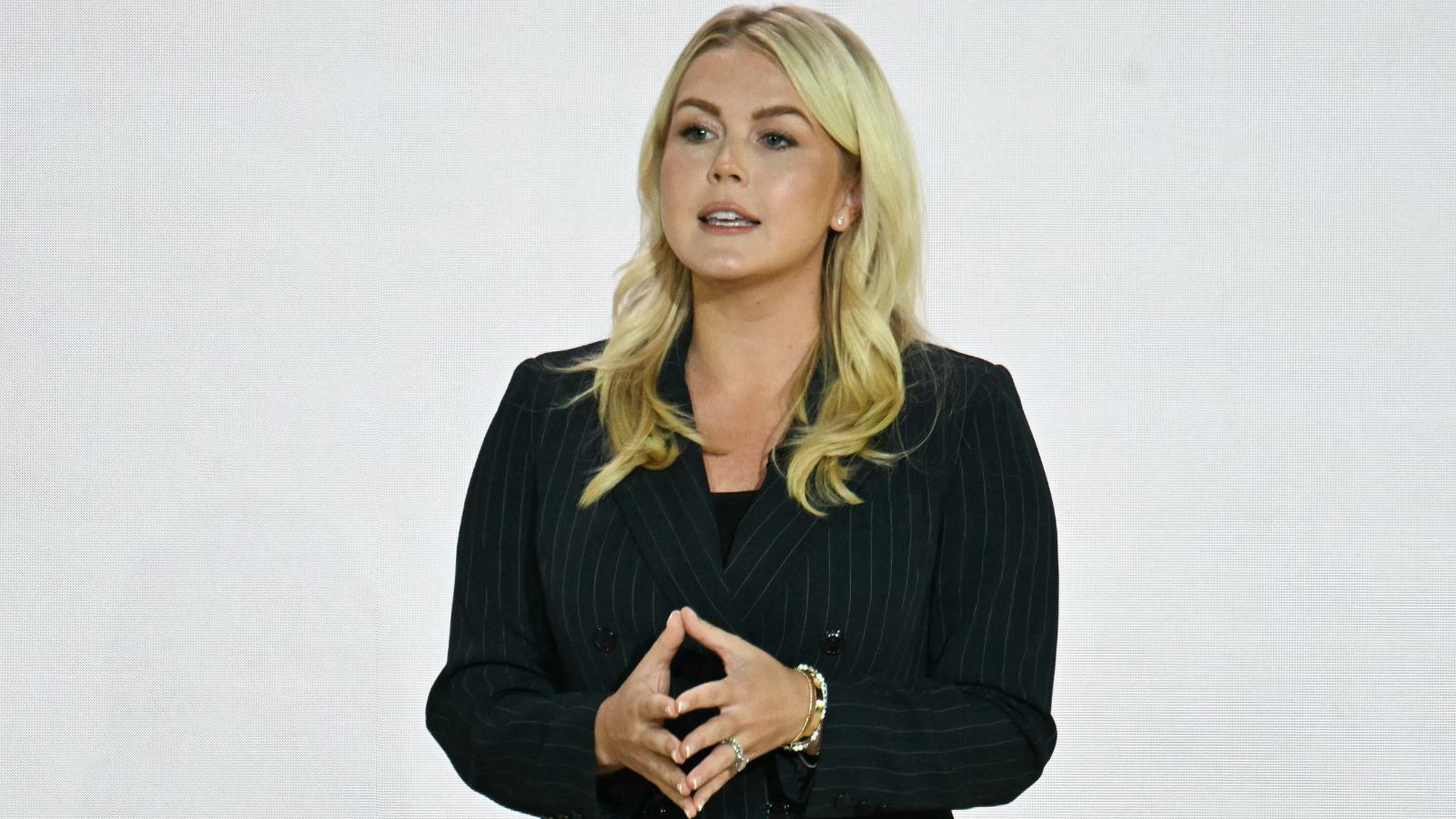
For years, the rhythm of Karoline Leavitt’s life was dictated by a very different kind of lens. It was the tight, unyielding square of a White House press briefing camera, the sharp staccato of shouted questions from reporters packed shoulder-to-shoulder, and the high-stakes theater of defending an administration against a daily storm of criticism. She stood at that blonde wood podium as the youngest press secretary in modern American history, absorbing incoming fire with the polished, unflappable precision of someone who learned early that hesitation is a fatal flaw in political combat.
Now, the set is changing. The lights are softer, the desk is wider, but the underlying mechanics of modern political survival remain identical.
Leavitt’s move to join Fox News as an on-air contributor marks a familiar migration in the ecosystem of American media and politics. It is a well-worn bridge connecting the apparatus of state power to the lucrative, opinion-driven architecture of cable news. But behind the dry press releases and the predictable chorus of media commentary lies a more fascinating human reality: the relentless, high-speed evolution of how political identity is packaged, broadcast, and consumed in the twenty-first century.
Consider what happens when a political operative steps behind the anchor desk.
The traditional wall separating the architects of government from the commentators who scrutinize them has not just eroded; it has been paved over. Viewers no longer want an aloof, detached arbiter of facts. They want voices that carry the scent of the arena. They want people who were in the room when the doors were slammed shut, who watched the staff scramble, and who know the exact inflection in a principal's voice when a crisis breaks at midnight.
Leavitt’s journey to this moment did not begin in a television studio. It started in the trenches of retail politics, ground down by the grueling mechanics of local campaigns before finding her footing in the fiery crucible of the Trump administration’s communications apparatus. She understood the language of the base before she ever stepped in front of a live microphone. That fluency is precisely what networks are buying. In the modern media economy, authenticity is currency, and proximity to power is the ultimate proof of work.
There is a distinct psychological weight that comes with this kind of life. Imagine standing before a bank of reporters who view your every sentence as a puzzle to be dismantled, a trap to be sprung. You learn to speak in paragraphs that double as shields. Every syllable is weighed. Every pause is scrutinized by social media algorithms looking for a crack in the armor.
Transitioning from that defensive crouch to the analytical freedom of an on-air contributor is an adjustment in posture. Yet, the skill set is remarkably transferrable. Television is essentially high-stakes debate compressed into two-minute segments. It requires the ability to distill complex, messy policy arguments into sharp, memorable talking points before the commercial break music swells.
Critics will point to this career shift as evidence of a revolving door between political advocacy and journalism, raising familiar questions about objectivity and bias. But that critique misses the fundamental transformation of the medium itself. Cable news is no longer pretending to be an objective wire service. It is a nightly conversation between a political movement and its audience. Contributors like Leavitt do not step into these roles to report neutral, dispassionate weather forecasts. They arrive to interpret the storm through a specific ideological lens, validating the worldview of the viewers sitting at home with their dinner trays.
The studios are quiet before the cameras roll. The floor manager raises a hand, counting down the seconds. Five. Four. Three.
For Leavitt, the podium is gone. The briefing room is a memory. But the microphone is hotter than ever, and the audience is watching to see how the youngest voice from the center of power handles her next performance under the glare of the primetime glass.