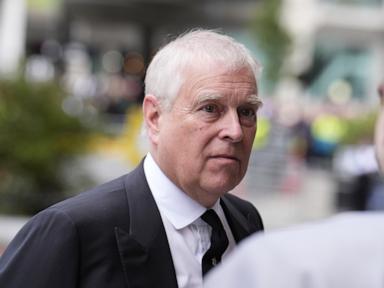
A former prince, a convicted sex offender, and royal estates that were supposed to be untouchable. That's the collision driving fresh police scrutiny across the UK after millions of Jeffrey Epstein records surfaced.
If you're looking for the short version, detectives aren't just re-hashing old gossip. Police Scotland has opened early-stage inquiries into time Andrew Mountbatten-Windsor—formerly known as Prince Andrew—spent at Balmoral with Jeffrey Epstein and Ghislaine Maxwell, amid claims involving women at the private Highlands estate. Meanwhile, multiple English forces, including Thames Valley Police, the Metropolitan Police, and Surrey Police, have live investigations tied to the US Department of Justice document dumps.
Here's the catch: having a name, an address, or a photo inside an investigative release isn't proof of a crime on its own. Still, when law enforcement starts looking closely at royal property and former public roles, the stakes jump fast.
Why the police probe into Andrew and Epstein at royal estates escalated
Most casual coverage treats these royal estate stories like a single neat timeline. They aren't. Different police forces are looking at separate threads, dates, and jurisdictions.
In October 2026, Police Scotland's inquiries drew headlines around time Epstein and Maxwell spent at Balmoral alongside Andrew, including images from a 1999 shooting trip that appeared in the US Department of Justice releases. Police Scotland noted that inquiries are at an early stage and relate to allegations surrounding women at the monarch's private Scottish estate.
Earlier in 2026, in February, Thames Valley Police arrested Mountbatten-Windsor on suspicion of misconduct in public office following revelations from the US files. He was held for several hours, released on bail pending further investigation, and had property searches carried out with support from local police. As of November 2026, he has not been charged with any offence, and he has repeatedly denied wrongdoing.
Different estates draw very different police responses
Not every royal residence mentioned in media reports or financial records triggers a criminal investigation. Look at how forces have handled separate sites:
- Balmoral in Scotland: Police Scotland launched early-stage enquiries into time spent there with Epstein and Maxwell, tied to claims about women at the estate.
- Sandringham in Norfolk: Media reports from years back and banking address entries in the DOJ files mentioned Sandringham, yet Norfolk Constabulary stated in early November 2026 that no evidence warranting a criminal investigation had been identified and no allegations had been received by the force.
- Defence and other sites: Norfolk Constabulary noted that documents touching Ministry of Defence sites—such as concerns raised over possible use of RAF Marham—were referred to a national coordination group overseeing UK policing reviews.
That distinction matters a lot if you're trying to separate rumor from actual criminal exposure. A location showing up in a bank alert or a past news clip isn't the same thing as detectives gathering evidence of a specific offence.
Misconceptions around royal estates and Epstein records
Whenever huge document dumps hit the news, people fill in the blanks too fast. I've seen readers assume every file drop equals a criminal charge, or assume royal status acts like a forcefield against detectives. Neither holds up cleanly.
First, a document release is a starting point for investigators, not a verdict. US lawmakers and the Department of Justice published millions of pages connected to Epstein probes, sweeping in flight logs, emails, photos, and financial records. Prosecutors and police still have to test whether any conduct crosses a criminal threshold under UK law.
Second, policing in Britain doesn't run on a single switch. A headline about "police investigating" might mean one force executing a search or questioning someone under caution, another force running early enquiries, and a third force finding no grounds to open a case. Even campaign groups like Republic have submitted material to police and the Crown Prosecution Service urging further action, adding public pressure onto an already crowded set of reviews.
Third, don't confuse civil disputes, past interviews, or reputational fallout with a criminal conviction. Mountbatten-Windsor's disastrous 2019 BBC interview hurt him massively in public view, and his titles and living arrangements have been major news stories, yet criminal guilt depends on admissible evidence and charges brought in court—none of which have resulted in a conviction.
What this scrutiny means for accountability and public trust
Honestly, the bigger shock isn't just that detectives are asking questions about royal visits. It's the signal it sends about how institutions handle powerful networks after the fact.
When King Charles III responded to the February arrest by saying the law must take its course, Buckingham Palace was trying to draw a line between the Crown's constitutional role and an active criminal probe. That's standard institutional crisis management. Still, for members of the public watching from the outside, seeing a former senior royal arrested on suspicion of misconduct in public office—and seeing Scottish detectives examine time at Balmoral—forces awkward questions about past vetting, access, and oversight.
Misconduct in public office is a serious common-law offence in England and Wales, carrying a maximum penalty of life imprisonment upon conviction. At the same time, it has a high legal bar, and investigations into complex historical events can take months or longer while police review records, interview witnesses, and coordinate across jurisdictions.
How to follow the investigation without getting misled
If you want to keep up with this story over the coming weeks and months, stick to primary policing updates and reputable wire or broadcast reporting rather than social media threads. Check which specific police force is speaking, whether they say an inquiry is at an "early stage," and whether anyone has actually been charged.
Watch for official statements from Police Scotland, Thames Valley Police, the Metropolitan Police, and the Crown Prosecution Service, alongside reporting from outlets like AP News, The Guardian, and Al Jazeera. Until charges are filed or a force closes a line of inquiry, treat every new headline as one piece of an ongoing legal process rather than the final word.
Police investigate Epstein's visits to Balmoral provides a concise broadcast overview of Scottish police inquiries into the time spent at the royal estate.