Geopolitics usually bends to immediate survival, but history just broke the rules in Eastern Europe.
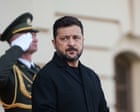
Volodymyr Zelenskyy won't be showing up in Gdańsk for this week’s Ukraine Recovery Conference. Instead, Ukrainian Prime Minister Yulia Svyrydenko is leading the delegation. On paper, it looks like a routine scheduling shuffle. In reality, it's a massive diplomatic middle finger triggered by ghosts from World War II.
Poland has been Ukraine’s logistical lifeline since Russia invaded in 2022. That makes this sudden fracture incredibly dangerous. If you think this is just a minor tiff between allies, you're missing the true story.
The Military Unit Name That Started a Firestorm
The breaking point happened when Zelenskyy officially named a Ukrainian military unit after the Ukrainian Insurgent Army, known as the UPA.
To modern Ukrainians, the UPA represents fierce, historical resistance against Soviet and Nazi occupation. They see these fighters as freedom heroes. But across the border in Poland, that same name triggers raw trauma. Between 1943 and 1945, UPA nationalists slaughtered up to 100,000 ethnic Poles in the Volhynia region. It was an ethnic cleansing campaign targeting mostly women and children.
When Zelenskyy honored the UPA legacy, Polish conservative President Karol Nawrocki hit back hard. Last week, Nawrocki stripped Zelenskyy of the Order of the White Eagle, Poland's highest honor.
Zelenskyy didn't apologize. He packed up the medal and mailed it back to Warsaw.
Historical Traumas vs. Current Geopolitics

Poland's View:
The UPA committed mass murder against Polish civilians in Volhynia. Honoring them is a direct insult to Polish victims.

Ukraine's View:
The UPA fought for Ukrainian independence against multiple empires. Modern units need these symbols for battlefield morale.
A Unified Front in Kyiv and a Deep Divide in Warsaw
The fallout spread fast. In a striking show of domestic unity, three former Ukrainian presidents—Leonid Kuchma, Viktor Yushchenko, and Petro Poroshenko—all mailed their own Polish state honors back to Warsaw in solidarity with Zelenskyy.
Zelenskyy went public with his anger, accusing Polish conservative politicians of exploiting historical pain to score domestic political points ahead of Poland’s upcoming parliamentary elections. He even compared Nawrocki’s tactics to those of Hungary’s former leader, Viktor Orbán.
"Without Ukraine, no one will be able to defend Poland," Zelenskyy warned bluntly on social media. "It is simply impossible."
Meanwhile, Polish Prime Minister Donald Tusk is stuck in the middle. Tusk is a pro-European centrist and a fierce political rival of the nationalist President Nawrocki. He tried desperately to play peacemaker. Tusk warned both sides to calm down, stating that the public fight "delights Putin and shocks our allies."
But Tusk also admitted that the anti-Ukrainian anger bubbling up among Polish voters is sometimes justified. History isn't something you can just sweep under the rug when it gets inconvenient.
What This Costs the Postwar Reconstruction Effort
The timing of this fight couldn't be worse. The Ukraine Recovery Conference in Gdańsk was supposed to be a major moment for Polish businesses.
More than 50 countries are sending delegations, including European Commission President Ursula von der Leyen and German Chancellor Friedrich Merz. Polish companies expected to use this event to lock down lucrative contracts for rebuilding Ukraine's shattered energy grid and infrastructure.
Svyrydenko insists the Ukrainian team will still sign roughly 200 business agreements during the summit. But without Zelenskyy there to co-host alongside Tusk, the political energy has evaporated. Polish corporate leaders are privately panicking that billions in future reconstruction contracts will now go to German, French, or American firms instead.
If you're tracking the regional impact, watch these concrete areas next:
- The Battlefield Alliance: Military transit through the Rzeszów hub will continue because Poland knows a Ukrainian collapse endangers Warsaw, but intelligence sharing and strategic trust will hit a deep freeze.
- The Exhumation Deadlock: Last year's fragile agreement allowing Polish families to dig up and properly bury Volhynia massacre victims is effectively dead for the foreseeable future.
- European Union Accession: Poland holds a veto over Ukraine’s future EU membership. Expect Warsaw to start using that leverage to demand historical concessions from Kyiv.
The immediate task for international observers isn't hoping for a quick handshake. It's monitoring whether Tusk can keep the physical supply lines open while Nawrocki and Zelenskyy trade rhetorical blows. Watch the border crossings and defense procurement contracts over the next month. That's where the real damage will show up.


