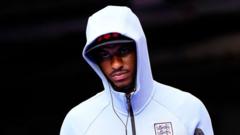
A World Cup final represents the absolute peak of athletic achievement, but the post-match medal ceremony has increasingly mutated into a high-stakes diplomatic standoff. When a finalist leaks word to the press that they are reluctant to shake hands with a head of state—specifically a polarizing figure like Donald Trump—it is rarely a spontaneous outburst of personal conscience. It is a calculated opening salvo in a broader war over who controls the narrative of global sport. The modern athlete is no longer just a competitor; they are an independent media entity holding immense geopolitical leverage at the exact moment the world is watching.
For decades, international sports governing bodies maintained the fiction that athletic competition could be entirely divorced from global politics. That illusion is dead. FIFA statutes explicitly forbid political statements on the pitch, yet the medal podium remains the most valuable real estate on television. When a player threatens to withhold a handshake from a superpower leader, they are weaponizing a mandatory protocol, transforming a traditional gesture of sportsmanship into a referendum on domestic and foreign policy. Meanwhile, you can find similar events here: How Spain Broke Argentina and Shattered Lionel Messi's World Cup Farewell.
The Geometry of the Modern Boycott
Protest in sport used to look like a raised fist on a podium or a refused invitation to a celebratory White House dinner. The White House snub is a low-risk maneuver; it happens weeks after the event, far from the heat of competition, when the public news cycle has already moved on.
Refusing a handshake on the pitch during a live broadcast watched by hundreds of millions of people is a completely different animal. To explore the full picture, we recommend the excellent analysis by Sky Sports.
It forces the governing body, the tournament organizers, and the broadcasting networks into an immediate crisis management mode. A handshake is built into the official choreography of the medal ceremony. When an athlete disrupts that choreography, they create a dead space in the production that directors cannot easily cut away from without exposing their own censorship.
This tactic works because it exploits the asymmetry of the situation. A politician on the podium is there to absorb the reflected glory of the athletes, projecting an image of national pride and unity to their home electorate. By denying the politician that handshake, the athlete flips the script. The politician instantly transforms from a magnanimous statesman into an awkward intruder on the athletes' stage.
The Cost of Stepping Across the Line
Athletes who choose this path face swift and severe institutional blowback. FIFA and corporate sponsors hate unpredictability. A player who introduces geopolitical friction into a pristine commercial broadcast risks several immediate consequences.
- Contractual Penalties: Modern boot and apparel deals contain sweeping morality and behavior clauses. Disrupting an official protocol can trigger immediate financial clawbacks.
- Federation Backlash: National associations rely on government goodwill and corporate funding. A player who embarrasses a visiting head of state often finds themselves quietly frozen out of future squad selections.
- The Fanbase Schism: The moment an athlete engages with a partisan political figure, their global audience splits down the middle, transforming sports commentary into a toxic shouting match.
When Sports Governing Bodies Lose Control
The governing bodies of sport like to pretend they run sovereign states. They dictate terms to cities, demand tax exemptions, and command their own security apparatuses. But the individual athlete retains the ultimate veto power because they control the physical performance.
FIFA has spent years trying to tightly script every second of the World Cup final. They control the pre-game music, the pitchside advertising boards, and the exact path the players walk to collect their medals. Yet, they cannot physically force one human being to extend their hand to another.
[Traditional Protocol] -> Player walks -> Accepts Medal -> Shakes Politician's Hand -> Photo Op
[The Disrupted Model]   -> Player walks -> Accepts Medal -> Bypasses Politician  -> Diplomatic Crisis
This structural vulnerability terrifies sports executives. If one high-profile finalist successfully bypasses a controversial world leader without facing career-ending sanctions, the dam breaks. The medal ceremony ceases to be a celebration of sport and becomes a gauntlet of political endorsements and rejections, where every handshake or lack thereof is analyzed by state intelligence agencies and cable news pundits.
The Hypocrisy of the Neutrality Myth
The standard corporate response to athlete activism is a rigid demand for neutrality. Federations tell players to leave politics in the locker room. This argument is fundamentally dishonest because the inclusion of politicians on the medal podium is itself a deeply political act.
When a head of state stands on the pitch to hand out trophies, the tournament organizers are actively trading athletic credibility for political capital. They are allowing a leader to use the emotional high of a sporting victory to bolster their own domestic polling or international standing. To demand that athletes remain neutral while forcing them to participate in a staged political photo opportunity is a double standard that players are no longer willing to accept.
The tension is amplified when the politician in question is a figure like Trump, whose political brand is built on disruption and nationalist rhetoric. For an international player, shaking his hand can be interpreted by their home country's audience as an endorsement of American hegemony or specific policy decisions. For an American player, it is seen as a partisan statement in a bitterly divided domestic landscape. There is no neutral path available; the handshake itself is a political statement.
Real Consequences in the Locker Room
The decision to leverage a World Cup final for a political statement does not happen in a vacuum. It introduces massive, immediate friction into the team dynamic. A squad competing for a world championship is rarely a monoculture.
In any elite locker room, players hold vastly different worldviews, religious beliefs, and economic priorities. When one prominent player goes public with a plan to boycott a podium ritual, they effectively drag their teammates into the mud with them. Suddenly, every other member of the squad is forced to answer questions about whether they agree with the boycott, whether they will join it, or whether their compliance makes them complicit in whatever policies the protesting player opposes.
This internal fracturing can ruin years of preparation in the final hours before a match. Coaches despise these distractions because they shift the focus away from tactical execution and onto media damage control. A team divided by political posturing on the eve of a final is a team that is structurally vulnerable on the pitch.
The Playbook for the Modern Sports Diplomat
Athletes who successfully navigate these waters do so by moving away from raw emotion and toward precise execution. The goal is to maximize the political message while minimizing the institutional vulnerability.
Instead of an outright, aggressive snub that can be framed as simple disrespect or bad manners, sophisticated athletes utilize passive resistance. They might engage in a long, deliberate conversation with the official presenting the medal, entirely ignoring the politician standing next to them until the line moves forward. They might keep their hands clasped firmly behind their backs, forcing the politician to make the awkward first move and risk being visibly left hanging on live television.
+------------------------+-----------------------------------+----------------------------------+
| Action                 | Immediate TV Impact               | Long-Term Fallout                |
+------------------------+-----------------------------------+----------------------------------+
| Direct Verbal Refusal  | Extreme high drama, instant meme  | Heavy fines, federation ban      |
| The Passive Bypass     | Awkward dead air, subtle slight   | Plausible deniability, safer     |
| Pre-emptive Press Leak | Shifts the narrative before match | Puts pressure on organizers      |
+------------------------+-----------------------------------+----------------------------------+
The pre-emptive leak to the media—the exact scenario playing out here—is the most effective tool in the arsenal. By making the reluctance known before the match even begins, the athlete shifts the burden of anxiety onto the organizers. FIFA and the politician’s advance team are forced to spend the hours leading up to the biggest game on earth figuring out how to avoid a public embarrassment. They might alter the line-up on the podium, substitute the controversial leader with a lower-ranking bureaucrat, or change the camera angles to obscure the interaction entirely.
The athlete wins the narrative battle before they even step onto the grass, proving that in the modern sports industrial complex, the threat of a protest is often far more powerful than the act itself.