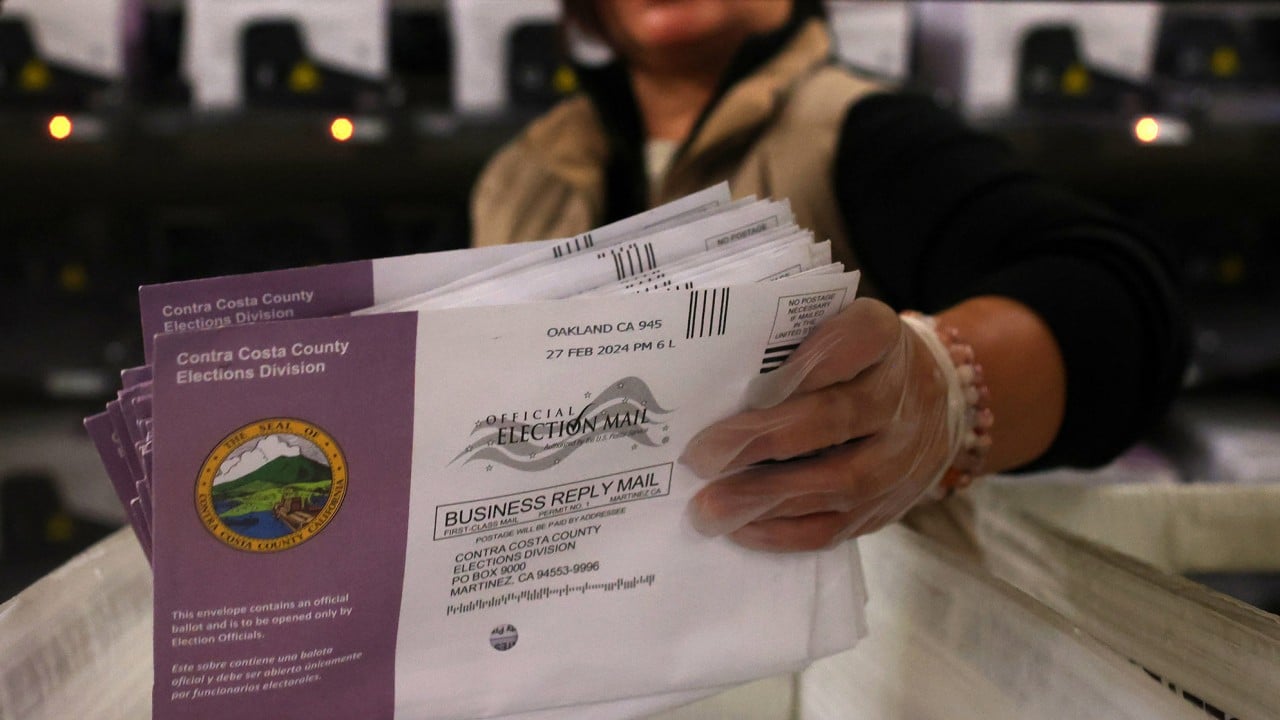
The mechanics of American elections are rarely quiet, but the administrative brawl leading up to the midterms tested the structural integrity of the ballot box in ways unseen for generations. When the United States Supreme Court declined to let the executive branch upend postal operations, it did more than block a last-minute administrative shift. It drew a hard jurisdictional line through the machinery of democracy, preserving a status quo that millions of voters rely on.
For months, the White House had pushed a strategy designed to constrict mail-in voting through targeted operational directives handed down to the United States Postal Service. The core mechanism relied on forcing states to submit strict voter eligibility lists months in advance, requiring unique postal barcodes, and effectively turning the federal mail carrier into an arbiter of ballot validity. To anyone who has tracked election administration for decades, the move represented a profound structural departure. The postal service was built to move paper from point A to point B, not to serve as an administrative filtering system for state-run elections.
States and civil rights organizations recognized the existential threat immediately. Led by a coalition of state attorneys general and groups like the League of Women Voters, plaintiffs rushed to federal court. They argued that the administration was attempting an end-run around constitutional boundaries, weaponizing a federal agency to impose restrictions that Congress never authorized and that individual states never consented to.
A federal judge in Boston agreed, issuing a preliminary injunction that blocked the Postal Service from implementing the core provisions of the new rule. When the administration appealed all the way to the Supreme Court, seeking emergency relief to enforce the changes ahead of the midterms, the high court balked. By leaving the lower court's injunction intact, the justices signaled a reluctance to disrupt ongoing election administration while ballots were already being printed and distributed.
The immediate practical effect of this decision is clear: the procedural ground rules for mail-in voting remain stable. Millions of citizens—including military personnel stationed abroad, rural voters without easy access to drop boxes, and older adults who depend on homebound ballot delivery—will cast their votes under the established procedures used during previous election cycles. The Postal Service will continue its traditional role of handling election mail without the added burden of maintaining administrative whitelist databases it was never equipped to manage.
Yet, viewing this ruling as a permanent victory for voting rights misses the forest for the trees. The legal battle over mail-in ballots is not a localized dispute; it is a symptom of a systemic friction point in modern American politics. As vote-by-mail numbers have surged over the past two decades—moving from a niche accommodation to a cornerstone of modern turnout—it has become a primary theater of political contestation.
Consider the logistical reality of how elections are funded and run. The Constitution explicitly grants states the authority to determine the times, places, and manner of holding elections. When federal agencies attempt to intervene through executive fiat, it creates an immediate constitutional collision. If the executive branch could unilaterally dictate how postal workers handle election materials, it would open the door to endless manipulation by whichever party holds the White House. Today's administrative hurdle could easily become tomorrow's outright disenfranchisement tool.
The Supreme Court's refusal to interfere does not settle the underlying ideological debate. It merely forces the conflict back into the slower, more grinding machinery of the courts and legislative chambers. The tension between security and accessibility will persist long after the midterms conclude. Every restriction proposed under the banner of election integrity is countered by evidence showing that the measures disproportionately burden legitimate voters while solving problems that statistical audits show are vanishingly rare.
For election administrators on the ground, the ruling provides a measure of operational sanity. Changing mail ballot rules weeks before an election is an administrative nightmare. Sorting out barcodes, cross-referencing federal databases that are prone to lag or error, and retraining postal workers in the middle of a voting cycle would have created widespread chaos. The courts recognized that chaos is the enemy of enfranchisement.
The broader lesson of this judicial standoff is that the architecture of American democracy remains remarkably fragile, dependent on the restraint of executive power and the vigilance of decentralized state systems. When those safeguards are tested, the friction is loud, public, and contentious.
The system held this time, not because the underlying political divisions healed, but because the judiciary chose stability over intervention. Next cycle, the pressure points will shift, and the battle over how citizens deliver their votes to the public square will begin anew.