Farzad keeps his shop lights off until the sun completely drops below the Alborz mountains. It is a small habit, born of a decade where every rial had to be stretched, squeezed, and defended against an inflation rate that felt like a fever. His store in the Grand Bazaar of Tehran sells traditional blue-and-white Isfahan ceramics. For years, tourists were a myth, credit cards were useless plastic, and the dust on his shelves mirrored the stagnation of the economy outside. When a country is cut off from the global financial artery, the blood stops flowing to the fingertips first. Farzad, with his cracked knuckles and ledger books full of red ink, is one of those fingertips.
The headlines across global news tickers speak of macroeconomics. They talk about a hypothetical peace agreement between Washington and Tehran. They analyze the sudden thaw in a decades-long diplomatic winter. Bulletins focus heavily on the abstract numbers: oil barrels per day, GDP growth percentages, the lifting of secondary sanctions, and export quotas. Also making headlines in related news: The Razor Edge of a Broken Promise.
But geopolitical metrics do not buy groceries.
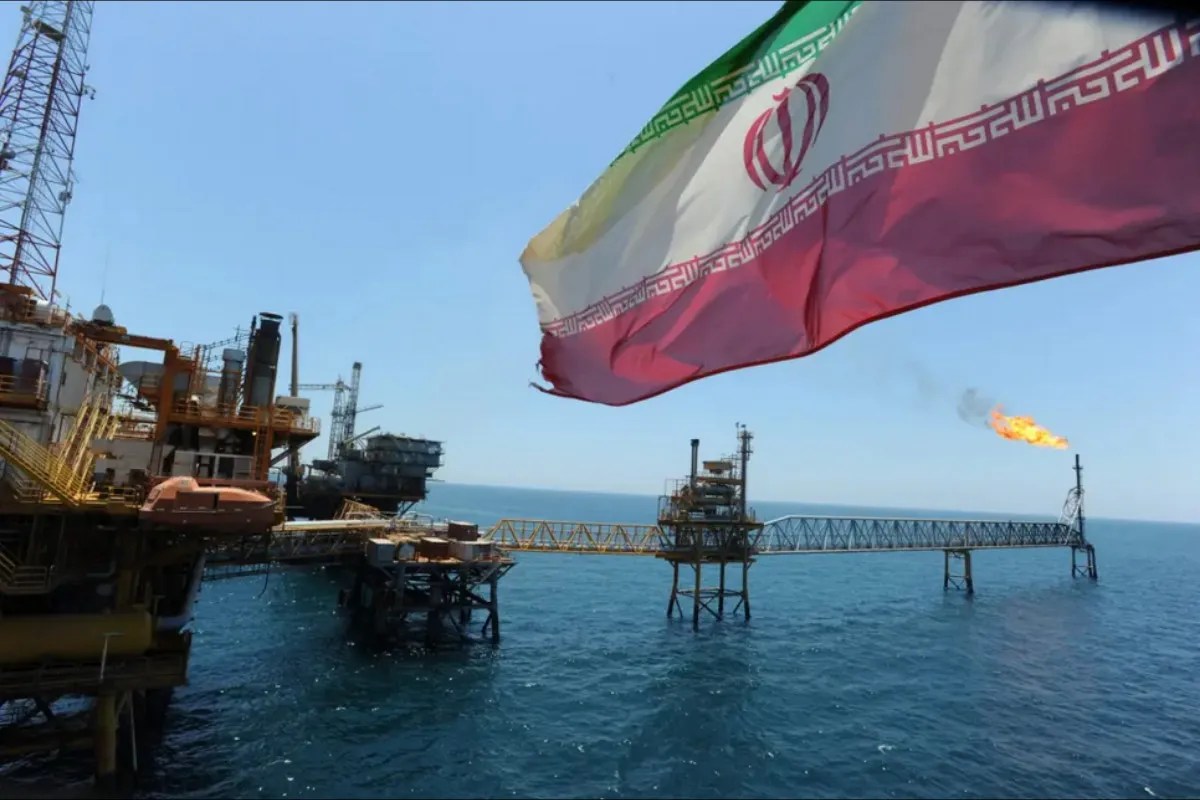
To understand what a peace deal truly means, you have to look away from the negotiation tables in Geneva or Vienna. You have to look at the oil terminals on Kharg Island, jutting into the Persian Gulf, where supertankers have long sat idle or moved under the cover of darkness, selling discounted crude to a handful of brave buyers. More information into this topic are detailed by USA Today.
Oil is the oxygen of the Iranian state. When the sanctions tightrope chokes that supply, the entire nation gasps for air.
Consider what happens when a single pen stroke in Washington legalizes the flow of that oil. It is not just a triumph for state treasuries; it is a profound shift in the daily calculus of survival for eighty-five million people.
The mechanics of this shift are grounded in cold, hard production data. Before the heaviest rounds of modern sanctions, Iran comfortably pumped around 3.8 million barrels of crude oil per day. Sanctions dragged that number down into a dark basement, forcing the country to rely on complex, expensive, and opaque networks to sell a fraction of its capacity. A formal peace agreement changes the math instantly. Energy analysts estimate that within months of sanctions being lifted, Iran can ramp production back up by at least one million barrels a day.
That is not just a statistic. That is a massive infusion of hard currency into a banking system that has been starved of foreign reserves for a generation.
When billions of dollars flow back into the central banking system legally, the domestic currency—the rial—stops its freefall against the dollar. For Farzad, this means the price of clay, glaze, and the packaging materials he buys from wholesalers stops changing between Tuesday and Thursday. Stability, more than wealth, is the first gift of peace.
The real transformation, however, lies in the logistics of the export market. Under economic blockades, selling oil is an expensive game of hide-and-seek. Iran had to offer steep discounts to attract buyers willing to risk American wrath, and insurance companies refused to cover the tankers. This meant a significant portion of every barrel's value was eaten up by the sheer cost of bypassing the system.
With an agreement, those discounts vanish. The country begins selling at full market price to European and Asian hubs that were previously out of reach. The state's revenue does not just grow because they are selling more oil; it grows because they are finally keeping the full profit of every barrel poured.
But the real problem lies elsewhere, deep within the infrastructure itself.
Decades of isolation mean Iran's oil fields are aging monuments to the twentieth century. They lack the technology required for modern, efficient extraction. They need billions of dollars in foreign investment just to maintain their current output without destroying the reservoirs. This is where the true human element of the business emerges. A peace deal is a green light for global engineering firms, technology providers, and geologists to cross the border.
Imagine the ripples this creates. A young metallurgical engineer in Isfahan, who has spent five years working a dead-end retail job because industrial projects were frozen, suddenly receives a call from a newly revitalized domestic energy firm. A construction worker in Khuzestan finds steady employment rebuilding pipeline junctions. The revival of the oil sector acts as a massive economic locomotive, pulling hundreds of secondary industries—cement, steel, transport, catering—along behind it.
The skeptics will argue that oil wealth rarely trickles down effectively in resource-dependent nations. They are right to doubt. Corruption, bureaucracy, and political infighting can easily divert the initial wave of prosperity into the pockets of the few. The scars of economic warfare do not heal cleanly, and a peace treaty cannot rewrite institutional flaws overnight. It is a fragile, uncertain path forward.
Yet, the psychological shift is immediate. Economic isolation breeds a specific kind of claustrophobia. It tells a population that their future is perpetually capped, that their hard work is destined to be neutralized by global forces beyond their control.
When the embargo breaks, that ceiling lifts.
The return of international trade means more than just a stronger balance sheet for the government. It means the return of medicines that were blocked by banking restrictions. It means schools with updated equipment and factories that can import spare parts instead of jerry-rigging dangerous fixes with duct tape and hope.
Yesterday evening, Farzad did something he hasn’t done in three years. He left the front display lights on for an hour past closing time. The bright LED bulbs illuminated the intricate turquoise patterns of his plates, casting a vivid glow onto the gray pavement of the bazaar. Passersby paused to look, their faces caught in the unexpected light. It was a tiny gamble, a fraction of a dollar spent on electricity he would usually hoard. But as rumors of the signed accord drifted through the teahouses and marketplaces of the capital, the air felt slightly lighter. The future was still unwritten, dangerous, and complicated. But for the first time in a very long time, it felt like it actually belonged to them.