The tea stalls of Blue Area always smell of cardamom, diesel exhaust, and quiet anxiety. On a damp Tuesday morning, Malik sets down a glass that has seen better decades, wiped with a rag that gave up its original color during the last regime. He looks past the low concrete barriers—the grey Lego blocks of modern statecraft—toward the government enclave where roads are wider, windows are thicker, and the silence is heavy enough to crush a man’s chest.
"They are budgeting for ghosts," Malik says, gesturing toward the barricades with a thumb rough as bark. He isn't talking about the weather. He is talking about the arithmetic of fear. In related updates, read about: Why Political Campaigns Rely on Conflict and What Hamas Got Right.
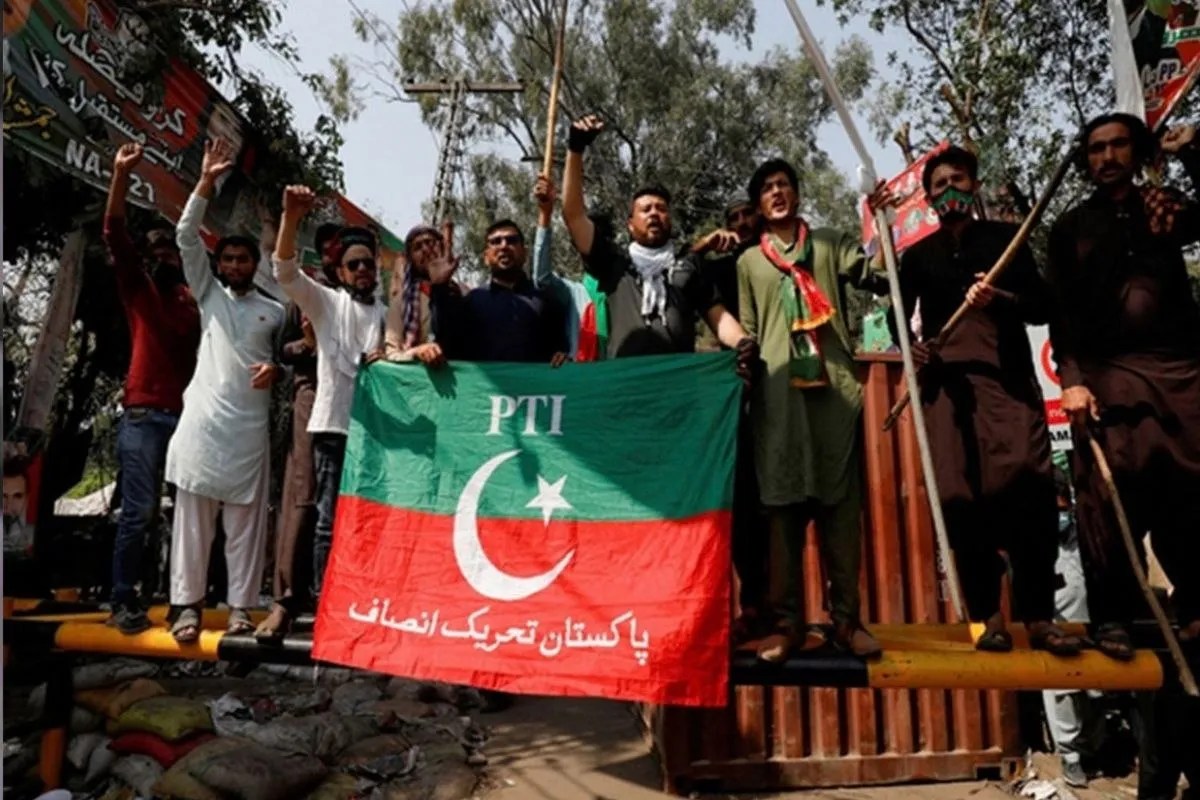
For months, the capital of Pakistan has lived in the gravitational pull of a single cell in Adiala Jail. Imran Khan, former prime minister, former cricket captain, and enduring political lightning rod, sits behind stone walls that have become the most expensive real estate in the country. The government outside those walls is trapped in a paradox. To release him is to risk a flood; to keep him locked away is to build a dam that leaks millions by the hour.
Consider what happens next: a call goes out from party faithfuls. A rally is announced. The machinery of the state grinds into emergency gear. Shipping containers—towering steel boxes meant for cargo ships crossing oceans—are dragged across highways to carve a labyrinth through Islamabad. Then, the call is postponed. A postponement. Not a cancellation. Just a deep breath held in the dark. Reuters has provided coverage on this fascinating issue in great detail.
Yet the containers remain. The police remain. The meters run.
Every time a confrontation is deferred, the ledger grows heavier. Official reports whisper of a security budget that has quietly doubled in the shadow of these recurring threats. Billions of rupees diverted from asphalt, from clinics, from the quiet dignity of municipal maintenance, poured instead into razor wire, fuel for armored personnel carriers, and overtime pay for exhausted constables standing twelve-hour shifts in riot gear.
Economists in quiet drawing rooms calculate the daily bleeding. Millions upon millions lost every single day commerce stutters to a halt. Markets shuttered behind rolling iron shutters. Transport lines severed. Foreign delegations rescheduling flights because the capital looks less like a sovereign seat of government and more like a staging ground for a medieval siege. The state is spending a fortune to keep the peace, while the very act of keeping that peace slowly hollows out the economy it is sworn to protect.
It is a strange kind of physics. The heavier the padlock, the greater the pressure building against the hinges.
To understand this tension, you have to look past the cable news chayouts and the breathless Twitter feeds. You have to look at Tariq, a small-scale textile trader whose warehouse sits on the outskirts of Rawalpindi. Tariq doesn't care about the constitutional amendments or the procedural technicalities of high court appeals. He cares about a truck that was supposed to reach Karachi three days ago.
"The road was blocked because someone heard a rumor that a march was starting," Tariq explains, his hands flat on a scarred wooden desk, his ledger open to a column of red ink. "The march didn't happen. The rumor was enough. But my truck sat idle for forty-eight hours. Do you know what happens to delivery windows when the capital turns into a fortress overnight? The buyer in Germany doesn't care about political chess. They cancel the order."
This is the invisible cost. It doesn't show up in the daily casualty reports because there are no physical casualties on a Tuesday when the protests are called off. There is only the slow, grinding erosion of confidence. Every time the government braces for a storm that doesn't break, the institutional muscle tears just a little bit more.
Political survival has become an expensive administrative habit.
The strategy of the administration is clear in its outline: containment through exhaustion. By wearing down the momentum of the opposition through constant legal hurdles, curfews, and pre-emptive arrests, the state hopes to dilute the rage into a manageable mist. They calculate that the public, exhausted by inflation and daily survival, will eventually trade passion for stability.
They might even be right, statistically speaking. People do get tired. Hunger is a quiet anchor.
But exhaustion is not loyalty. It is just silence before the next barometer drops.
Walk down the commercial avenues of F-6 when the rumors of a lockdown are thick in the air. The Mercedes sedans share the lane with battered Suzuki pickups, all moving at the same nervous crawl. Shopkeepers pull their displays inside three hours before closing time, not because an order was given, but because experience has taught them that certainty is a luxury reserved for history books.
The irony is sharp enough to draw blood. The government spends double to secure a city where citizens feel less secure by the day. Every extra barricade is an admission of vulnerability. Every doubled security detail is a confession that the social contract is fraying at the edges.
Back at the tea stall, Malik pours another glass of dark, sweet brew. A police truck rolls past, its tires hissing against the damp asphalt, carrying men in heavy flak jackets who look just as tired as the vendors watching them.
"You can build a wall around a building," Malik murmurs, wiping the counter with a practiced sweep of his hand, "but you cannot make the wind stop blowing."
The state remains trapped in its own maze of steel and paper, balancing the ledger of a crisis that has no clean exit. Inside the jail, the clock ticks. Outside, the meters continue to run. And the capital waits for the next rumor, paying for tomorrow with the blood of today.