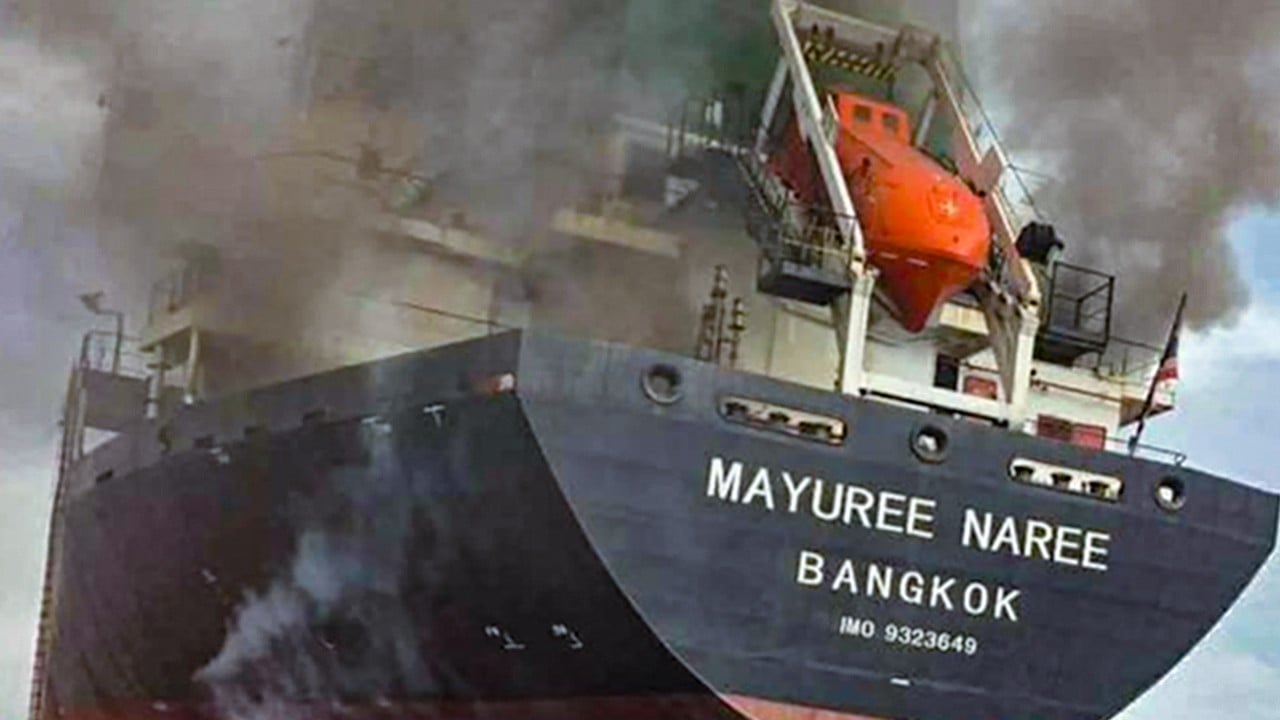
Standard reporting on Filipino seafarers in the Persian Gulf, the Red Sea, and the Strait of Hormuz treats danger as a binary switch: either a sailor faces missiles and drones, or they do not. That framing misses the real engine keeping crews onboard. A Filipino mariners' decision to transit or remain near a designated War Operation Area (WOA) or High-Risk Area (HRA) is governed by asymmetric labor economics, rigid contractual cash flows, and regulatory friction between Manila's Department of Migrant Workers (DMW) and global shipowners.
To understand why thousands of Filipino seafarers have stayed near or crossed contested Middle Eastern waters despite stranding crises, vessel strikes, and formal advisories, analysts must replace emotional narratives with three structural frameworks: The Seafarer Reservation Wage Model, The Chokepoint Risk Allocation Matrix, and The Regulatory-Contractual Lag.
Deconstructing the Standard Narrative
Typical coverage of maritime conflict zones relies on a linear cause-and-effect chain: geopolitical escalation breaks out, shipping lanes become dangerous, crews are stranded or harmed, and reporters ask why workers keep taking the risk.
That logic leaves three causal gaps unexamined:
- Conflating physical risk with financial exposure. A seafarer stranded outside a port or held at anchor faces lost earning time and delayed relief just as acutely as physical threat, yet standard coverage treats kinetic danger as the sole reason to leave.
- Treating labor supply as frictionless. A mariner cannot simply step off a tanker in mid-transit without triggering repatriation logistics, contract termination rules, or income interruption.
- Ignoring split incentives across principals and agencies. Shipowners, foreign principals, and Philippine Licensed Manning Agencies (LMAs) bear different slices of war-risk insurance, hull exposure, crew welfare costs, and regulatory scrutiny.
The Seafarer Reservation Wage Model
In labor economics, a worker's reservation wage is the lowest compensation package that makes accepting or keeping a job worthwhile compared to the next best alternative. For a Filipino seafarer, the baseline wage differential between domestic employment and international maritime contracts is already wide. Once a vessel enters a War Operation Area or High-Risk Area, the reservation wage shifts upward—but the cash flow available to the worker does not always move in lockstep.
Known Facts vs. Educated Hypotheses
Known facts establish the legal and operational floor:
- The Philippines supplies a massive share of the global maritime workforce, making crew availability a core variable for international shipping operators.
- Philippine rules and DMW advisories—grounded in Republic Act No. 12021 (the Magna Carta of Filipino Seafarers) and Standard Terms and Conditions (STC)—recognize a seafarer's right to refuse sailing into high-risk or warlike areas without prejudice, while governing wages, repatriation, and crew-change suspensions.
- When conflict or closure disrupts transit, thousands of Filipino seafarers can become stranded aboard vessels or at transit hubs, while crew changes in affected areas face strict limits or suspensions.
Educated hypotheses explain the internal calculus when a crew member faces a high-risk transit:
- A seafarer mid-contract with dependents relying on monthly allotments faces a high opportunity cost if exercising refusal leads to immediate contract cessation, prolonged unpaid downtime ashore, or placement into a slower deployment queue.
- War-risk premiums or hazard allowances, where negotiated or applicable, can temporarily pull a mariner's net payout above their perceived risk threshold—especially when alternative domestic earnings cannot match foreign-currency remittances.
- Conversely, once kinetic incidents escalate—such as attacks on commercial tankers in the Strait of Hormuz—the perceived probability of severe injury or death rises sharply enough to breach even an elevated pay threshold, prompting collective refusal or heightened demand for rerouting.
Why "Why Do They Stay?" Is the Wrong Question
Asking why a sailor stays often assumes free choice in a vacuum. In practice, a seafarer already committed onboard evaluates marginal risk per additional day against sunk travel and waiting costs. Having already spent months away from home or invested heavily in training, certification, and pre-deployment preparation, a worker often weighs staying until a safe port or structured repatriation against walking away into uncertainty.
The Chokepoint Risk Allocation Matrix
Narrow waterways such as the Strait of Hormuz and the Red Sea compress commercial traffic into predictable corridors. For shipping operators and crew stakeholders, risk does not land evenly across the balance sheet. Instead, it splits into four distinct categories:
- Hull and cargo exposure: Vessel damage, delayed voyages, rerouting fuel and time costs, and war-risk insurance surcharges borne primarily by shipowners and charterers.
- Operational and crew-change friction: Restricted port calls, suspended or tightly conditioned crew changes, and stranded personnel requiring hotels, flights, and provisions.
- Regulatory and compliance liability: Investigations, directives, and enforcement actions by the DMW against manning agencies and principals that fail to observe routing warnings, welfare obligations, or refusal rights.
- Bodily and psychological risk: Physical injury, fatality, confinement, and prolonged stress borne directly by the seafarers onboard.
The Mismatch Between Cost and Authority
The core structural flaw in chokepoint operations is a principal-agent divergence. Shipowners and commercial charterers control routing decisions, commercial schedules, and voyage economics, subject to maritime security assessments and insurer terms. Meanwhile, Filipino seafarers absorb the physical exposure, and the DMW steps in to police welfare, refusal rights, and crew-change conditions.
When commercial pressure favors "just one more transit" or a brief pause waiting for ceasefire clarity, the owner's financial upside from avoiding a long detour can outweigh the immediate cost of keeping a vessel positioned near a chokepoint—unless regulatory intervention or crew refusal blocks the move.
The Regulatory-Contractual Lag
Policy directives do not instantaneously rewrite maritime operations. Between a government advisory and a ship's actual track on a chart lies a regulatory-contractual lag shaped by three mechanisms:
- Contractual ambiguity during disruptions. Standard employment terms govern repatriation and wages, yet warlike conditions create edge cases—such as whether a seafarer unable to join a ship due to regional escalation receives pay, or how repatriation entitlements apply when voyages stall.
- Logistical bottlenecks at neutral hubs. Prohibiting or suspending crew changes in conflict-affected ports is straightforward on paper, but executing safe embarkation and disembarkation requires available flights, visa clearances, hotel capacity, and safe alternative ports.
- Enforcement after incidents rather than before. Regulatory probes into manning agencies and shipowners frequently intensify after a high-profile attack or fatality, creating a reactive cycle rather than real-time voyage veto power at the moment a vessel approaches a danger zone.
People Also Ask: Core Operational Questions
Can a Filipino seafarer legally refuse to sail into a Middle East conflict zone?
Philippine labor rules and DMW issuances affirm a seafarer's right to refuse sailing into designated warlike or high-risk areas without prejudice. In operational reality, exercising that right works smoothest when backed by clear documented risk assessments, pre-agreed alternative routing, and timely repatriation support from the principal and manning agency.
Why do vessels still pass through or linger near the Strait of Hormuz during escalations?
Commercial cargo commitments, bunker and voyage economics, and shifting diplomatic or ceasefire signals drive operators to hold position or time transits, even when advisories urge avoidance or require strict security assessments.
What happens to wages when a crew is stranded or unable to deploy?
Entitlements depend on the specific contractual provisions, Standard Terms and Conditions, and whether the seafarer is already onboard, awaiting embarkation, or being repatriated due to security conditions.
Tactical Playbook for Maritime Stakeholders
Moving from crisis reaction to structured risk management requires concrete actions across three groups.
For Shipowners and Charterers
- Mandate pre-transit risk gates. Require a formal, auditable security risk assessment before any vessel with Filipino crew enters or approaches a designated WOA or HRA, with explicit executive sign-off rather than routine master discretion.
- Pre-position neutral crew-change hubs. Establish standing agreements at safe regional or extra-regional ports with pre-booked accommodation and flexible flight routing so crew rotations do not stall when local ports close.
- Ring-fence crew welfare budgets. Pre-authorize funds for emergency provisions, communications, safe-muster upgrades, and immediate repatriation so financial haggling never delays crew safety.
For Licensed Manning Agencies (LMAs)
- Operationalize "no-fault" refusal workflows. Build a documented process allowing a seafarer to decline a high-risk assignment or transit without losing seniority or facing retaliatory blacklisting, while logging voluntary declarations transparently where limited crew changes occur.
- Audit principals on contingency readiness. Verify that foreign principals maintain active emergency response plans, designated safe areas onboard, and direct communication lines before deploying crews to affected regions.
- Track stranded personnel in real time. Maintain live status logs of every seafarer in transit or aboard affected vessels and report promptly to the DMW and overseas offices.
For Seafarers and Crew Unions
- Document all routing and risk briefings. Keep written or electronic records of voyage orders, high-risk zone notifications, and any requests for rerouting, safe muster drills, or refusal of high-risk transit.
- Clarify repatriation and pay terms before embarkation. Confirm how war-zone allowances, stranded-status support, and early repatriation clauses operate under the contract before signing on.
- Use official channels early. Escalate unresolved welfare, provision, or refusal issues to the manning agency and DMW offices before a vessel enters a confined chokepoint.
Limitations and Trade-Offs
No single rule eliminates risk in contested waters. Rerouting around chokepoints lengthens voyages, raises freight and fuel costs, and can tighten global supply chains, which may pressure margins or extend schedules elsewhere. Conversely, blanket bans on deployment or transit can freeze legitimate employment opportunities for seafarers on vessels operating safely outside active fire zones, while creating complex repatriation bottlenecks if enforced abruptly mid-voyage. Every safeguard trades some degree of commercial speed or labor liquidity for lower physical exposure.
Strategic Recommendation
Treat Middle East chokepoint exposure as a contractual and routing governance problem, not merely a moral appeal to shipowners. Regulators and industry leaders should tie crew-deployment clearances in high-risk corridors to verifiable pre-voyage rerouting triggers, pre-funded neutral-hub repatriation guarantees, and frictionless refusal protections—shifting risk away from individual seafarers before the next missile or drone strikes.


