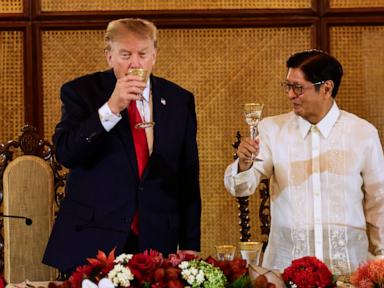
A celebrity royal shakes hands with wounded veterans. Cameras flash. A headline declares a "big separation" between Washington's political class and everyday Americans over aid to Kyiv.
Lazy journalism. Comforting for people who want a neat moral scorecard. Wrong about how foreign policy actually breaks.
When observers hear that Prince Harry sees a wide gap between the US administration and the American public on supporting Ukraine, they treat his observation like a pollster's finding. It isn't. It is an impression filtered through emotional solidarity, wounded-soldier advocacy, and high-visibility charity work. Turning a personal read of the room into a structural diagnosis of American politics misses the real fault line.
The split isn't simply "administration versus public." The real tension sits between symbolic empathy and fiscal-strategic exhaustion, complicated by a sharp partisan divide inside the electorate itself.
The Lazy Consensus Around a "Big Separation"
Standard coverage loves a clean villain and a clean hero. In the conventional framing, elected officials play cold realpolitik or partisan games in Washington, while regular citizens hold steady to clear moral instincts—or vice versa.
That framing collapses under scrutiny. American public opinion on Ukraine has never been a single monolithic block marching in lockstep against the White House. Polling over the course of the war has repeatedly shown deep division along party lines, shifting priorities over time, and a persistent gap between liking Ukraine as a victim of aggression and wanting open-ended US taxpayer commitments.
Calling every difference between an administration's posture and public sentiment a "big separation" flattens two very different phenomena:
- Policy trade-offs: Administrations manage alliances, munitions stockpiles, congressional appropriations, escalation risks, and competing global theaters. Voters react to inflation, domestic spending, headline fatigue, and party cues.
- Emotional resonance vs. budget math: A person can feel genuine sympathy for a Ukrainian soldier in a wheelchair and still balk at another multi-billion-dollar package when groceries and housing feel tight at home.
Treating empathy at a veterans' event as proof of pro-aid consensus—or treating skepticism in Washington as proof that leaders have abandoned their people—is sloppy analysis.
What Prince Harry Actually Sees (and Why His Lens Skews)
Credit where due: Prince Harry brings real military background and genuine focus to wounded veterans through the Invictus Games and related initiatives. When he talks to injured service members or watches rehabilitation up close, he sees human cost without diplomatic euphemisms.
That vantage point has power. It also has blind spots.
A royal or patron operating in philanthropy and veteran recovery lives in an ecosystem built around human solidarity. People who show up to support wounded fighters are self-selected supporters of those fighters. Sympathy in that room is high, immediate, and personal.
Washington operates on incentives, constraints, and coalitions. A president or cabinet official weighs industrial capacity, congressional votes, deterrence credibility, and domestic political survival. Even when leaders and citizens share the same broad goal—preventing Russian domination—they collide over duration, cost, and risk.
Thought Experiment: Two Rooms, One Country
Imagine a scenario where you run two focus groups in the same Ohio county on the exact same afternoon. Group A watches a ten-minute documentary on Ukrainian amputees rebuilding their lives. Group B reviews a federal budget chart comparing overseas security assistance against local infrastructure and debt service.
Both groups are real Americans. Both answers are honest within their frame. If a commentator only interviews Group A and compares it to a cautious State Department briefing, they will swear the public and the government live on different planets. Change the framing, and the apparent "gap" shifts shape immediately.
The Real Fault Lines Nobody Wants to Map
If you want to understand how US support for Ukraine actually behaves, stop looking for a single chasm between "the suits" and "the people." Look at four mechanics that drive the friction.
- Partisan sorting overrides raw facts. Voters increasingly take cues on foreign conflicts from trusted media and party leaders rather than from diplomatic communiques. When elites split, public support splinters along the same lines.
- Attention decays faster than war. Wars grind through attrition, logistics, and stalemate. News cycles reward novelty. Public intensity naturally cools as a conflict turns into a long slog.
- Burden-sharing resentment cuts deep. Many skeptical Americans aren't cheering for Moscow; they ask why European economies with large GDPs don't shoulder a larger share of their own neighborhood's security.
- Executive vs. legislative friction. Even inside Washington, "the administration" is not a single lever. Appropriations fights, executive authorities, and shifting majorities turn foreign policy into tug-of-war.
Where My Contrarian Take Can Go Wrong
Let me put my cards on the table. Dismissing a high-profile figure's read of the mood carries its own risk. Popular public figures sometimes pick up on cultural undercurrents—like discomfort with harsh rhetoric or a hunger for human decency—before dry policy analysts do.
Also, treating public opinion purely as a product of media cues and budget math can understate genuine moral conviction. Plenty of Americans support Ukraine out of principle, democratic solidarity, or family ties, regardless of poll swings or partisan noise. Being sharp shouldn't mean being cynical about every real human feeling in the room.
Lessons From Watching Big Bets Go Sideways
I've watched political campaigns, advocacy groups, and corporate strategy teams burn millions of dollars because they misread a "gap" between leaders and the public. They saw a loud reaction in one corner—a rally, a viral clip, a passionate donor base—and assumed the whole country was ready to move with them.
In strategic communications and policy analysis, precision beats vibes every single time. Classic realist thinkers like Hans Morgenthau and George Kennan argued long ago that sustainable foreign policy has to align moral purpose with durable domestic power and clear interests. When leaders overpromise open-ended commitments without building lasting public consent, friction is guaranteed.
People often ask a lazy set of follow-up questions around moments like this:
- "Does public sympathy automatically translate into political support?" No. Sympathy is cheap; sustained political backing requires votes, budgets, and tolerance for risk.
- "Is the US public turning its back on Ukraine?" That phrasing is too blunt. Support has become more conditional, contested, and tired—not a single light switch flipped from on to off.
- "What should advocates and policymakers actually do?" Stop lecturing skeptics with moral slogans. Explain concrete security stakes, enforce transparent oversight, and insist on balanced allied burden-sharing.
How to Read Foreign Policy Headlines Without Getting Played
Next time a headline claims a sharp divide between Washington and the public over an overseas crisis, run a quick reality check before sharing it:
- Check who is making the claim and what environment they were standing in.
- Separate warm feelings toward victims from support for specific policies or dollar amounts.
- Look at coalition math in Congress and allied contributions abroad, not just cable-news outrage.
Feelings move crowds for a weekend. Incentives, budgets, and coalitions move policy for years.