The royal public relations machine just sold you a fairy tale wrapped in a hospital gown.
And if you are an actual cancer patient—or love someone who is—that fairy tale is going to hurt you.
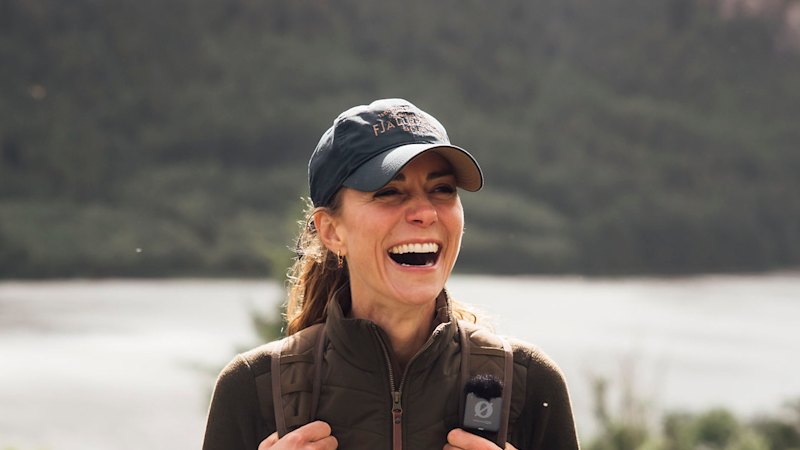
Every major entertainment outlet is currently tripping over itself to praise the soft-focus, sunlit vulnerability of the new documentary project surrounding Princess Kate’s life after chemotherapy. The coverage reads like a press release written by Kensington Palace’s most expensive crisis consultants. They use words like "brave." They talk about "healing." They frame her return to public life as a neat, cinematic arc where darkness gives way to morning dew, whispering trees, and restored perfection.
Stop buying it.
Look closely at the media coverage of Heal and the surrounding royal communications strategy, and you will spot the lazy consensus immediately. Entertainment journalists treat royal health updates like a season finale of The Crown. They want a clean resolution. They want a tidy moral about resilience, nature, and gratitude.
In doing so, they are erasing the brutal, unglamorous, financially devastating reality of cancer survivorship.
The Lie of the Cinematic Recovery
I have spent fifteen years dissecting crisis communications, celebrity health rollouts, and medical journalism. I have watched publicists turn life-threatening illnesses into brand-rehabilitation tours, and I have watched real patients suffer the psychological whiplash when their own recoveries fail to look like a movie trailer.
When an institution with billions of dollars in sovereign assets, round-the-clock private medical teams, household staff, and zero financial stress packages a cancer recovery as a gentle walk through the Norfolk woods, it sets a toxic baseline.
Let’s look at the mechanics of what is actually happening here.
First, there is the * survivorship bias* of wealth. In oncology, outcomes and quality of life during recovery are heavily dictated by social determinants of health. Organizations like the American Cancer Society and Cancer Research UK have documented for decades that financial toxicity—the literal bankruptcy and chronic stress caused by lost wages and medical bills—is one of the primary drivers of poor post-treatment outcomes.
Kate Middleton did not have to argue with an insurance adjuster while vomiting from cytotoxic drugs. She did not have to choose between paying for anti-nausea medication and paying her mortgage. She did not have to drag herself back to a warehouse shift or a cubicle three weeks after her final infusion because her statutory sick pay ran out.
Yet, when the media reports on her reflections on "life beyond cancer," they strip away the scaffolding of extreme privilege and present her emotional state as a universal blueprint.
Just breathe.
Connect with nature.
Focus on love.
Try telling that to a single mother in Manchester or Ohio dealing with chemo-induced peripheral neuropathy while trying to keep her electricity on. That isn't inspiration. It is gaslighting.
Dismantling the "Life Beyond Cancer" Myth
The biggest flaw in the competitor coverage—and the very premise of the title Heal—is the implication that cancer has a clean finish line.
Ask any oncologist. Ask any oncology nurse who actually spends twelve hours a day on a ward. There is no "beyond cancer" for most patients. There is only remission, surveillance, and chronic management.
When celebrity media frames a public figure as "healed" or "past it," they reinforce a dangerous cultural expectation that patients face every single day: the expectation to bounce back.
Here is what actually happens when chemotherapy ends, according to clinical oncology data and patient advocacy groups like Macmillan Cancer Support:
- The Abandonment Cliff: During active treatment, you have a schedule. You have scans, blood draws, and doctors checking on you every week. The day treatment ends, that safety net vanishes. Patients routinely report a massive spike in clinical anxiety and depression after being declared cancer-free, because they are suddenly left alone to wonder if every minor headache is a metastasis.
- Post-Treatment Morbidity: Chemotherapy and radiation do not just kill cancer cells; they scorch the earth. Patients are left with permanent heart damage, early menopause, cognitive impairment ("chemo brain"), chronic fatigue that sleep does not fix, and secondary cancer risks.
- The Empathy Deficit: The moment a patient’s hair grows back—or the moment a royal steps out in a tailored coat looking radiant—society decides the crisis is over. Friends stop bringing meals. Employers stop offering flexibility. Partners expect normal energy levels.
When the media celebrates a glossy, curated portrait of post-cancer serenity, it hands ammunition to every ignorant boss and impatient relative who wonders why a survivor isn't "over it yet."
What People Are Actually Asking (And Why the Questions Are Wrong)
If you look at search trends surrounding Kate Middleton’s health, people are desperate for specifics. They are asking: What kind of cancer did Princess Kate have? Is Princess Kate completely cured? How did she recover so quickly?
Every single one of those questions is rooted in a fundamental misunderstanding of both modern oncology and royal PR.
1. "Is she completely cured?"
Oncologists almost never use the word "cured" in the immediate aftermath of preventative (adjuvant) chemotherapy. They use No Evidence of Disease (NED) or complete remission. Even with the best medical care on earth, microscopic residual disease can remain undetectable on standard imaging for years. Asking if she is "cured" treats cancer like a broken bone or a bacterial infection. It isn't. It is a cellular rebellion that requires years of anxious monitoring.
2. "How did she recover so quickly?"
She didn't. You are confusing public appearances with physical recovery. A carefully lit, three-minute video shoot or a two-hour balcony appearance requires immense preparation, makeup artists, styling, and days of rest before and after. You are seeing an edited highlight reel, not a medical chart. Mistaking a controlled media appearance for full physical restoration is like watching an action movie and assuming the actor actually jumped off the building without a harness.
3. "What does her story teach us about healing?"
Nothing about medicine. Everything about narrative control. After the catastrophic public relations blunders of early 2024—the manipulated Mother’s Day photo, the bizarre conspiracies, the vacuum of information—Kensington Palace realized the old royal playbook ("never complain, never explain") was dead. They pivoted to hyper-curated intimacy. By releasing soft-focus, emotionally resonant content about "healing," the Palace bypassed skeptical journalists entirely and spoke directly to an audience primed for emotional validation.
The Dark Side of Toxic Positivity in Oncology
There is a specific industry built around the "inspirational cancer warrior" trope, and it needs to be dismantled.
Barbara Ehrenreich, the late journalist and author, famously exposed this in her landmark essay Welcome to Cancerland after her own breast cancer diagnosis. She noted how mainstream culture demands that cancer patients act as cheerful, grateful survivors who view their disease as a "gift" that taught them to appreciate life.
We see this exact script playing out in the coverage of Kate’s documentary reflections. The narrative insists that suffering must have a redemptive arc. It demands that trauma be converted into wisdom.
Why? Because society is terrified of random, meaningless suffering.
If a wealthy, fit, young mother of three can suddenly get cancer for no apparent reason, that means anyone can. That means your green smoothies, your Peloton rides, and your clean living will not save you. That realization is terrifying to the public.
So, the media rushes to soothe that terror. They wrap the story in comforting clichés about nature, family, and spiritual awakening. They turn a terrifying biological ambush into a wellness retreat.
Let’s be brutally honest about the downside of rejecting this narrative: Cynicism doesn't cure anyone either.
I am not arguing that Kate Middleton shouldn't feel grateful to be alive, or that spending time in nature isn't psychologically beneficial for someone recovering from trauma. Cortisol reduction, green space exposure, and strong family support are real, measurable buffers against stress. If walking through the woods helps her process the terror of facing her own mortality, she should walk through the woods every single day.
The problem is not her personal coping mechanism. The problem is the media industrial complex turning her private coping mechanism into a public prescription.
Imagine a Scenario Where Royals Told the Truth
Imagine a scenario where a high-profile public figure bypassed the soft-focus lens entirely.
Instead of acoustic guitar music and slow-motion shots of sunlight filtering through leaves, imagine a royal sitting in front of a plain background and saying:
"Chemotherapy poisoned my body to save my life. I still have days where I cannot get out of bed. I am terrified every time I go in for a scan. And the only reason I am functioning right now is because I have an army of doctors, chefs, and nannies that 99.9% of you will never have access to. Do not compare your recovery to mine."
The entertainment press wouldn't know what to do with that. It wouldn't fit into a lifestyle vertical. It wouldn't sell commemorative magazines.
It would, however, be the single greatest act of public health service a royal has ever performed.
How Real Patients Should Process Celebrity Health Media
If you are navigating a diagnosis, supporting a partner through treatment, or trying to rebuild your life after oncology discharges you, you need a ruthless filter for celebrity health narratives.
Stop treating public figures as peers in your recovery. Treat their output as entertainment, not education.
- Audit your media consumption during survivorship. If watching a celebrity glide through a sunlit meadow makes you feel defective because you are crying on your bathroom floor six months after your last chemo cycle, turn it off. Your reaction is normal; their production budget is artificial.
- Separate emotional validation from clinical reality. Organizations like the National Comprehensive Cancer Network (NCCN) publish actual survivorship guidelines. They cover fatigue management, cognitive dysfunction, and fear of recurrence. Read clinical guidelines, not royal press releases, to understand what your body is going through.
- Demand accommodation, not inspiration. Do not let people call you "brave" to avoid giving you practical help. Bravery doesn't drive you to radiation appointments. Bravery doesn't cook dinner when your white blood cell count is in the basement. Ask for concrete logistics, and refuse to perform cheerfulness to make healthy people feel comfortable.
- Reject the "new normal" cliché until you are ready. You do not owe anyone a silver lining. Cancer is not a wellness guru. Sometimes a terrible disease is just a terrible disease that you survived through science, luck, and endurance.
Kensington Palace produced a masterclass in modern reputation management. They took a PR crisis, transformed it into a sympathetic human-interest triumph, and got the global press to act as unpaid distribution partners.
Respect the PR execution for what it is. Just don't mistake a billion-dollar brand strategy for medical truth.