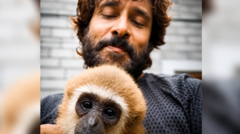
Another week, another social media clip of a high-profile actor interacting with an exotic animal, followed by the predictable digital lynch mob calling for blood, fines, and prison time. The headlines scream about endangered gibbons and illegal trafficking investigations, treating the incident as a moral outrage against nature.
It is lazy outrage. It is also entirely counterproductive.
When authorities launch investigations into celebrity animal selfies, they do not save a single habitat or protect a single population from the actual threats of extinction. They create a performative distraction. They offer the public a cheap dopamine hit of righteous indignation while the real drivers of biodiversity loss—habitat fragmentation, commercial agriculture, and structural poverty in range countries—go completely untouched.
I have spent two decades advising wildlife management programs across South and Southeast Asia. I have seen governments blow millions of dollars chasing down viral social media posts while local forest corridors are bulldozed for palm oil plantations. The fixation on individual animal interactions is a symptom of a conservation movement that prefers punishing easy scapegoats to solving hard, systemic problems.
The Flawed Premise of the Paws-Off Ideology
The lazy consensus in modern conservation is simple: any human contact with a wild animal is inherently abusive, illegal, and destructive.
This absolutist dogma feels clean. It looks great on a placard. But it collapses the moment you examine how wildlife actually survives in the twenty-first century.
Take the case of primates like gibbons. The standard narrative claims that a celebrity posting a video with a captive or semi-captive ape normalizes the illegal pet trade, driving demand for poachers to rip infants from maternal arms in the deep jungle.
The logic sounds airtight until you look at the economics. The vast majority of illegal wildlife trade is driven by traditional medicine markets, bushmeat consumption, and large-scale industrial logging. A celebrity holding a rescued gibbon in a sanctuary or a private estate—while legally murky and often ill-advised—represents a tiny fraction of a percent of mortality factors. Yet, it consumes ninety percent of the public outrage.
When we treat every human-animal interaction as a catastrophic crime, we sever the emotional bridge between urban populations and wild ecosystems. People care about what they can see, touch, and feel. Lock nature behind an impenetrable glass wall of untouchability, and the public stops funding it, stops fighting for it, and ultimately forgets it exists.
Dismantling the Animal Selfie Panic
Let us address the common questions surrounding these viral scandals with brutal honesty.
People ask: Does posting a photo with an endangered species encourage poaching?
The data says no. It encourages clicks. There is zero empirical evidence linking individual celebrity media posts to spikes in poaching statistics for species like hoolock gibbons or slow lorises. Poaching spikes correlate directly with economic collapse, local enforcement vacuums, and road construction that opens previously inaccessible forest tracts. Blaming actors for extinctions is like blaming a weather vane for a hurricane.
People ask: Shouldn't the law apply equally to everyone, including the rich and famous?
Of course it should. If a wildlife law is broken—whether it involves illegal importation, smuggling, or unlawful possession—prosecute it. But let us stop pretending that a misdemeanor wildlife possession charge in a suburban estate is a major victory for global biodiversity. It is a local administrative infraction dressed up as a global ecological crisis because it generates high web traffic.
The obsession with policing internet aesthetics has created a culture of fear among conservationists and educators alike. Field researchers are terrified to share close-up footage of habituated animals for fear of triggering a social media witch hunt. We are penalizing proximity while ignoring destruction.
The Real Cost of Outrage Culture
Imagine a scenario where every forest ranger in Southeast Asia was taken off anti-poaching patrols and reassigned to monitor Instagram and TikTok for unauthorized primate videos.
That sounds absurd, yet it mirrors our current intellectual priorities. We spend immense cultural energy debating whether a celebrity should be allowed to feed a fruit to a rescued primate while millions of acres of primary canopy burn or get clear-cut for timber and mining.
The outrage economy thrives on simplicity. A video of a cute ape with a famous face is easy to process. It allows millions of people sitting in concrete apartments thousands of miles away to feel like moral guardians of the planet without changing their consumption habits, voting patterns, or carbon footprints.
It is a placebo. And placebos are dangerous when the patient is bleeding out.
What Actual Conservation Looks Like
If you want to save endangered species, stop worrying about what happens on movie sets and start looking at land deeds, supply chains, and local community incentives.
Real conservation is boring, grinding, and deeply unphotogenic. It involves:
- Securing land tenure for indigenous communities who live alongside wildlife and have a vested interest in keeping forests intact.
- Cracking down on large-scale laundering operations where illegal wildlife products are mixed with legal captive-bred inventory.
- Funding veterinary clinics and rescue networks that actually handle the fallout of the exotic pet trade, rather than just tweeting about them after hours.
The next time a celebrity video drops and the internet demands a scalp, take a breath. Recognize the outrage for what it is: a distraction machine designed to make you feel virtuous while the forest burns down behind the curtain. Stop feeding the machine. Start looking at the map.