Salt dries white on dark skin. It crusts along the hairline, settles into the creases of knuckles, and turns a wool sweater into something stiff as cardboard. When you pull a human being out of the Libyan Sea in late autumn, the first thing you notice is not the terror in their eyes. It is the weight. Waterlogged clothes double a person’s mass, turning an exhausted body into dead freight that fights every inch of the gunwale.
Fourteen.
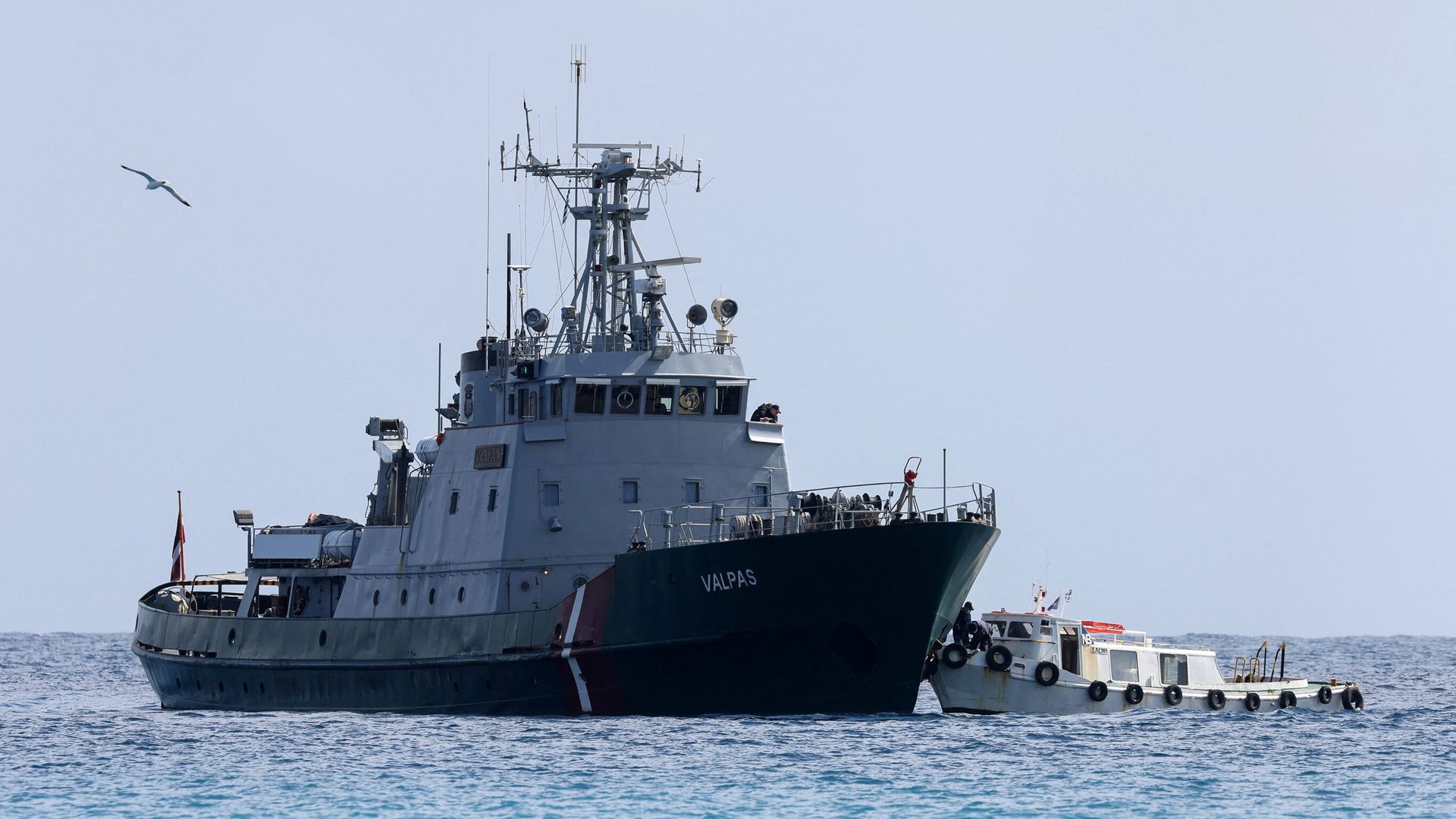
That is the number the wire services settled on when a wooden vessel carrying migrants was found drifting in the waters near Crete. Fourteen bodies recovered. Dozens more pulled shivering onto the decks of passing merchant ships and Greek Coast Guard patrol boats. Within six hours, the headline had cycled off the front pages of European news portals, filed away under the familiar, numbing taxonomy of Mediterranean border crossings. A boat sank. People died. An investigation was launched.
If you only read the brief, you might think you understand what happened south of Crete. You have the coordinates, the casualty count, and the agency quotes. Yet the real story is not sitting in a coast guard press release. It sits in the terrifying geometry of the open water between Tobruk and Gavdos—a stretch of sea that has quietly become the deadliest, least-watched corridor in the modern history of human displacement.
The Illusion of the Short Crossing
Most people picture the Mediterranean migration crisis through images from a decade ago: bright orange inflatable dinghies bobbing a few miles off the Turkish coast, within sight of the whitewashed hills of Lesbos. That route was brutal, make no mistake, but it was short. A smuggler could point a rubber boat toward a visible island, hand a passenger a plastic compass, and let the currents do the rest.
The sea south of Crete operates by entirely different rules.
Consider a hypothetical passenger—let us call him Tariq, a twenty-six-year-old carpenter from Damietta—standing on a darkened beach in eastern Libya at two in the morning. He has paid four thousand dollars, scraped together from the sale of his workshop tools and loans from three cousins, for a spot on a dilapidated wooden fishing trawler. Looking north across the water, Tariq sees nothing. There are no twinkling lights on a distant shore. Between the Libyan coast and the southern cliffs of Crete lies nearly two hundred nautical miles of deep, exposed ocean.
To grasp what that distance means, imagine walking out into the middle of an empty desert with a gallon of lukewarm water and a broken map, knowing that the nearest town is a three-day march away through shifting sandstorms. On the water, the desert moves. The meltemi winds and sudden autumn squalls whip the Libyan Sea into steep, chaotic swells that slam against the hull of an overloaded trawler like a battering ram.
Smugglers know this. They do not care. In the grim economics of human trafficking, a wooden boat that has already outlived its commercial fishing license is a disposable asset. Crew members pack seventy, eighty, sometimes a hundred people into a hold designed for crates of sardines and ice. Below deck, the air turns thick with diesel fumes, vomit, and the suffocating heat of pressed bodies. Above deck, there is nowhere to hold on when the bow drops into a trough.
Why the Southern Route Exists
You might wonder why anyone would get onto such a vessel when the odds are so visibly stacked against survival. The answer lies in a phenomenon border analysts call the balloon effect: squeeze one end of a migration route, and the pressure simply bulges out somewhere else.
Over the past several years, European governments poured billions of euros into fortifying the central Mediterranean route toward Italy and tightening patrols in the Aegean. Coast guards intercepted more boats. Bilateral deals with transit countries choked off traditional departure points. On paper, the strategy looked like deterrence.
In practice, it pushed desperate people toward longer, deeper, and far more lethal waters.
Crete—and specifically Gavdos, a tiny, sun-baked island off Crete’s southwestern coast that marks the southernmost point of Europe—suddenly found itself on the front line. For generations, Gavdos was a quiet outpost of fewer than a hundred year-round residents, known mostly to off-grid travelers and goats. Then the boats began arriving. Not rubber dinghies, which would tear apart in the open swells halfway across, but aging wooden hulls and rusted iron tubs launched from ports like Tobruk and Benghazi.
When a boat gets into trouble sixty miles south of Crete, there is no network of nearby islands to offer shelter. There are no tourist ferries crisscrossing the shipping lanes every twenty minutes. There is only the vast, indifferent expanse of the eastern Mediterranean, where a wooden trawler taking on water can slip beneath the surface in less than ten minutes without a single radar screen registering its disappearance.
The Seconds Between Floating and Sinking
Survivors who make it to the reception centers on Crete rarely talk about politics or asylum law. They talk about sound.
First, there is the groan of wet timber straining against bolts that rusted through years ago. Then comes the sharp, unmistakable crack of a hull plank giving way, followed by the rush of black water pouring over ankles, knees, and waists. In the pitch dark of a moonless night at sea, panic does not spread in a straight line; it detonates.
When sixty people lunge toward the high side of a listing boat at the exact same moment, physics takes over with ruthless efficiency. The center of gravity shifts. The gunwale dips below the waterline. Within seconds, the vessel rolls, trapping anyone still inside the lower hold beneath a ceiling of splintered wood and rising sea.
Those who make it into the open water face a quieter enemy. Even in late autumn, the surface temperature of the sea south of Crete hovers around twenty degrees Celsius—warm enough to feel mild during a ten-minute swim, cold enough to leech body heat steadily hour after hour. Hypothermia does not announce itself with dramatic shivers. It arrives as a heavy, seductive numbness. Fingers lose their grip on floating jerrycans. Speech slurs. The mind begins to bargain with the cold, convincing a drowning swimmer that letting go of a piece of driftwood would actually feel like rest.
By the time a passing cargo ship spots a flickering flashlight or a coast guard helicopter drops a rescue basket through the salt spray, the math has already been decided. Fourteen bodies floating face down in life jackets bought from street vendors in Tripoli—jackets stuffed with cheap foam or scraps of paper that soak up water like sponges instead of keeping a head above the waves.
The Architecture of Indifference
I have stood on the concrete quays of Mediterranean ports when the aluminum body bags are lifted off the decks of patrol vessels. You never get used to the silence that settles over a harbor during an offloading. Even the port workers, men who spend their lives shouting over the roar of marine diesel engines and winches, lower their voices to whispers.
What makes these deaths uniquely haunting is not that they are unavoidable tragedies of nature, like an earthquake or a sudden tsunami. They are the predictable outcome of policy choices made in air-conditioned ministries thousands of miles away from the salt spray.
Consider what happens next after a tragedy like the one off Crete. A spokesperson expresses deep sorrow over the loss of life. Authorities promise a crackdown on ruthless smuggling networks. Within forty-eight hours, the diplomatic machinery hums back into its familiar groove, focused almost exclusively on interception, externalization, and keeping the problem out of sight.
Look closely at the gap between what governments say they are doing and what actually happens on the water. We maintain satellite networks capable of tracking a license plate from orbit, yet entire wooden vessels vanish for days in the Libyan Sea until a merchant captain happens to glance through binoculars at dawn. We criminalize the act of irregular arrival while dismantling nearly every safe, legal pathway that would allow a family fleeing economic collapse or civil war to apply for a visa without handing their life savings to a cartel.
The smugglers are monsters—on that point, there is no room for ambiguity. They load children onto unseaworthy wrecks at gunpoint and pocket fortunes built on human misery. Yet smugglers do not create desperation. They merely monetize a market that border policies have handed them on a silver platter. When you wall off every legal door and leave only a treacherous sea lane open, you do not stop people from moving. You simply ensure that only the luckiest survive the trip.
The Names That Never Make the Wire
In the days following the recovery of the fourteen bodies near Crete, forensic teams begin the slow, agonizing work of identification. Without passports—most having been confiscated by smugglers before departure or lost to the sea—investigators rely on tattoos, scars, scraps of clothing, and DNA swabs collected from weeping relatives who travel from across Europe to peer at photographs on a computer screen.
Behind every single statistic in that initial headline lies an entire architecture of interrupted lives. A mother in Alexandria waiting for a WhatsApp message with two blue checkmarks that will never turn blue. A younger brother in a refugee camp in Lebanon who was counting on his older sibling to reach Germany, find work in a warehouse, and send back fifty euros a month for insulin. A debt owed to a neighborhood moneylender that a grieving family will spend the next decade trying to repay for a journey that ended in a refrigerated morgue container in Heraklion.
We have grown dangerously comfortable with large, round numbers. Fourteen dead. Three hundred missing. Two thousand lost this year alone. Repetition dulls the moral nerve endings until a human catastrophe reads like a weather report—something regrettable, vaguely sad, and entirely beyond our control.
Yet nothing about the sea south of Crete is inevitable.
Search-and-rescue protocols work when they are funded and permitted to operate without obstruction. Dedicated maritime surveillance saves lives when distress calls are answered immediately rather than debated across jurisdictional lines between Rome, Athens, and Tripoli. Legal labor pathways and humanitarian corridors dismantle smuggling networks far more effectively than patrol boats ever could, because nobody pays four thousand dollars to risk drowning in the hold of a rotting trawler if they can buy a two-hundred-dollar ferry ticket with a valid stamp in their passport.
Until that calculus changes, the wooden boats will keep pushing off from the dark beaches of eastern Libya. They will point their bows north toward a horizon they cannot see, betting everything on two hundred miles of deep, indifferent water. And somewhere along the rocky southern coast of Crete, a fisherman walking down to his skiff at first light will look out past the breakers and see something pale bobbing gently in the morning tide.