The dust in southwestern Iran tastes like iron and dried salt, especially when the late afternoon wind sweeps off the Shatt al-Arab and rattles the corrugated metal roofs of border outposts.
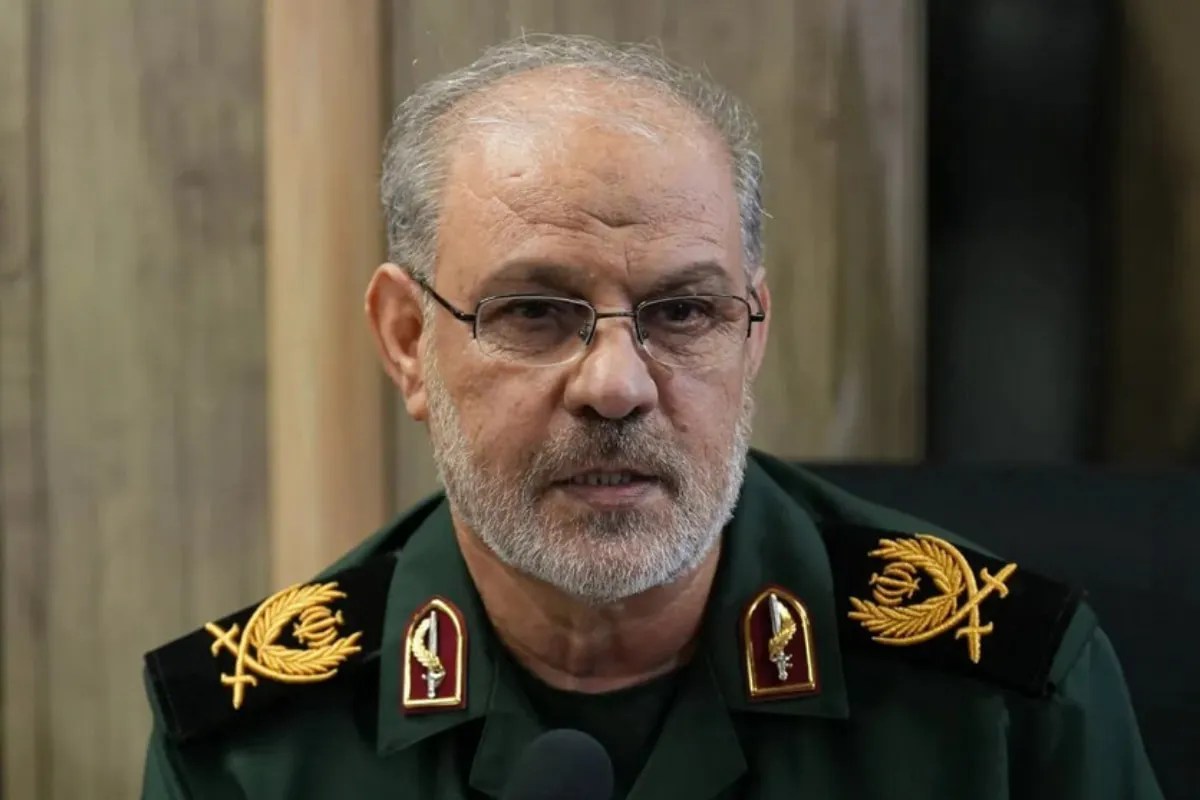
Stand near the edge of the Khuzestan plain long enough, and you begin to understand how geography shapes theology, and how theology, in turn, hardens into military doctrine. For decades, the men wearing the olive-drab uniforms of the Islamic Revolutionary Guard Corps have looked across those flat, sun-bleached horizons not merely as soldiers guarding a perimeter, but as custodians of an unfinished historical reckoning. So when a senior Iranian military official recently stepped before a microphone and declared that, God willing, Iran would emerge from the final war as the world’s superpower, Western analysts largely treated it as another flare-up of predictable rhetoric.
They missed the point entirely.
To dismiss that sentence as empty bravado is to misread the psychological engine driving one of the most consequential geopolitical standoffs of the twenty-first century. Language like that is never improvised in Tehran. Every syllable carries the weight of forty-five years of isolation, the lingering trauma of a brutal eight-year war with Iraq, and a deeply ingrained eschatological worldview that refuses to measure victory in quarterly economic reports or conventional GDP rankings.
Wait. Listen closely to the phrasing again.
In the final war, God willing, we will become the world's superpower.
Notice the conditional grace embedded in the boast. Notice the timeline. It does not claim supremacy tomorrow morning, nor does it promise dominance in a conventional clash of aircraft carriers and stealth bombers. Instead, it anchors national destiny to a catastrophic, transformative climax—a moment when existing global hierarchies collapse under the weight of their own contradictions, leaving resilience, ideology, and asymmetric endurance as the sole currencies of power.
The Weight of Unfinished Memory
To grasp why a general in Tehran speaks with such certainty about an ultimate reckoning, consider a hypothetical observer—let us call him Reza, a retired civil engineer living in Ahvaz who spent his twenties digging trenches during the 1980s Iran-Iraq War.
Reza remembers the sound of Scud missiles whistling over his neighborhood before dawn, and he remembers watching teenage volunteers march toward minefields with plastic keys around their necks, convinced they were unlocking the gates of paradise. For men of Reza’s generation, survival against overwhelming international odds is not an abstract theory taught at a war college. It is a lived, sensory memory etched into scarred lungs and crumbling concrete walls. During that conflict, Iran stood virtually alone while global superpowers supplied Baghdad with intelligence, credit, and chemical precursors. Out of that crucible emerged a foundational doctrine: never again rely on international institutions for survival, and never measure strength by the enemy's metrics.
When modern Iranian commanders invoke the "final war," they are speaking directly to the collective memory that shaped men like Reza. They are tapping into a narrative where suffering is never wasted, where sanctions are reframed as a refining fire, and where endurance itself becomes an offensive weapon.
According to defense analysts at institutions like the International Institute for Strategic Studies and researchers tracking Middle Eastern security dynamics, Tehran’s military brass has spent the past thirty years systematically translating this siege mentality into tangible hardware. Rather than bankrupting the state trying to match the United States dollar-for-dollar in fifth-generation fighter jets or blue-water naval fleets, Iran invested heavily in what military theorists call asymmetric deterrence. Ballistic missiles buried deep inside mountain complexes. Swarming fast-attack boats patrolling the narrow choke point of the Strait of Hormuz. Low-cost, long-range unmanned aerial vehicles capable of reshaping battlefields thousands of miles from Iranian soil.
The rhetoric of future superpower status sits atop this very real subterranean infrastructure. It is a psychological bridge connecting present-day economic hardship to promised historical vindication.
Theology Meets Asymmetric Deterrence
Outsiders often struggle to separate religious vocabulary from strategic calculation when listening to Iranian officials. That confusion is understandable, even terrifying, because modern secular statecraft rarely uses apocalyptic language to describe defense policy.
Yet in the ideological architecture of the Islamic Republic, geopolitics and Shia eschatology are tightly braided together. Within Twelver Shia tradition, history is moving toward the eventual return of the twelfth Imam, the Mahdi, a messianic figure who will establish global justice following a period of profound global upheaval and conflict. Since the 1979 revolution, state ideologues have woven this theological expectation into the fabric of national security strategy, arguing that the Islamic Republic must prepare the groundwork—politically, spiritually, and militarily—for that transformative era.
Think of it like a long-distance runner competing on a track where everyone else is sprinting a hundred-meter dash.
If you judge the runner at the fifty-meter mark, he looks hopelessly behind, gasping for air while the sprinters surge ahead with superior speed and sleek equipment. The crowd laughs. The commentators write him off. Yet the runner knows the race isn't ending at the hundred-meter tape; he is pacing himself for a marathon across broken glass and uphill terrain, betting that the sprinters will exhaust their lungs and tear their hamstrings long before the finish line appears.
This metaphor captures the essence of Tehran’s strategic patience. When Iranian officials speak of emerging as a superpower after a final conflict, they are articulating a belief that the current American-led international order is overextended, polarized from within, and structurally fragile. From Tehran’s perspective, every protracted crisis in Eastern Europe, every flashpoint in the Indo-Pacific, and every wave of domestic political turmoil in Western capitals serves as evidence that the old empires are burning through their reserves.
Meanwhile, Iran’s commanders focus on survivability and regional depth. By cultivating an interconnected network of aligned militias and political movements across Lebanon, Iraq, Syria, and Yemen—an architecture Tehran refers to as the Axis of Resistance—the Islamic Republic has pushed its forward defensive perimeter hundreds of miles beyond its own borders. Any direct confrontation with Iran is no longer a localized bilateral skirmish; it immediately threatens global energy corridors, commercial shipping lanes, and multiple regional capitals simultaneously.
The Invisible Stakes Behind the Microphone
Still, grand declarations of destiny carry immense peril, both for the people making them and for the millions of ordinary citizens caught beneath the shadow of great-power ambitions.
Walk through the bustling Grand Bazaar in Tehran or sit in a crowded café in Isfahan, and the conversation rarely revolves around becoming a global superpower. People talk about the price of cooking oil. They worry about the relentless depreciation of the rial, the brain drain sending their brightest engineers and doctors to Toronto and Berlin, and the suffocating weight of inflation that erodes savings faster than families can replenish them.
Here lies the sharpest contradiction at the heart of the Iranian state.
While military commanders project an image of unstoppable ascendance toward a final historic triumph, the domestic economy strains under decades of international sanctions, structural mismanagement, and environmental decay. Water scarcity threatens major agricultural regions. Aging infrastructure struggles to keep pace with urban demand. Young Iranians, connected to the wider world through virtual private networks and encrypted messaging apps, frequently express exhaustion with ideological slogans that fail to put bread on the table or secure a predictable future.
Understanding this domestic friction is essential to decoding why senior officers make such sweeping proclamations in the first place.
Public speeches by military leaders rarely target foreign intelligence agencies alone; they are carefully calibrated instruments of internal cohesion. In moments of heightened regional tension—when Israeli airstrikes target senior commanders, when naval skirmishes flare in the Red Sea, or when diplomatic talks over nuclear enrichment stall—uncertainty ripples through the ranks of loyalists and security forces. Doubts creep in. Questions arise about whether the cost of perpetual confrontation has grown too steep.
A bold declaration of inevitable superpower status acts as an ideological anchor against that drift. It tells the soldier standing watch on a lonely border post, and the Basij volunteer patrolling a quiet street in Mashhad, that their sacrifices are not futile gestures in a losing game. It assures them that history itself has already chosen their side, provided they refuse to blink.
The Danger of Misreading the Script
History offers sobering warnings about what happens when nations begin believing their own prophecies—or when adversaries dismiss those prophecies as harmless theater.
In the years leading up to World War I, European capitals overflowed with speeches about national destiny, inevitable triumph, and swift decisive wars that would reshape the continent before autumn leaves fell. Leaders treated maximalist rhetoric as routine diplomatic posturing, right up until the moment mobilization timetables locked into place and diplomacy lost the power to hit the brakes.
A similar hazard stalks the modern Middle East.
When an Iranian commander speaks of a "final war," Western defense planners immediately scrutinize satellite imagery of missile silos in Kermanshah and centrifuge halls beneath the mountains at Natanz. They calculate enrichment timelines, warhead payload capacities, and air defense vulnerabilities. Conversely, hardliners in Tehran watch American carrier strike groups steaming into the Persian Gulf and conclude that the decisive showdown they have predicted for forty years is finally knocking at the door.
Both sides read the same events through radically incompatible lenses. Where Washington sees deterrence and containment, Tehran sees encirclement and the opening skirmishes of an existential struggle. Where Tehran sees defensive depth and divine destiny, Washington and its regional partners see aggressive expansionism and nuclear brinkmanship.
The real danger is not necessarily that someone wakes up tomorrow eager to ignite a catastrophic global war. Few rational actors actively seek total annihilation. Rather, the danger lies in a steady narrowing of the margin for error—a world where bold speeches raise public expectations so high that backing down from a minor border clash becomes politically impossible for leaders on either side.
What Survives After the Noise Fades
Spend enough time studying the rise and fall of empires, and a quiet truth emerges from the rubble of every collapsed ambition: nations rarely become superpowers simply because they declare themselves destined for the role.
True geopolitical durability rests on boring, unglamorous foundations. It requires thriving universities that keep their brightest minds at home, open trade routes that enrich ordinary merchants, institutions resilient enough to absorb dissent without fracturing, and economies capable of innovating beyond crisis management. Military prowess can shield a nation from invasion, and asymmetric weaponry can deter even the mightiest adversary from striking first, yet missiles alone cannot pave roads, replenish aquifers, or heal the quiet disillusionment of a generation longing for normalcy.
Yet the men who shape Iran’s military doctrine remain fiercely committed to their own calculus of power. They have watched foreign armies bog down in Afghanistan and Iraq. They have watched sanctions fail to topple governments in Havana, Pyongyang, and Caracas. They have watched the global balance of power fragment into a messy, multipolar contest where middle powers routinely defy traditional superpowers and walk away intact.
From inside their worldview, the trajectory looks unmistakable. The giants of the twentieth century appear weary, distracted, and divided, while those forged in scarcity and perpetual struggle believe their moment on the world stage is finally approaching.
Late at night, when the wind dies down over the Khuzestan plain and the desert air turns unexpectedly cold, the border outposts go quiet save for the hum of diesel generators and the distant glow of oil flares burning against the dark horizon. Inside those concrete bunkers, young conscripts stare at radar screens, waiting for signals that may never come, carrying the heavy weight of a prophecy spoken thousands of miles away in air-conditioned conference halls—caught between the immediate reality of a hard, uncertain life and the vast, intoxicating promise of a final war that will supposedly change everything.



