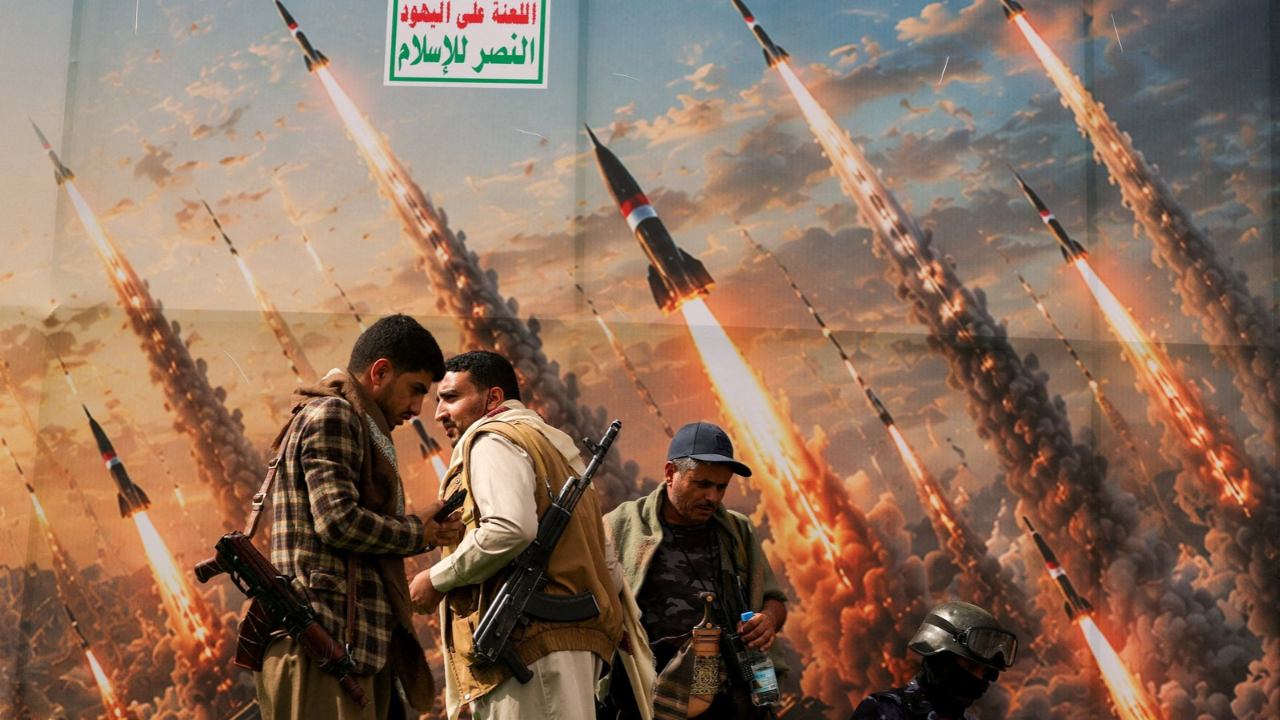
When pro-government Yemeni forces quietly pulled back from key coastal positions along the Bab el-Mandeb Strait, it did not look like a cinematic military defeat. There were no sweeping tank battles across the desert floor or dramatic televised surrenders. Instead, it was a slow, methodical withdrawal driven by fractured regional alliances, unpaid salaries, and shifting diplomatic priorities in Riyadh and Abu Dhabi that effectively ceded operational dominance of one of the world’s most vital maritime chokepoints to the Houthi movement.
For nearly a decade, the global shipping industry and Western defense planners treated the Red Sea corridor as a contested zone where an international coalition could ultimately contain local insurgencies. That assumption is dead. By consolidating their grip on the western Yemeni coastline overlooking the 20-mile-wide strait between the Arabian Peninsula and the Horn of Africa, the Houthis have transformed from a landlocked northern militia into a permanent maritime power broker capable of holding global supply chains hostage at will.
The Anatomy of a Strategic Retreat
To understand how anti-Houthi forces lost their footing along the Red Sea coast, you have to look at who was actually holding the line. The anti-Houthi coalition was never a unified national army. It was a fragile patchwork of competing militias, southern separatists, and locally recruited brigades bankrolled by competing Gulf sponsors.
Along the western coast, from Mocha down toward the Bab el-Mandeb Strait, security depended heavily on the National Resistance Forces, commanded by Tareq Saleh, the nephew of Yemen’s late former president Ali Abdullah Saleh, alongside the Giants Brigades, a formidable Salafi-dominated fighting force largely backed by the United Arab Emirates. For years, these units acted as the primary buffer preventing Houthi fighters in Taiz and Hodeidah from establishing direct, unchallenged artillery and surveillance posts overlooking the narrowest point of the strait.
Then the political math changed.
As Saudi Arabia pursued direct backchannel negotiations with Houthi leadership to extricate itself from a costly, unpopular war, the incentives for local Yemeni factions to bleed for coastal territory evaporated. Without guaranteed air support, steady logistics, and unified political backing from the Presidential Leadership Council, holding exposed coastal outposts became a suicide mission. Supply lines stretched thin across barren, sun-baked terrain. Local commanders began quietly consolidating their troops closer to defensible urban hubs like Mocha and Aden, leaving vast stretches of rugged coastline and critical high ground under-monitored or entirely abandoned.
The Houthis did not need to launch a massive, high-casualty offensive to take advantage of the vacuum. They simply walked into the spaces left behind.
Why Bab el-Mandeb Matters More Than the Headlines Admit
Most coverage of the Red Sea crisis focuses on the immediate shock to container shipping—rerouted vessels steaming around the Cape of Good Hope, delayed retail inventory, and spiking freight rates. Those disruptions are real, yet they miss the deeper structural shift occurring in the water column and along the shoreline.
The Bab el-Mandeb Strait is roughly 18 miles wide at its narrowest point, divided into two shipping channels by the volcanic island of Perim (Mayyun). Under normal conditions, roughly 12 percent of global seaborne trade and up to 30 percent of global container traffic pass through this narrow bottleneck. Every barrel of Persian Gulf crude heading to Europe via the Suez Canal, every liquefied natural gas tanker bound for Mediterranean terminals, and millions of tons of Asian manufactured goods must thread this needle.
Geographic asymmetry is the decisive factor here. A commercial supertanker moving at 14 knots through a narrow shipping lane is a massive, predictable, unarmored target. Meanwhile, the Yemeni coastline provides rugged volcanic terrain, wadis, and coastal caves ideal for concealing mobile missile launchers, radar installations, and drone workshops.
When anti-Houthi forces controlled the coastal plain and the adjoining highlands of Taiz province, Houthi weapons teams had to fire from deeper inland. That extra distance gave naval destroyers in the Red Sea precious additional seconds to detect incoming ballistic missiles or low-flying cruise missiles and engage them with multi-million-dollar interceptor rounds. By pushing forward toward the Bab el-Mandeb littoral, Houthi spotters gain direct visual line-of-sight over passing maritime traffic. They no longer need sophisticated satellite targeting to identify a vessel's draft, speed, or flag; a pair of commercial binoculars and a coastal spotter with an encrypted radio suffice.
The Economics of Asymmetric Blockades
Conventional naval doctrine was built to fight peer adversaries—blue-water fleets with aircraft carriers, submarines, and fixed ports. It was never designed to wage an indefinite war of attrition against an entrenched, decentralized coastal insurgency operating out of pickup trucks and subterranean bunkers.
Consider the brutal arithmetic of the Red Sea standoff. A single Houthi one-way attack drone costs roughly $2,000 to $20,000 to assemble using commercially available electronics and smuggled Iranian components. An anti-ship ballistic missile costs a fraction of what a modern naval warship spends to shoot it down. Standard SM-2 and SM-6 surface-to-air interceptors fired by U.S. and European destroyers cost anywhere from $2 million to more than $4 million per shot.
You do not need a degree in defense economics to see who wins that exchange over a twelve-month timeline.
Even when coalition warships intercept 95 percent of incoming threats, the remaining 5 percent is enough to send maritime insurance premiums into the stratosphere. War risk insurance for vessels transiting the Bab el-Mandeb surged from roughly 0.07 percent of a ship's value before the crisis to upwards of 0.75 percent or even 1 percent during peak escalation. On a $100 million vessel, that single surcharge adds up to a million dollars per transit.
Shipping giants like Maersk, MSC, and Hapag-Lloyd do not make routing decisions based on patriotic speeches from Pentagon podiums. They make decisions based on actuarial tables, crew safety liabilities, and fuel burn calculations. As long as Houthi forces maintain an uncontested foothold overlooking the strait, major maritime insurers will continue to classify the corridor as a high-risk zone, effectively imposing an invisible tax on global commerce without the Houthis firing a single shot in a given week.
The Subsea Cable Vulnerability Nobody Wants to Discuss
Beyond oil tankers and container ships lies a quieter, arguably more fragile vulnerability resting on the seabed of the Bab el-Mandeb. More than a dozen major intercontinental fiber-optic cables pass through the narrow strait, carrying roughly 90 percent of all internet data and financial communications between Europe and Asia.
Because the waters in the strait are relatively shallow—averaging between 100 and 200 meters deep—these cables are uniquely exposed. Earlier in the conflict, when a damaged bulk carrier dragged its anchor across the seabed, it severed multiple cables simultaneously, instantly degrading internet connectivity across East Africa, the Middle East, and South Asia.
Repairing subsea cables in a conflict zone is a logistical nightmare. Specialized cable-laying ships must remain stationary over the break for days while remotely operated vehicles haul the severed ends to the surface for splicing. No private cable consortium will send an unarmored repair vessel into waters dominated by coastal anti-ship batteries without ironclad security guarantees. With pro-government Yemeni forces retreating from the shoreline, those guarantees simply do not exist.
The Mirage of the Coalition Counter-Strategy
For months, Western policymakers insisted that a combination of defensive naval patrols—such as Operation Prosperity Guardian—and periodic retaliatory airstrikes against radar sites and missile depots would degrade Houthi capabilities enough to restore normal maritime traffic.
It did not work. In fact, the campaign inadvertently achieved the exact opposite of its intended effect.
First, airstrikes against a movement that survived nearly a decade of relentless Saudi-led bombardment failed to break Houthi command and control. The Houthis spent years dispersing their manufacturing facilities, burying stockpiles beneath granite mountains, and decentralizing decision-making down to local cell commanders. Bombing an empty hangar or a mobile radar truck does not stop a decentralized insurgency; it merely serves as a recruitment poster.
Second, the withdrawal of local Yemeni ground forces exposed the fatal flaw in relying purely on air and naval power. You cannot hold territory from 30,000 feet. Without reliable, well-funded, and politically unified local ground forces physically occupying the coastline around Bab el-Mandeb, naval coalitions are reduced to playing an endless, exhausting game of whack-a-mole. Every time a radar site is destroyed, another commercial marine radar is bolted onto a coastal ridge a week later.
Why Riyadh and Abu Dhabi Looked the Other Way
A common misconception in Washington and London is that Saudi Arabia and the United Arab Emirates share identical goals in Yemen. They do not, and their diverging agendas directly contributed to the collapse of anti-Houthi positions near the strait.
Saudi Arabia shares a massive, porous land border with northern Yemen. Riyadh’s overriding priority is securing a permanent truce that stops Houthi cross-border drone and missile strikes against Saudi oil refineries, desalination plants, and major cities. Joining a U.S.-led military campaign in the Red Sea would immediately shatter that fragile détente and put Saudi infrastructure back in the crosshairs. Consequently, Riyadh has pressured its Yemeni allies to avoid provocative ground escalations that might derail peace talks.
The United Arab Emirates, meanwhile, has focused heavily on securing strategic ports, islands, and maritime infrastructure across the Gulf of Aden and the southern Red Sea—including facilities on Perim Island and Socotra. While Abu Dhabi has invested heavily in Tareq Saleh’s forces along the western coast, the UAE has little appetite for committing its own troops to a grinding ground war to protect international shipping lanes that primarily serve European and Asian trade routes.
Caught between Saudi caution and Emirati pragmatism, the anti-Houthi Yemeni factions were left holding an untenable line. Pulling back from exposed coastal sectors was not cowardice; it was basic self-preservation.
What Houthi Dominance Means for Regional Power
By cementing their presence near Bab el-Mandeb, the Houthis have fundamentally altered the balance of power across the Middle East and the Horn of Africa.
Domestically, control over the coastal approaches gives the group immense economic and political authority. For years, the internationally recognized Yemeni government relied on revenues from southern ports and theoretical international backing to claim legitimacy. Now, the Houthis dictate the security environment of Yemen's most valuable geographic asset. Any future peace settlement—whether brokered by the United Nations or directly by Riyadh—will have to account for the reality that the Houthis sit astride the country’s maritime throat.
Regionally, the Houthis have demonstrated that a non-state actor armed with relatively inexpensive asymmetric weapons can achieve strategic deterrence against the world’s most advanced navies. That lesson has not been lost on other armed groups across the region, nor on state rivals watching closely from Tehran, Moscow, and Beijing.
Notice how Chinese and Russian commercial vessels continued transiting the Bab el-Mandeb Strait largely unscathed while Western-linked shipping fled toward southern Africa. By selectively targeting vessels tied to the United States, the United Kingdom, and Israel—while offering safe passage assurances to others—the Houthis turned a chaotic regional insurgency into a targeted geopolitical tollbooth.
The Uncomfortable Reality on the Water
There is no quick military fix for what has transpired along the Bab el-Mandeb coast. Reversing the Houthi consolidation would require a massive, coordinated ground offensive by unified Yemeni forces backed by sustained, overwhelming air support, logistics, and billions of dollars in reconstruction funding. None of the regional players have the political will to launch that campaign, and Western powers have zero appetite for another Middle Eastern ground entanglement.
Even if a diplomatic breakthrough in Gaza or northern Yemen temporarily pauses attacks on commercial shipping, the underlying military reality remains unchanged. The launchers are still in the caves. The coastal spotters are still watching the shipping lanes. The institutional knowledge of how to shut down global trade at a moment’s notice has been permanently acquired.
For decades, global trade operated on the quiet assumption that the world’s major maritime chokepoints were guaranteed by unassailable naval supremacy. That era ended not with a treaty, but with a quiet retreat along a dusty strip of Yemeni coastline, leaving the gatekeepers of global commerce staring down the barrel of a newly entrenched coastal power.


