We spend our lives waiting for the needle.
There is a deep, cultural comfort in the medical ritual. We sit on crinkling paper, roll up our sleeves, and hand our biological secrets over to a vial. A technician spins it down. A machine hums. Days later, a portal on a glowing screen hands us a verdict of risk or relief. We treat our bodies like complex engines that can only be diagnosed by an authorized mechanic with expensive diagnostic tools. You might also find this connected story insightful: The Thermodynamics of Buffalo Chicken Salad A Functional Analysis.
So when people talk about lowering the risk of dementia—about facing down the terrifying, slow erosion of memory, personality, and self—they look for the test. They want the biomarker panel. They want the genetic screen that points a definitive finger at a rogue protein.
Yet, the most potent shield we possess against cognitive decline doesn't require a single drop of blood. It cannot be patented, it sits on no pharmacy shelf, and it is entirely free. As extensively documented in latest coverage by World Health Organization, the effects are worth noting.
To understand why, we have to look away from the laboratory and into the quiet, cluttered living room of an ordinary seventy-year-old named Arthur.
Arthur used to build cabinets. For forty years, his hands translated blueprints into polished cherry wood and exact dovetail joints. His days were a symphony of spatial math, friction, tension, and wood grain. When he retired, the blueprints stopped. The shop grew quiet. Within two years, Arthur began misplacing his keys not occasionally, but with a frightening regularity. He forgot the name of his granddaughter's golden retriever. The sharp edges of his mind started to blur, softening into a gray fog that terrified his wife, Martha.
They panicked, assuming the worst. They chased appointments, waiting for a definitive scan to tell them how much time was left in the vault of his memory.
They were looking in the wrong direction.
The human brain is not a porcelain vase that simply cracks with age. It is a dense, hyper-adaptive jungle of eighty-six billion neurons, constantly carving new pathways or letting old trails choke with weeds. What Arthur was experiencing wasn't just an inevitable biological decay; it was the rapid, catastrophic atrophy of a landscape that had suddenly stopped demanding anything of itself.
When neuroscientists study cognitive reserve—the brain's remarkable ability to improvise, find alternate routes, and bypass damaged areas—they are not looking at pristine brain tissue. They are looking at complexity. They are looking at a life richly textured by challenge, novelty, and persistent engagement.
Consider what happens when you learn a new language late in life, or pick up an instrument, or navigate an unfamiliar city without a glowing GPS screen whispering turn-by-turn directions. The brain stalls, stumbles, and then frantically builds a bridge. It creates redundancy. It lays down thick cables of white matter where once there was only a single frayed thread.
This is where the medical establishment often fails to communicate the truth effectively. We are given a prescription to "stay active," which usually translates to a vague instruction to do a crossword puzzle while watching television. But a crossword puzzle is a closed loop. Once you master the patterns, it requires very little cognitive heavy lifting. It is the mental equivalent of walking on a treadmill that is turned off.
True cognitive defense requires friction. It demands that you do things that make you feel slightly clumsy, mildly frustrated, and deeply absorbed.
Imagine Arthur six months after his frightening memory lapses. Instead of accepting the fog, his daughter—a persistent skeptic of passive aging—intervened. She didn't buy him a supplement or schedule another blood draw. She bought him a set of woodcarving tools and a stack of sketchpads, and she enrolled them both in a beginner's ceramic class on Tuesday nights.
At first, Arthur hated it. His clumsy thumbs couldn't center the clay on the wheel. The wet earth collapsed into sad, gray puddles under his weight. He swore, flushed with embarrassment, and wanted to quit.
That frustration? That is the sound of neurons firing. That is the feeling of cognitive reserve being actively forged.
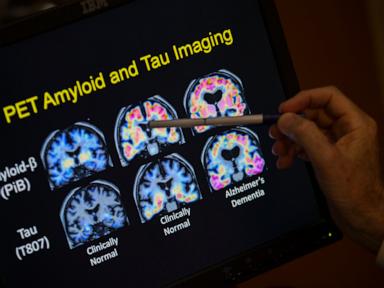
Epidemiological data backs up Arthur's clay-stained fingers with staggering clarity. Longitudinal studies tracking thousands of older adults consistently reveal that sustained mental stimulation, complex social interaction, and continuous learning lower the clinical manifestation of dementia significantly. Two people can accumulate the exact same physical pathology in their brain tissue—the same physical plaques and tangles associated with Alzheimer's disease—yet only one of them shows symptoms of cognitive decline.
The difference? The person with high cognitive reserve has built a massive, interconnected web of neural detours. When one bridge collapses, traffic simply reroutes through a dozen other paths. The destination is still reached. The self remains intact.
We have commercialized the fear of aging. Entire industries thrive on selling us bottled hope, brain-training apps with cheerful cartoon interfaces, and expensive panels that measure proteins we can do nothing about. They prey on our desire for a passive fix. We want a pill to swallow so we can absolve ourselves of the hard, daily labor of staying curious.
But biology refuses to be outsourced.
Lowering your risk of dementia is an active, ongoing rebellion against the narrowing of your world. It is the conscious decision to stop retreating into the comfort of what you already know. It is found in the awkwardness of learning how to cook a cuisine you cannot pronounce, in the heated, messy debate with a friend over a book you disagree with, in the physical navigation of a forest trail you have never walked before.
Arthur still loses his keys sometimes. We all do. But the gray fog has receded, driven back by the stubborn friction of wet clay and the demand of new blueprints.
The tools are already in your hands. You don't need a lab technician to tell you when to start using them. You just have to decide to step out of the quiet, safe room of the familiar, and dare to build something difficult again.