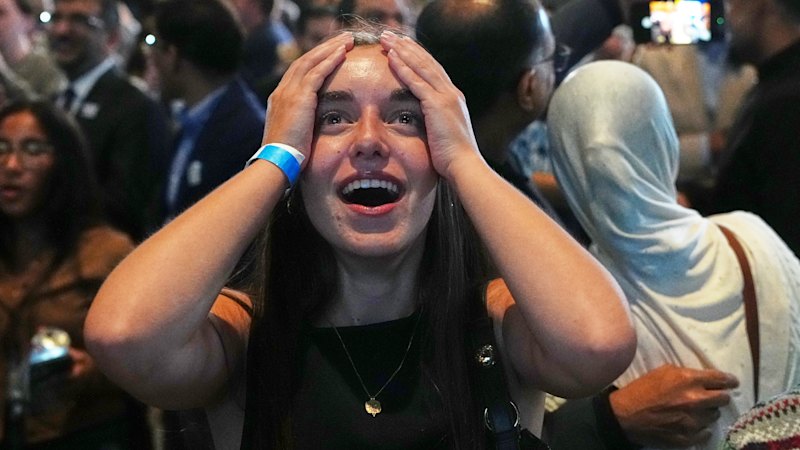
The fluorescent lights in a county election warehouse hum at a frequency that vibrates right behind your eyes. It is two in the morning. The smell of burnt coffee, damp cardboard, and static electricity hangs thick in the air. I have spent more election nights than I care to count on concrete floors like these, watching exhausted poll workers feed paper ballots through high-speed scanners while television anchors on muted monitors frantically tap touchscreens.
Usually, those nights feel predictable. The names change, the red and blue maps shift by a percentage point here or there, and by morning, the machinery of American politics settles back into its familiar grooves.
Not this time.
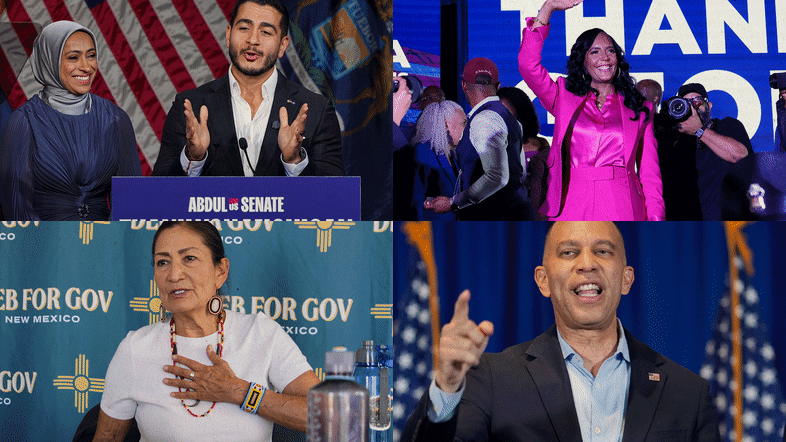
When the dust settled on the recent U.S. midterm elections, the headlines immediately reached for the standard shorthand. Pundits called it a "wave of historic firsts." They rattled off demographic milestones like baseball statistics, treating human lives as checkmarks on a diversity bingo card. The first openly LGBTQ+ governor in this state. The first Gen Z lawmaker to walk the marble floors of the Capitol. The first woman, the first immigrant, the first Indigenous representative to hold seats that had belonged to a single narrow slice of the population since the ink dried on the Constitution.
Reading those dry summaries, you might nod, feel a brief flicker of civic pride or skepticism, and scroll on. That would be a mistake. Because when you reduce a historic election to a list of "firsts," you miss the actual earthquake happening beneath the floorboards of American democracy.
To understand what really shifted, we have to leave the television studios and step into the living rooms, union halls, and suburban cul-de-sacs where these victories were actually forged.
The Architecture of an Unlikely Room
Consider a hypothetical scenario that played out in dozens of variations across the country over the last few months. Let us call her Elena. She is thirty-four, a former public school teacher in a mid-sized Rust Belt city, and someone who never once considered running for office until her local school board became a battleground over basic funding.
For two centuries, the unwritten rules of American politics dictated that someone like Elena had to wait her turn. She needed a law degree, a Rolodex of wealthy donors, and the blessing of party gatekeepers who had occupied the same leather armchairs since the Reagan administration. The system was built like an old Victorian mansion—imposing, exclusive, and designed with very narrow hallways so only one person could pass at a time.
During the midterms, people stopped waiting in the hallway. They knocked down the walls.
When voters elected the first Generation Z member of Congress, or the first Muslim woman to a state legislature in the Deep South, or the first openly transgender state senator in a rural district, they were not merely making a symbolic gesture. They were executing a hostile takeover of the political resume. They looked at the traditional qualifications—the polished stump speeches, the generational wealth, the carefully hedged answers—and decided those traits were no longer assets. They were liabilities.
Voters wanted scars. They wanted candidates who knew what it felt like to ration insulin, to navigate a broken childcare system, or to stare at a rent hike notice on a kitchen table at midnight.
Why "Firsts" Are Actually About Survival
There is a comforting myth that historic breakthroughs happen because society suddenly wakes up and decides to be noble. History tells a much grittier story.
Look back at the Reconstruction era, when Hiram Revels became the first African American to serve in the U.S. Senate in 1870, or 1916, when Jeannette Rankin was elected to the House of Representatives four years before women even had the constitutional right to vote nationwide. Neither of those moments happened because the political establishment felt generous. They happened because communities realized that if they did not claim a seat at the table, they were going to stay on the menu.
The wave of historic firsts in the midterms followed that exact behavioral pattern. It was driven by friction, not charity.
Take the surge of young candidates and working-class organizers who broke through in statehouses from Pennsylvania to Arizona. For years, conventional political wisdom insisted that young voters were apathetic and that working-class districts were permanently locked into rigid partisan identities. Yet when candidates emerged who actually mirrored the anxieties of those communities—people who carried student debt, who spoke the unvarnished language of the neighborhood rather than the sanitized dialect of Washington consultants—turnout defied the models.
I remember talking to a first-time campaign manager in Michigan during the final stretch of the race. Her headquarters was a borrowed storefront with folding chairs and a single space heater that rattled like a dying truck. When I asked how she was competing against an incumbent with a million-dollar war chest, she laughed. "He's buying television ads telling people what he thinks they want to hear," she said, pointing to a wall covered in hand-drawn precinct maps. "We're knocking on doors and asking them what hurts."
That distinction—between performing empathy and possessing lived experience—is the secret engine behind every historic milestone from this election cycle.
The Invisible Weight of Being the Only One
It is easy to celebrate a victory speech on election night. The confetti falls, the cameras flash, and the music swells. What happens the next morning is considerably harder, and honestly, a little terrifying.
Being a "first" is an intoxicating headline, but it is a grueling job description.
When the first Indigenous woman enters a state senate chamber, or the first openly queer governor takes the oath of office, they do not walk into an empty room. They walk into institutions whose rules, traditions, and social networks were engineered long before they were born. Every vote they cast is scrutinized not just as a policy choice, but as a referendum on their entire community. If a traditional politician fails, it is a personal failure. If a historic "first" stumbles, critics inevitably whisper that people like them were never ready to lead in the first place.
Let us be candid about the vulnerability built into this moment. Breaking a barrier does not automatically fix the machinery behind it. A single trailblazer in a legislature of hundreds cannot rewrite tax codes or overhaul healthcare systems by sheer force of will. There is a very real danger that voters, having achieved the emotional high of making history, will expect immediate miracles—and grow cynical when the slow, grinding reality of governance sets in.
Yet dismissing these breakthroughs as mere symbolism is equally naive.
Think of representation like a change in the acoustic properties of a room. When everyone around a policy table shares the same background, blind spots become invisible. Nobody questions the assumption that everyone owns a car, or has reliable broadband, or can afford a sudden four-hundred-dollar emergency. The conversation glides smoothly along familiar tracks.
Now put one person in that room who has lived a completely different reality. Suddenly, the unspoken assumptions have to be spoken aloud. A bill that looked harmless on paper is exposed as devastating to rural clinics or urban transit riders. The presence of that single voice alters what every other person in the room feels comfortable saying, proposing, and ignoring. You do not need a majority to change the conversation; you just need someone in the chair who refuses to let the old silences stand.
The Counter-Reaction Nobody Wants to Talk About
Every physical force produces an equal and opposite pushback, and politics is no different. If you believe this wave of historic firsts means the country has permanently turned a page, you are not paying attention to the map.
In the very same election cycle that shattered dozens of glass ceilings, other states doubled down on consolidation, tightening voting rules, redrawing district lines, and elevating candidates who explicitly campaigned on rolling back social and institutional changes. The United States did not move in one unified direction during the midterms. It stretched.
Imagine pulling a rubber band from both ends at once. On one side, a multiracial, multi-generational coalition is rapidly reshaping city councils, governorships, and congressional delegations, bringing voices into power that would have been unthinkable a generation ago. On the other side, entrenched power structures are hardening their defenses, creating a country where your basic rights and political representation depend wildly on which side of a state line you happen to call home.
This tension is precisely why the midterms felt so disorienting to watch. Both narratives are true at the same time. The doors of power are wider open than they have ever been in American history, and the fights over who gets to walk through them are fiercer than they have been in decades.
What Happens After the Confetti Is Swept Up
The true measure of a historic election is never found in the November headlines. It is found four, six, and ten years later, in the quiet normalization of what once seemed radical.
Thirty years ago, the idea of a woman running a major presidential campaign was treated as a novelty. Today, women govern states, lead congressional committees, and run national party apparatuses without anyone blinking at their gender. The "first" only matters because it breaks the spell of impossibility. Once a kid in a classroom sees someone who looks like them, prays like them, or loves like them holding a gavel, the ceiling turns into a floor.
Back in that county election warehouse at two in the morning, the last batch of provisional ballots finally cleared the scanners. The totals printed out on a thin strip of thermal paper—just rows of black ink and cold numbers. A tired clerk tore the sheet off the machine, initialed the bottom, and taped it to a metal clipboard.
On paper, it was nothing more than arithmetic. Out in the dark beyond the warehouse doors, in neighborhoods that had spent decades waiting for someone to finally learn their names, it was the sound of a lock turning.