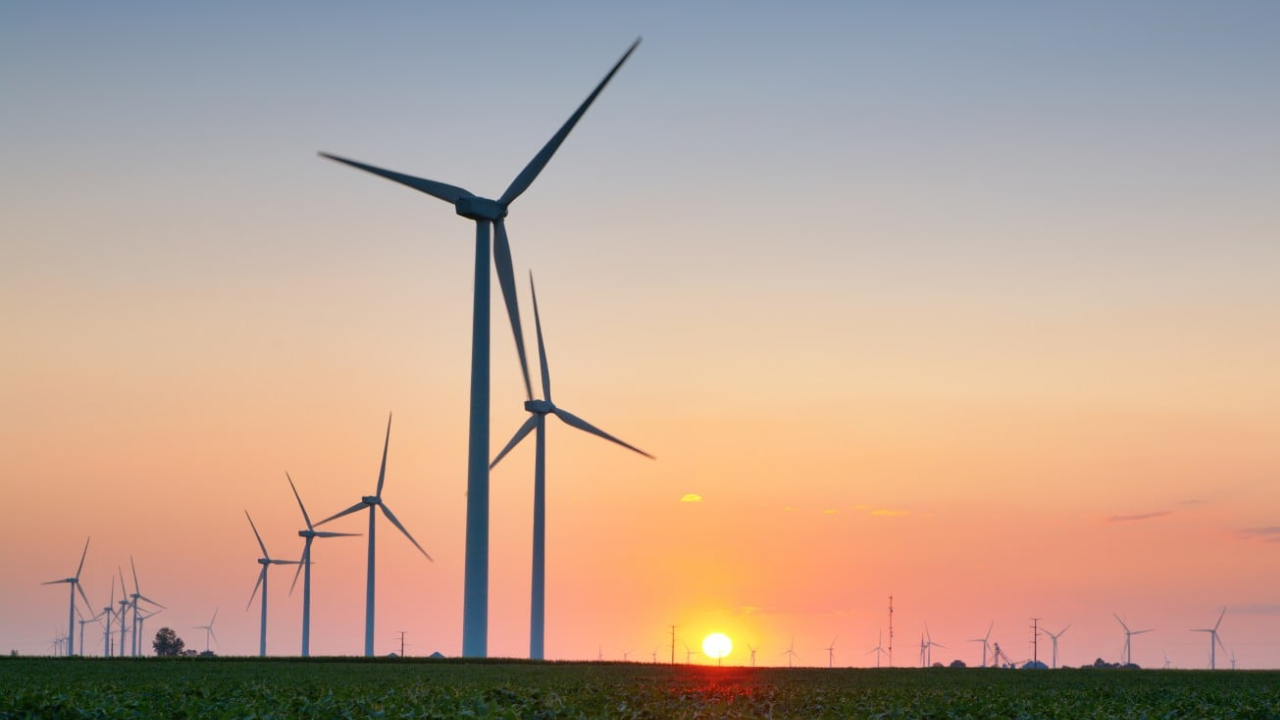
When an Iowa agricultural producer pockets a $25,000 annual lease payment for granting access to a couple of acres of gravel and dirt, the traditional narrative of the family farm undergoes a radical revision. For generations, rural survival relied entirely on the volatile whims of commodity markets, global trade tariffs, and unpredictable precipitation patterns. Today, a growing contingent of landowners across the Midwest is discovering that the most reliable crop harvested from their soil doesn't grow out of it. It blows right across it.
Wind energy leases have transitioned from a niche alternative income stream into a foundational financial pillar for hundreds of rural households. While a standard corn-and-soybean operation fights shifting margins, rising fertilizer expenses, and equipment overhead, a utility-scale wind turbine demands a footprint of roughly half an acre to an acre while generating tens of thousands of dollars in guaranteed annual royalties. This juxtaposition exposes a profound structural shift in rural economics: the monetization of geography over biology.
To understand why these lease agreements represent a lifeline, one must examine the baseline economics of contemporary agriculture. Commodity prices swing wildly based on international supply chains and geopolitical events. A farmer can experience a banner year followed by two consecutive seasons of operating in the red due to drought or a sudden spike in diesel and seed costs. Against this backdrop of financial precariousness, a twenty-to-thirty-year contract with an energy corporation provides a predictable, inflation-adjusted revenue floor. It functions as a corporate pension or a private retirement fund for individuals who spent their entire lives plowing every surplus dollar back into machinery and land rather than traditional equity markets.
Yet, this transformation is far from uniform or universally welcomed across the countryside. The spread of renewable infrastructure has sparked intense local friction, dividing rural communities into competing camps. On one side stand pragmatists who view the towers as essential economic development that keeps family land solvent. On the other side stand property owners and residents who argue that industrial components degrade rural aesthetics, complicate aerial crop-dusting, and alter the traditional horizon.
County-level politics have become the primary battleground for this conflict. Numerous rural counties throughout the Midwest have enacted stringent setback requirements, moratoriums, or outright bans on new turbine installations. These regulatory barriers often stem from aesthetic concerns or anxieties over property values, but they effectively strip neighboring landowners of their freedom to diversify their income. When a county board restricts wind development, it dictates how a private citizen can utilize their acreage, creating a tense paradox in regions historically protective of private property rights.
Beyond individual farm balance sheets, the macro-level impact on local tax bases is substantial. In parts of Iowa—a state that generates over half of its electricity from wind—utility infrastructure serves as the primary taxpayer for numerous rural school districts and county governments. These tax revenues fund local infrastructure, emergency services, and public schools without placing an additional tax burden on residential homeowners. When development stalls due to local opposition, the financial deficit falls back on the local populace or results in deferred maintenance for public services.
The mechanics of these agreements also merit close inspection, as they are rarely simple handouts. Landowners enter into complex, multi-decade legal contracts that dictate liability, decommissioning responsibilities, access road maintenance, and interference clauses. Navigating these documents requires specialized legal counsel to ensure that provisions for inflation adjustments and eventual site restoration are strictly enforced. A poorly negotiated contract can leave a landowner tied to unfavorable terms while energy conglomerates consolidate profits across regional grids.
As federal policy debates regarding energy subsidies and tax credits continue to evolve, the long-term trajectory of rural energy leasing remains tethered to legislative winds in Washington. Economists point out that any major contraction in federal backing could slow the pace of new installations, forcing developers to reevaluate marginal projects. Nevertheless, the underlying economic pressure driving farmers toward these agreements is unlikely to vanish. As long as operating costs outpace commodity price growth, the impulse to secure guaranteed auxiliary revenue will override traditional agricultural romanticism.
The wind turbine standing sentinel over a soybean field symbolizes more than just an energy transition. It marks the pragmatic adaptation of a rural economy forced to find new ways to stay afloat in a changing world, proving that survival often depends on looking past the horizon.



