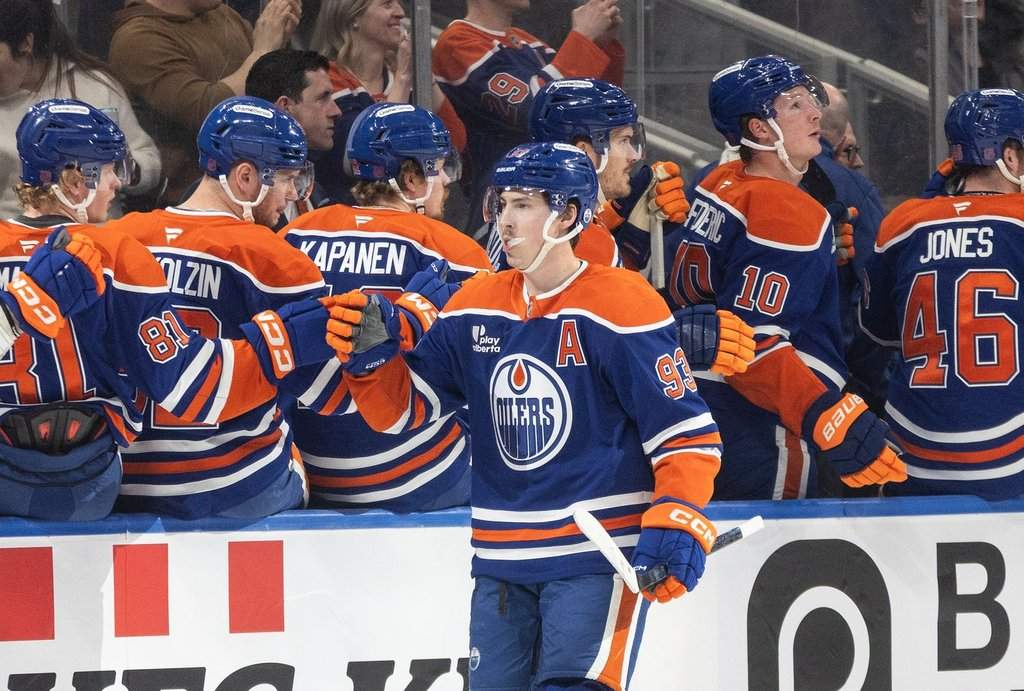
Long before the endless waves of media hype surrounded generational talents in Western Canada, an 18-year-old center from Burnaby stepped onto the ice in Edmonton bearing the crushing weight of a first-overall draft selection.
Ryan Nugent-Hopkins entered the National Hockey League in 2011 into an organization trapped in a generational loop of organizational dysfunction. While casual observers remember his arrival as the dawn of a hopeful rebuild, veterans of the beat recall a locker room stripped of foundational stability. He did not step into a polished contender. He stepped into a franchise that would miss the postseason in his first five campaigns and seven of his first eight.
Surviving the Decade of Darkness
The modern perception of the Edmonton Oilers is defined by explosive rushes, high-end scoring titles, and deep spring runs. Yet that success obscures the grueling physical and psychological toll paid by the few who survived the transition eras.
Nugent-Hopkins absorbed the brunt of that storm. While high-profile roster pieces rotated through town like turnstiles, he quietly adapted his game. He transitioned from a pure offensive pivot into a defensively reliable utility forward capable of playing heavy minutes against opposing top lines.
He absorbed the heavy hits in the corners, killed penalties, and served as the primary administrative shock absorber for a roster undergoing constant management overhauls. Longevity in professional hockey is rarely a reward for raw talent alone. It requires an acute tactical awareness and an ability to reinvent one's athletic identity as physical recovery times slow down.
Breaking the Franchise Record
Quiet milestones rarely capture mainstream sports headlines. However, when Nugent-Hopkins skated into his record-breaking appearance against the New Jersey Devils, eclipsing Kevin Lowe's long-standing franchise mark for games played in an Oilers sweater, it marked a rare instance where organizational loyalty intersected with actual on-ice utility.
Most players drafted first overall are expected to carry a franchise as the singular offensive engine. When Connor McDavid and Leon Draisaitl arrived to anchor the scoring load, the narrative around Nugent-Hopkins shifted. Mediocre analysts labeled him an expensive complementary piece. Sharp observers recognized him as the structural glue holding the forward core together.
His 2022-23 campaign—where he quietly posted a 104-point season—was not an offensive fluke. It was the natural byproduct of a high-hockey-IQ veteran operating in the prime of his spatial awareness alongside elite offensive producers. He reads passing lanes before they develop, a skill acquired through thousands of hard-fought professional minutes against the best defensive systems in the world.
The Reality of Wear and Tear
Entering his fifteenth season, the physical ledger comes due for every professional athlete. A lower-body injury delayed the start of his campaign, followed immediately by the unpredictable hazards of the game, such as absorbing an accidental deflection to the head.
These moments test the fragility of a veteran's body. Teams often panic when a foundational leader misses stretches of games, yet the modern Oilers roster is uniquely built to absorb temporary absences precisely because Nugent-Hopkins spent years establishing a defensive culture that outlives individual health status.
His current contract—signed at a hometown discount that prioritizes team flexibility over maximum personal compensation—remains one of the most team-friendly assets in the league. While market rates for veteran leadership often cripple salary cap structures, his $5.125 million cap hit allows the front office to patch defensive depth elsewhere.
Beyond the Scoresheet
True hockey value cannot be isolated on a standard scoring sheet. It lives in the defensive zone faceoffs won with the game on the line. It manifests on the bench during chaotic timeouts where a calm veteran voice settles a panicked young defensive pairing.
The modern sports landscape worships immediate output and explosive offensive highlights. It discards players the moment their production dips by a fraction. Yet the history of championship rosters is written by organizations that retain players who understand how to win ugly when the skill game breaks down.
Edmonton is no longer the rebuilding wasteland of the early 2010s. The expectations have shifted from lottery odds to June hockey. Through every front-office mistake, coaching change, and missed playoff spring, Nugent-Hopkins remained the constant baseline of the franchise.
The skates eventually lose their edge, and the heavy minutes leave permanent reminders in the joints. For now, the longest-serving Oiler continues to log his shifts, anchoring the identity of a franchise that finally learned how to win.