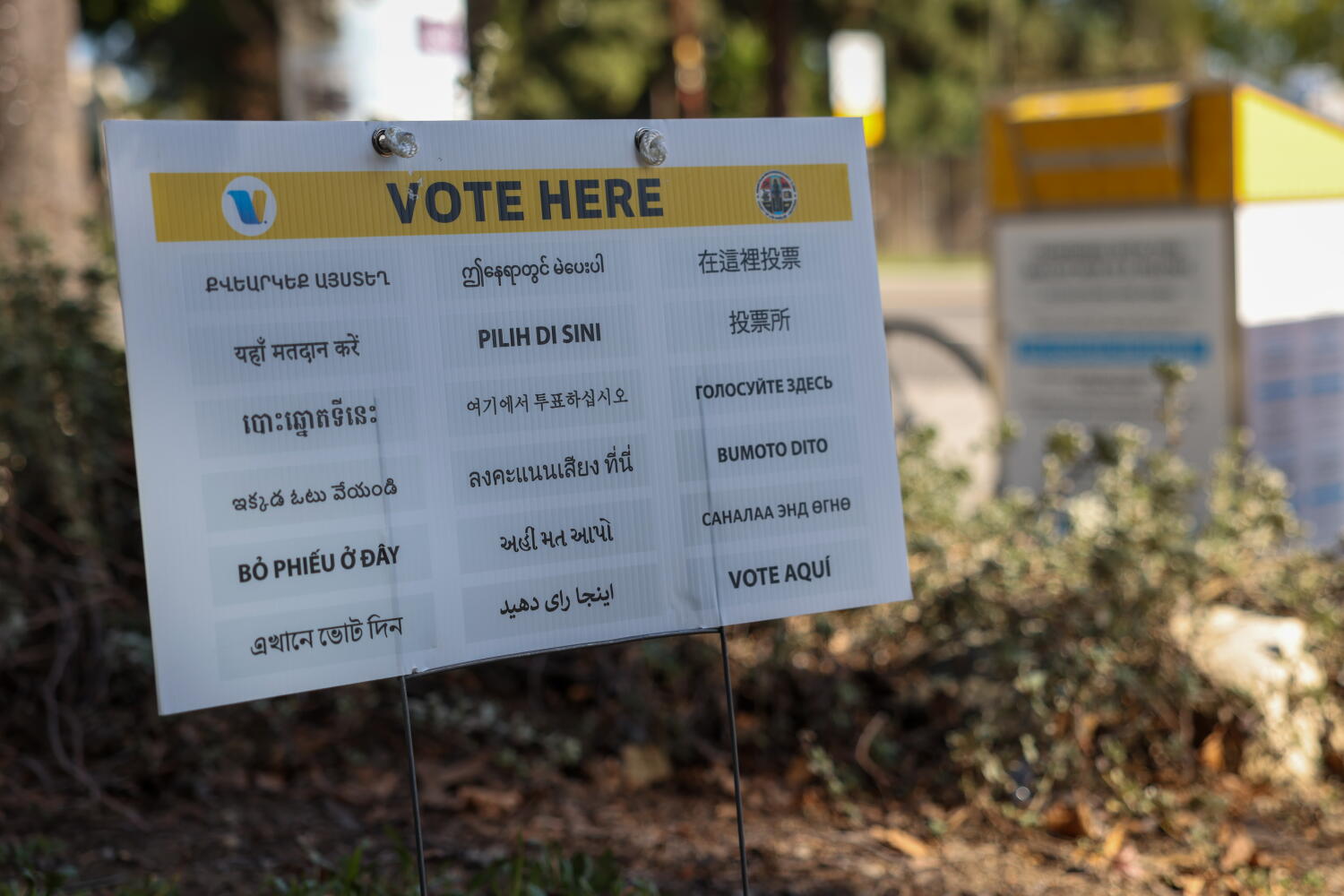
The fluorescent lights in a community gymnasium hum at a frequency just low enough to get under your skin.
You smell floor wax, damp wool coats, and the sharp, metallic tang of stale coffee from a breakroom down the hall. A folding table sits ten feet from the entrance, draped in a creased vinyl flag, manned by two retirees in orthopedic sneakers who have been awake since four in the morning. Everything looks ordinary. Everything looks safe. Yet right here, three steps away from a privacy booth, a citizen’s constitutional right can quietly evaporate without a single raised voice.
Friction.
It rarely looks like a locked door or a barricade across a precinct entrance; instead, it arrives as a blinking cursor on a county tablet, a mismatched middle initial on an expired utility bill, or a poll worker squinting at a laminated binder with the exhausted confusion of someone trying to read fine print in a moving car. According to election administration data compiled by the U.S. Election Assistance Commission and nonpartisan legal groups like the Election Protection coalition, millions of Americans encounter administrative hurdles every federal cycle—not because they lack the right to vote, but because the machinery standing between a citizen and a ballot box is built out of human error, shifting state statutes, and aging hardware.
When you stand in that line at 7:15 AM on a Tuesday in November, with a toddler tugging at your sleeve or a shift supervisor texting you about an eight o'clock clock-in, a bureaucratic hiccup does not feel like a minor procedural delay. It feels like a wall.
The Anatomy of a Stalled Line
Consider a hypothetical voter—let us call her Elena—walking into her neighborhood elementary school before work during the 2026 midterm elections. She has lived in the same brick duplex for six years. She voted there in 2022 and again in 2024. She hands over her driver’s license, expects the familiar tear of a paper ballot stub, and instead watches the poll worker’s eyebrows draw together.
"You're not showing up on the active roll," the clerk says, tapping the screen twice with a manicured nail.
At that exact second, the invisible stakes of election day drop onto Elena’s shoulders. Behind her, seven people shift their weight, checking their watches. The air in the gymnasium suddenly feels three degrees warmer. Most voters, confronted with an official-looking screen that says No Record Found, experience an immediate surge of self-doubt. Did I forget to update my address? Did my registration expire? Should I just leave before I hold up the line?
Stop. Never walk away from a polling place without casting a ballot.
What Elena is experiencing is one of the most common failure points in modern American elections: list maintenance discrepancies and electronic poll book sync delays. Under the National Voter Registration Act, states are required to keep voter rolls accurate, which regularly involves sending confirmation postcards to residents who have not voted in recent cycles or who appear in postal change-of-address databases. If a postcard goes unanswered—buried under grocery flyers and credit card offers—a voter can be shifted to "inactive" status. Inactive does not mean ineligible. According to guidance from the U.S. Department of Justice and state election boards nationwide, an inactive voter still has the legal right to cast a regular ballot upon confirming their current address at the polls, yet poorly trained temporary staff frequently mistake that status for a purged registration.
I have watched this exact misunderstanding play out across three different precincts over the last decade, and the emotional pattern never changes. The voter apologizes for causing trouble. The poll worker apologizes for the computer. Both people are trying to be polite, and politeness becomes the mechanism that disenfranchises a citizen.
Why Machines Break and Lines Freeze
Think of an election precinct not as a permanent government office, but as a pop-up logistics operation assembled overnight by volunteers. Imagine setting up a brand-new pop-up retail store in four thousand church basements and high school cafeterias simultaneously at five in the morning, staffed by people who received three hours of training two weeks ago, using printers and barcode scanners that have sat in a county warehouse since the last autumn.
Something will jam.
When optical scanners refuse to read a damp paper ballot, or when a thermal printer runs out of tape, the line outside stretches down the sidewalk into the November wind. Research from the MIT Election Data and Science Lab has consistently documented how wait times spike sharply when precincts experience equipment malfunctions or insufficient check-in stations, disproportionately affecting urban precincts and working-class neighborhoods where voters have the least flexibility in their work schedules.
Suppose you are standing in that stalled line at 6:45 PM, fifteen minutes before the polls are scheduled to close, and the scanner at the front of the room flashes a red error code. Panic ripples backward through the crowd. Someone near the back mutters that they are going to shut the doors at seven sharp regardless of who is still waiting.
That rumor is false, and knowing the law here is the difference between being heard and being locked out. Across all fifty states and the District of Columbia, federal and state election rules establish a bright-line protection: if you are physically standing in line when the polls officially close, you have the legal right to stay and vote. Poll workers are instructed to send a staff member to the end of the line at closing time to mark the final eligible person. Even if the scanner is broken, election officials are required to provide emergency paper ballots or place completed ballots into a secure auxiliary slot on the ballot box to be tabulated once technicians repair or replace the unit.
The Paper Shield of Provisional Voting
Now return to our hypothetical voter, Elena, still standing at the check-in table while the clerk fails to locate her name on the digital tablet. Perhaps her street name was misspelled during a DMV data transfer—"Main St." entered as "Maine Street"—or perhaps redistricting moved her precinct boundary two blocks north without her realizing it.
When standard verification fails, federal law provides an emergency safety valve created by the Help America Vote Act of 2002: the provisional ballot.
Think of a provisional ballot as an escrow account for your vote. Instead of feeding your paper sheet directly into the precinct scanner, you seal it inside a special envelope bearing your sworn affidavit of eligibility. Election officials set that envelope aside until the days immediately following election night, when county canvassers cross-check your signature, address, and registration records against master state databases. If your eligibility checks out, the envelope is opened and your vote is added to the official tally.
Yet provisional ballots carry their own hidden traps, and treating them casually is a mistake.
First, ask the poll worker why you are being offered a provisional ballot before you accept one. If the issue is simply that you are in the wrong precinct within the same county, check whether your state counts "out-of-precinct" provisional ballots. According to the National Conference of State Legislatures, roughly half of U.S. states discard provisional ballots cast in the wrong precinct entirely, even for statewide races like U.S. Senate or Governor, while other states count only the races common to both precincts. If you have twenty minutes to drive two miles to your assigned polling location, casting a regular ballot there guarantees every single race on your sheet counts.
Second, ask whether your state permits same-day voter registration. Over twenty states and Washington, D.C. now allow eligible residents to register or update an outdated address right at the polling site on election day by showing proof of residence—such as a current lease, bank statement, or government paycheck alongside a photo ID. Using same-day registration converts an uncertain provisional situation into an immediate, regular ballot.
Third, if a provisional ballot truly is your only path forward, insist on receiving your written tracking receipt before leaving the table. Federal law requires election authorities to provide a free access system—usually a toll-free phone line or county website—where you can verify whether your provisional ballot was counted and, if it was rejected, the exact reason why.
The Mail-In Bottleneck at the Finish Line
Not every election day crisis happens inside a gymnasium. Millions of voters now receive ballots by mail weeks before November, planning to drop them off at the last minute when life gets busy.
Consider another hypothetical scenario: Marcus, a night-shift nurse who finds his mail-in ballot sitting unopened on his kitchen counter at noon on election day. He fills it out carefully over black coffee, seals the envelope, and drives toward the nearest post office—only to realize a postmark on Tuesday evening might arrive at the county clerk’s office days too late.
State deadlines for mail-in ballots vary wildly across the country, and assuming your state follows the rules of a neighboring state is one of the fastest ways to invalidate a vote. According to tracking by the National Conference of State Legislatures, a majority of states require mail-in ballots to physically arrive at the election office by the time polls close on election night, regardless of when the postal service stamped them. Other states accept ballots postmarked on or before election day if they arrive within a specific grace window.
If you are holding an unmailed absentee ballot on election day, skip the blue mailbox entirely. Deliver it in person to an official county drop box or your local election office before closing time. And what if you requested a mail ballot, never received it, or accidentally spilled coffee across the paper before signing the outer envelope? Walk into your assigned polling place anyway. In most jurisdictions, you can surrender your spoiled mail ballot to the poll judge and receive a fresh in-person ballot, or sign an affidavit confirming you never cast the absentee ballot so you can vote a provisional or regular ballot on-site.
Intimidation, Observation, and the Space Around the Door
Sometimes the obstacle standing outside a precinct is not a broken scanner or a missing middle initial, but human pressure.
In recent election cycles, heightened political tension has brought larger numbers of partisan poll watchers and unaffiliated crowds near voting locations. There is a clear legal boundary separating lawful observation from illegal interference, and every voter deserves to know where that line sits.
Credentialed poll watchers are permitted in many states to observe check-in procedures quietly from designated areas, take notes, and raise formal procedural questions with the presiding election judge. They are not permitted to hover over your shoulder while you mark your choices, demand to inspect your identification personally, photograph you at the check-in desk, block the entrance to the building, or interrogate you in the parking lot about where you live or how you plan to vote. Under federal statutes including the Voting Rights Act and the Ku Klux Klan Act, intimidating, threatening, or coercing any person for voting or attempting to vote is a federal crime.
Furthermore, every state enforces a buffer zone—typically extending fifty to one hundred feet from the entrance of a polling place—where campaigning, wearing candidate gear, distributing flyers, or shouting slogans is strictly prohibited. If anyone inside or outside that perimeter makes you feel unsafe or tries to block your path, do not engage in an argument on the sidewalk. Step directly inside, report the behavior to the chief precinct judge, and call the nonpartisan Election Protection hotline at 866-OUR-VOTE (866-687-8683), where volunteer attorneys track precinct incidents in real time and contact county election directors directly to resolve disruptions.
What Stays in the Box
Picture Elena again, ten minutes after that anxious pause at the folding table.
Instead of turning around and walking back to her car in defeat, she takes a slow breath. She asks the clerk to check her name under both her maiden name and her street address alone. When the search still comes up empty, she asks clearly whether her state offers same-day address updates. It does. She pulls up her current utility bill on her phone screen, completes a one-page registration update form on a clipboard, and watches the clerk hand her a crisp paper ballot.
The privacy booth is small, lit by a single overhead bulb that casts a warm yellow circle onto the plastic shelf. She picks up the black felt-tip pen, fills in the ovals with steady strokes, and walks over to the optical scanner.
The paper slides smoothly into the rollers. A tiny green counter on the digital display ticks upward by one.
Outside, the November wind rattles the metal flagpole against its rope, and the line behind her stretches past the trophy case into the corridor—dozens of neighbors holding driver's licenses, utility bills, and folded sample ballots, waiting their turn to make the machine click one more time.