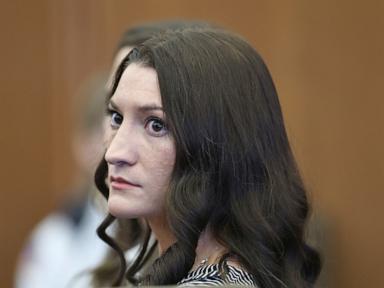
The fluorescent lights in a Massachusetts courtroom hum at a frequency designed to keep people awake, though they rarely keep anyone warm.
If you have ever sat on those hard wooden benches during a pre-trial motion, you know the specific, suffocating silence that precedes a clerk calling a docket number. Papers rustle. A radiator clanks against a drafty window. Outside, traffic moves along at forty miles an hour, completely indifferent to the fact that inside, twelve strangers will soon be asked to measure the exact weight of a shattered mind.
When news broke that Lindsay Clancy had filed an appeal ahead of her scheduled March 2027 retrial, the headlines arrived with the cold, mechanical precision of a police blotter. Appeal filed. Retrial scheduled. Defense challenges prior rulings.
Read those dry summaries and you might think this is simply another procedural chess match between defense attorneys and prosecutors in Plymouth County. You would be wrong.
Behind those legal filings lies a fault line running straight through modern medicine, criminal law, and the unspoken terror that haunts thousands of new mothers in the quiet hours before dawn.
A House in Duxbury and a Question Without Easy Answers
To understand why an appellate brief filed before a March 2027 retrial carries such staggering weight, you have to strip away the legal jargon and return to the foundational facts of January 2023.
Duxbury, Massachusetts is the kind of coastal town where cedar-shingled houses sit neatly behind stone walls and salt air drifts inland from the bay. Lindsay Clancy was a labor and delivery nurse at Massachusetts General Hospital—a woman whose entire professional life revolved around ushering new life safely into the world. She had three young children: Cora, Dawson, and baby Callan.
Then came the evening of January 24, 2023.
First responders arrived at the Clancy home to find a scene that defied comprehension. The three children were fatally strangled; Lindsay Clancy had jumped from a second-story window, sustaining severe spinal injuries that left her paralyzed from the waist down.
Prosecutors charged her with murder, arguing that her actions were deliberate, planned, and calculated—pointing to notes, internet searches, and the timeline of events that evening while her husband, Patrick, stepped out to pick up takeout food and medication.
Her defense team countered with a reality far harder for a jury to hold in their hands: severe postpartum psychosis, compounded by an aggressive regimen of over a dozen psychiatric medications prescribed in the months leading up to the tragedy.
Stop here for a second. Breathe.
Because right at this intersection—between cold premeditation and acute psychiatric collapse—is where the American legal system routinely fractures.
What the Legal Filings Are Really Fighting Over
People often ask a deceptively simple question when a high-profile case heads toward a retrial: Why file an appeal before the trial even happens?
In criminal law, pre-trial appeals—often referred to as interlocutory appeals or challenges to evidentiary and constitutional rulings—are not mere stalling tactics. They are battles over what a jury is actually allowed to see, hear, and consider.
Think of a criminal trial like building a house out of glass. Every piece of evidence is a pane. If a judge rules before trial that certain medical records are inadmissible, or that specific statements taken while a defendant was sedated in a hospital bed can be presented to jurors, the shape of that house changes entirely before the first witness ever takes the stand.
Consider a hypothetical scenario to see how this works in practice. Imagine a patient waking up in an intensive care unit after major trauma, tethered to IV drips, heavily medicated, and unable to move their legs. If investigators question that patient at the bedside before an attorney is present, should those words carry the same legal weight as a statement given calmly in a conference room three weeks later?
Prosecutors will argue that voluntary statements made before formal custody are fair game—vital windows into a person's state of mind at the exact moment truth is unfiltered. Defense attorneys will argue that a mind suspended between psychosis, surgical anesthesia, and shock cannot knowingly waive constitutional protections.
When Lindsay Clancy’s legal team files an appeal ahead of the March 2027 retrial, they are fighting over the architecture of that glass house. They are asking higher courts to examine whether lower-court rulings unfairly tilted the evidentiary floor before twelve citizens ever enter the deliberation room.
And they are doing it under the glare of a public that has already split into two rigid, unforgiving camps.
The Invisible Fog of Postpartum Psychosis
I remember sitting across from a friend three years ago—let’s call her Elena, though her name doesn't matter as much as the hollow look behind her eyes—six weeks after she gave birth to her second child. On paper, Elena had everything. A supportive partner, a steady career, a sunlit nursery painted pale sage.
Yet when she handed me her coffee mug, her hands trembled so violently the liquid spilled across the table. She leaned in and whispered something she was too ashamed to tell her obstetrician: "I keep seeing shadows moving in the hallway, and a voice in my head keeps telling me my baby isn't safe with me."
She wasn't angry. She wasn't neglectful. Her brain chemistry had simply misfired into an emergency she didn't have the vocabulary to describe.
To understand the medical core of the Clancy defense, you have to understand the chasm separating postpartum depression from postpartum psychosis.
Most people recognize postpartum depression. It affects roughly one in seven new mothers, bringing waves of exhaustion, sadness, anxiety, and emotional detachment. It is heavy, painful, and deeply treatable.
Postpartum psychosis is an entirely different animal.
Occurring in roughly one to two out of every thousand births, it is a rare, acute psychiatric emergency. It does not creep in slowly like autumn fog; it strikes like sudden lightning. Within days or weeks of delivery, a mother can experience hallucinations, fixed delusions, rapid mood swings, severe insomnia, and a complete break from shared reality.
Here is the cruelty of the condition: the delusions are often rooted in distorted love rather than malice. A mother experiencing acute psychosis may genuinely believe—with the unshakable certainty that you believe gravity pulls downward—that she is saving her children from an imminent, catastrophic fate.
Try explaining that to twelve jurors who have never experienced a hallucination in their lives.
In a courtroom, sanity is usually measured by outward signs of organization. Did the defendant check a map? Did they send a text message? Did they wait until their spouse left the house? To a prosecutor, those actions look like cold, rational planning—proof of criminal intent. To a forensic psychiatrist, a person in the grip of severe psychosis can still execute mechanical tasks while their underlying perception of reality is completely broken.
You can know how to unlock a door and still believe the house is on fire.
The Medication Maze Nobody Wants to Examine
There is another layer to this story that rarely fits neatly into a thirty-second evening news broadcast, yet it sits squarely at the center of the medical debate surrounding the upcoming retrial.
In the months before January 2023, Lindsay Clancy sought help. Repeatedly. She checked into treatment facilities. She attended appointments. She did every single thing public health campaigns beg struggling mothers to do.
During that span, according to court records and defense filings, she was prescribed at least thirteen different psychiatric medications—antidepressants, mood stabilizers, benzodiazepines, antipsychotics—often cycled, layered, or adjusted over short periods.
Anyone who has ever navigated psychiatric pharmacology knows that brain chemistry is not a light switch; it is an intricate ecosystem. Adjusting one neurotransmitter pathway takes weeks to stabilize. Layering multiple powerful medications while tapering others can trigger side effects that mimic or intensify the very crisis they are meant to extinguish—severe agitation, akathisia, emotional blunting, and paradoxical behavioral shifts.
Does that erase personal responsibility?
No. And that is precisely why this case refuses to sit comfortably in anyone's moral framework.
If the law declares that any severe psychiatric struggle automatically absolves someone of taking human lives, accountability dissolves. Yet if the law pretends that a severely medicated, hallucinating brain operates with the exact same free will as a healthy one, justice becomes an exercise in selective blindness.
Massachusetts law sets an extraordinarily high bar for an insanity defense. Under the Commonwealth’s standard, it is not enough to prove that a defendant suffered from a severe mental illness. The defense must prove that, because of that mental disease or defect, the person lacked the substantial capacity either to appreciate the criminality of their conduct or to conform their conduct to the requirements of the law.
Look closely at those two prongs.
Appreciate the criminality.
Conform their conduct.
Every pre-trial motion, every evidentiary challenge, and every appellate brief filed between now and March 2027 exists to define the boundaries of those two phrases.
Why March 2027 Feels Both Distant and Urgent
A retrial date set for March 2027 sounds like an eternity away when you read it on a calendar. In the rhythms of the appellate courts, however, sixteen months passes in the blink of an eye.
Briefs must be drafted, served, and answered. Oral arguments must be scheduled before appellate panels whose dockets are already overflowing. Judges must issue written opinions that will withstand scrutiny not only during the retrial itself, but in any post-conviction appeals that might follow years down the road.
Meanwhile, the human reality sits frozen in time.
Patrick Clancy, who lost his three children in a single night and subsequently asked the public to forgive his wife, carries a grief that defies language. Emergency responders in Duxbury still carry the images from that evening into their own homes. Nurses across New England look at their hospital badges differently, acutely aware that medical training offers zero immunity against a biochemical storm.
And thousands of mothers scrolling on their phones at three in the morning—rocking a colicky infant in a dark bedroom, wondering why their thoughts feel strange and jagged—watch how society treats a woman who asked for help before everything collapsed.
Will this appeal change what happened on January 24, 2023? Nothing in any courthouse on earth can do that. Three children are gone, and that absence is permanent.
What the appeal can decide is whether the March 2027 retrial becomes a genuine reckoning with the darkest corners of human biology and criminal intent, or a simplified morality play that leaves out the hardest truths.
Down in Plymouth County, the court clerks will keep stamping dates onto heavy manila folders, filing away motions page by numbered page, while outside the tall courthouse windows, the tide continues its slow, indifferent pull against the Massachusetts coast.