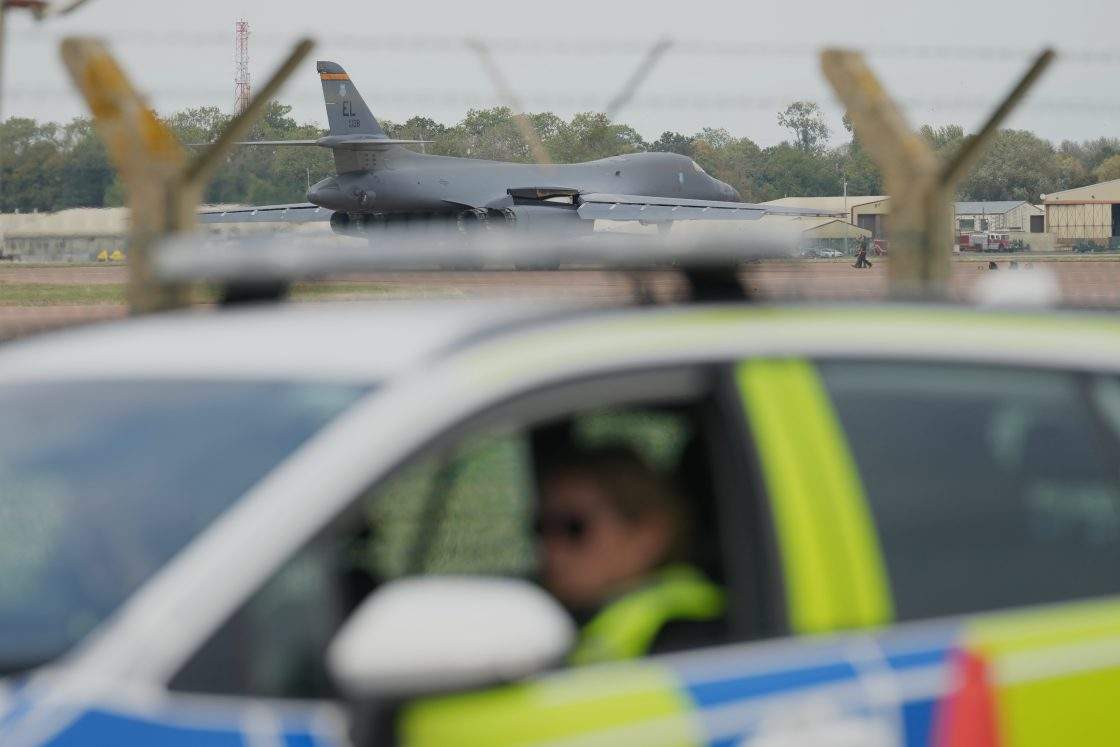
Foreign intelligence operations don't always look like cinematic spy thrillers. Sometimes they look like coded phone calls routed from a jail cell in New York, directing local operatives to surveil a British runway. When UK officials confirmed that Tehran stood "almost certainly" behind an attempted attack on RAF Fairford, it shattered any lingering illusion that domestic soil remains insulated from foreign kinetic operations.
The plot targeted a critical Royal Air Force station in Gloucestershire that regularly hosts United States Air Force heavy bombers. For years, defense analysts warned that these installations were vulnerable not just to cyber warfare, but to proxy-driven, localized sabotage. Recent indictments from the U.S. Department of Justice laid bare how the Islamic Revolutionary Guard Corps orchestrated the operation, utilizing a network of domestic contacts to plan an assault on British ground.
Why UK Airbases Became Prime Targets
Military installations housing foreign allied assets are natural flashpoints during geopolitical friction. When tensions escalate across the Middle East, host nations like the United Kingdom find themselves caught directly in the crosshairs of retaliatory state-sponsored aggression. Tehran made it clear that any infrastructure utilized to launch military operations against its regime would be treated as a legitimate target.
Yet, transitioning that rhetoric into physical reconnaissance on British ground marks a sharp tactical escalation. The suspects involved didn't possess advanced military hardware; instead, they relied on domestic cells, encrypted communication channels, and low-profile surveillance. This hybrid warfare model allows state actors to maintain plausible deniability while outsourcing high-risk sabotage to localized operatives.
The Breakdown of Traditional Border Security
National security architectures built for the twentieth century struggle against modern decentralized networks. When an operative can coordinate a terror plot targeting a western military base while locked inside a correctional facility thousands of miles away, standard counter-terrorism protocols face severe stress tests.
Intelligence agencies had to move quickly, resulting in multiple arrests across London and subsequent diplomatic fallout. The fallout wasn't just legal; it was operational. Following the security breach and subsequent threat assessments, the Pentagon quietly adjusted its footprint, relocating high-value assets and aircraft from exposed bases like Fairford and Mildenhall to more secure continental locations.
What Comes Next for Domestic Defense
The reality of modern geopolitics is that foreign conflicts rarely stay contained within regional borders. Intelligence services across Europe are actively auditing security perimeters around joint-use military installations, knowing that proxy networks are actively testing response times and vulnerabilities.
Protecting critical defense infrastructure now requires tracking financial flows through underground networks, monitoring radicalized domestic cells, and decoding covert instructions passed through ordinary communication channels. If the Fairford plot proved anything, it's that the front lines of international conflict are no longer thousands of miles away. They run right through local neighborhoods, suburban safehouses, and digital communication streams.