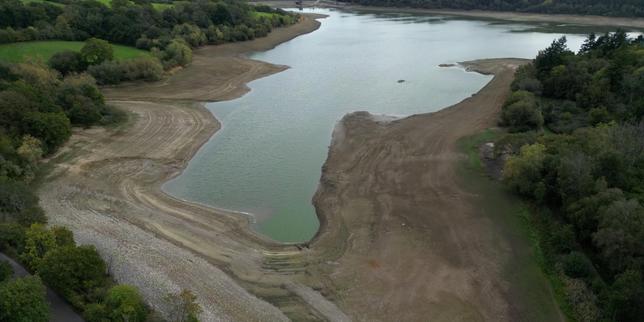
Silence.
That is the first thing you notice when a chalk stream in Hampshire stops running, not with a dramatic roar or a sudden collapse, but with a slow, almost polite thinning of sound until the gravel that once sang beneath clear water lies bare and chalk-white under a pale sky. I have stood along dry riverbeds in late summer when the air smelled of crushed mint, warm dust, and sun-baked clay, watching dragonflies hover over cracked mud where silver minnows used to dart. You expect that in a Mediterranean gorge. You do not expect it in southern England, where the entire cultural memory of weather is built on drizzle, mackintoshes, tea by a fogged window, and grass that stays green without asking permission.
When headlines announce that southern England is confronting the first severe drought in its recorded history, most people read the phrase like a meteorological trivia note. Another record. Another warm spell. Another hosepipe ban that might ruin a Sunday car wash or turn a lawn the color of straw until October.
They are looking at the wrong end of the story.
A severe drought in southern England is not merely a shortage of rain falling from gray clouds. It is a reckoning with geography, aging infrastructure, a rapidly growing population squeezed into a relatively dry corner of an island, and a quiet underground battery—the chalk aquifer—that takes months of steady winter rain to charge and can be drained faster than polite public notices admit.
To see why this moment feels so unsettling, it helps to step away from press releases and walk through the lives it touches. The characters below are hypothetical composites built to ground real hydrological and social pressures in human experience; I will call them out clearly as we go so you know where lived reporting logic meets composite storytelling.
The Myth of Endless Green
For generations, Englishness carried a silent assumption: water was abundant because the sky was moody. Even when summers turned dry—as they memorably did in 1976, 1995, 2003, or 2022—people treated dry spells as interruptions to normal weather rather than a shift in baseline conditions.
Yet hydrologists have pointed out for years that southern and southeastern England actually receives less annual rainfall than many cities people associate with sunnier climates, while carrying some of the highest water demand per person in the country. Combine porous chalk geology, dense population centers around London and the South Coast, millions of daily commuters and households, and increasingly erratic rainfall patterns—long dry stretches punctuated by sharp downpours that run off hardened soil rather than soaking deep underground—and the margin for error shrinks to almost nothing.
Think of the chalk aquifer beneath the South Downs or the Chilterns as a giant sponge made of ancient marine skeletons. (This is a metaphor, not a literal sponge—chalk is porous rock that stores water in tiny fractures and pores.) When gentle rain falls steadily through autumn and winter, water seeps downward over weeks and months, filling the rock and feeding the springs that supply chalk streams and groundwater sources. When winter rains fail or arrive in violent bursts over parched ground, the underground reservoir stays half-empty going into spring. By the time summer arrives and demand spikes, the system is already running on borrowed time.
A Morning on the Chalk Stream
(Hypothetical character: Arthur Pendelton, 68, a retired schoolteacher and volunteer river keeper in a Hampshire village.)
Arthur walks the same two-mile stretch of path along the river every morning at seven, regardless of whether his knees ache from dampness or his cap feels too light for the sun. For forty years, that walk had a rhythm he could set a watch by: watercress trailing in the current, brown trout holding steady against the flow, kingfishers flashing blue past alder roots.
This season, Arthur carries a plastic notebook instead of a landing net. At mile one, the water is barely ankle-deep over a riffle that used to lap against his wellingtons. By mile two, the channel narrows into disconnected pools linked by damp pebbles.
"People think a river is just water moving downhill," Arthur says in our imagined conversation, leaning against a wooden stile while heat shimmers off a meadow already turning ochre. "They don't see the whole plumbing system underneath it. When the water table drops below the riverbed, the river doesn't just shrink. It loses its breath."
What happens next is a chain reaction that feels small on day one and unmistakable by week six. Shallow water warms faster in direct sun. Warmer water holds less dissolved oxygen. Aquatic insects struggle, fish crowd into shrinking pockets where herons and predators find them easily, and stretches of streambed become vulnerable to pollution because there is no strong flow left to dilute runoff.
When a region faces its first severe drought on record, the ecological shock arrives quietly. There is no siren. Just a river losing its voice while a kestrel hangs motionless above dry grass.
Where Every Drop Goes Before It Reaches Your Tap
If the story stopped at weather and chalk rocks, it would be tragic enough. It gets sharper when you follow the water through pipes.
Most of us turn a tap expecting clear water on demand without thinking about the thousands of miles of buried iron and plastic beneath our streets. Yet in England, aging water mains lose billions of liters every single day through leaks—some pipes dating back to the Victorian era, patched over decades while population and housing targets climbed.
(Hypothetical character: Nadia Patel, 34, a civil engineer working on municipal water networks near Brighton.)
Nadia spends her days looking at pressure sensors, flow meters, and maps riddled with red warning pins. When drought hits, engineers face an agonizing balancing act. Crank up pressure to keep upper floors and outer suburbs supplied, and brittle old joints give way, spewing treated drinking water into the soil beneath the tarmac. Drop pressure too far, and households on hills or at the ends of lines see a trickle—or lose supply altogether during peak evening hours.
"The hardest part isn't even the math," Nadia explains. "It's explaining to someone whose garden is brown why we're asking them to save every bucket while a pipe bursts two streets over and takes three days to excavate."
That tension is real across southern England whenever restrictions tighten. Public frustration flares easily when citizens are asked to ration showers and skip watering flowerbeds while visible leaks linger or reservoir storage drops to alarming lows. At the same time, water companies argue that severe multi-season deficits outstrip what short-term leak repairs alone can offset in a single summer. Both sides of that frustration point to the same underlying truth: infrastructure built for a different climate and a smaller footprint is being tested all at once.
The Quiet Cost on Farms and Small Businesses
Drought rarely announces itself only in household bills. It shows up in the price of a punnet of strawberries, the stress on a dairy herd, the survival of a family nursery that spent twenty years cultivating perennials.
(Hypothetical character: Samira Khan, 41, who runs a market garden and pick-your-own farm in Kent.)
By mid-summer, Samira's irrigation pond looks like a dark bowl rimmed with cracked clay. Abstracting extra water from local sources is restricted or costly, and young transplants need steady moisture just to establish roots before autumn.
"You plan your whole year around timing," Samira says, wiping soil from her forearms as a dry breeze rattles dry leaves along a hedgerow. "If the soil is bone-dry when you plant, you're fighting uphill from day one. A week of extreme heat doesn't just wilt leaves—it knocks back yields you can't make back in August."
Farmers in the south and east often grow high-value crops—salads, soft fruit, potatoes, vegetables—that depend on reliable water at critical growth stages. When drought bites hard, growers face stark choices: pay steep costs for alternative water, cut back planted acreage, or watch crops fail in the field. None of those choices are painless, and all of them ripple outward into local food supply and rural livelihoods.
Why "Just Wait for Rain" Is No Longer a Plan
So how do you live through a severe drought without falling into either fatalism or denial?
First, let's admit how confusing and contradictory the signals can feel. One week you read about record dryness and depleted reservoirs; two weeks later a heavy storm floods a town street or a road underpass. People naturally wonder: How can we have a severe drought and flash flooding in the same season?
The answer lies in how soil and rock behave. Baked, compacted ground sheds heavy rain like a slate roof instead of absorbing it slowly. Water rushes over the surface into drains and swollen streams, causing local flooding, while the deep underground aquifer still waits for prolonged, gentle soaking to recharge. Weather whiplash—long dry spells broken by intense bursts—is one of the trickiest patterns for water managers and gardeners alike.
Second, practical resilience starts closer to home than most people think, without turning daily life into a joyless chore.
Look at where water actually goes in a typical southern English household:
- Outdoor watering and lawns: Lawns in England are remarkably resilient; grass may turn yellow and dormant during a severe dry spell and bounce back once autumn rain returns, whereas deep-rooted shrubs and trees in pots need targeted watering at the base rather than sprinklers spraying into warm air.
- Slow leaks inside the home: A running toilet cistern or a dripping tap wastes far more water over a month than most people notice until they check a meter.
- Soil health in gardens: Mulch—bark chips, compost, or leaf mold—acts like a sun hat for soil, cutting evaporation dramatically and keeping roots cooler during heatwaves.
- Habit shifts that stick: Shorter showers, full dishwasher and washing-machine loads, and catching cool water while waiting for the tap to warm up for a kettle or watering can add up across millions of homes.
None of these actions alone will refill a chalk aquifer overnight. Together, across hundreds of thousands of households, businesses, and farms, they ease peak demand when reservoirs and rivers are most vulnerable.
A Different Relationship with Weather
There is a temptation in moments like this to treat a historic drought as a freak anomaly—a strange chapter that will close the moment November brings steady rain. Maybe winter will be wet. Maybe reservoirs will recover nicely by spring.
Even if they do, the spell of effortless abundance has already broken.
Southern England is learning what drier parts of the world have known for decades: water is not just something that falls from the sky; it is a shared commons shaped by every decision we make about land, pipes, crops, and daily habits.
Down by that Hampshire chalk stream, as evening settles and the air cools, a single gray heron stands motionless beside a narrow ribbon of clear water, waiting for a movement beneath the surface.


