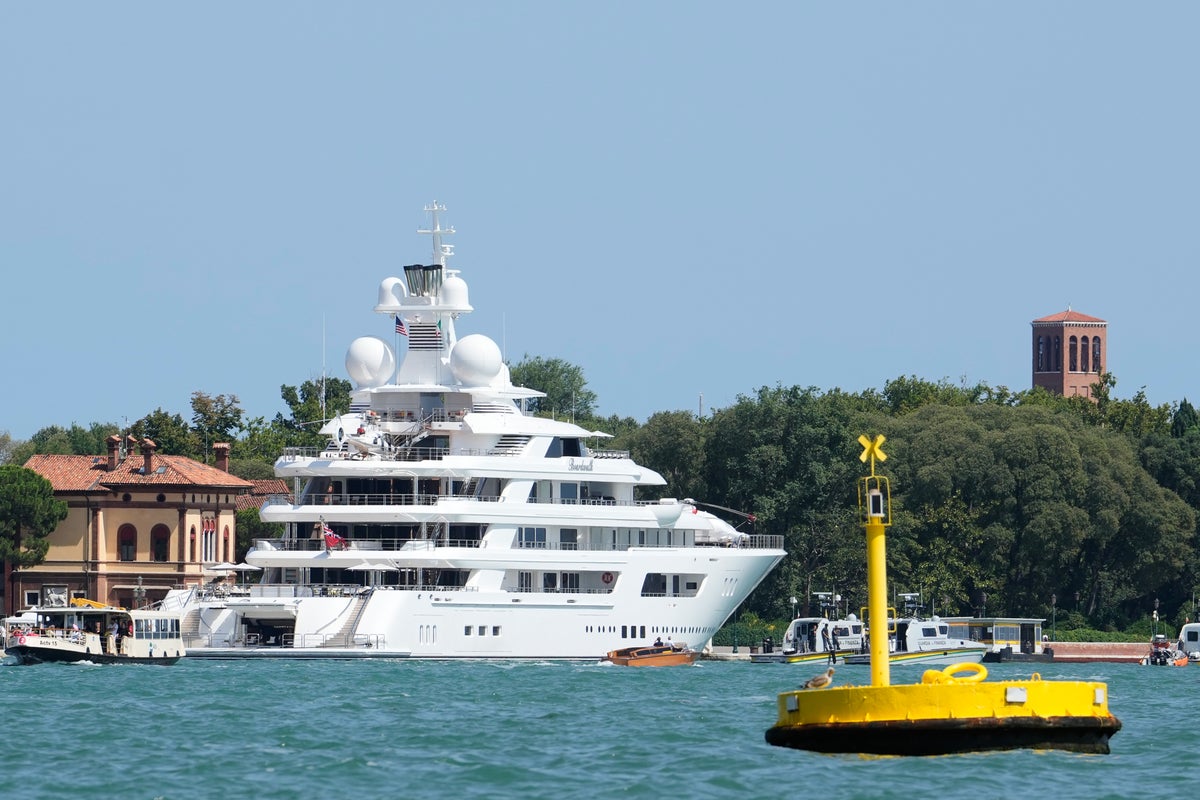
The arrival of a $450 million superyacht in Venice’s St. Mark’s Basin was meant to be a masterclass in soft-power projection. Instead, it exposed a deep rift in transatlantic relations.
When Tilman Fertitta, the billionaire hospitality mogul turned U.S. Ambassador to Italy, docked his 117-meter luxury vessel, Boardwalk, in the historic lagoon, he was not met with the quiet deference traditionally afforded to American envoys. He was met with a wall of riot police, flying inflatable pool toys, and hundreds of furious Venetian protesters shouting "Shame!" The "Freedom 250 Coastal Diplomacy" tour—a self-funded, 13-region cruise intended to celebrate the upcoming 250th anniversary of American independence—has instead mutated into a lightning rod for European resentment against the Trump administration's foreign policy. You might also find this similar article interesting: Why the New US Visa Restrictions on Chinese Students and Journalists Will Backfire.
This is not a story about a simple protest. It is a symptom of a fundamental shift in how the United States projects influence abroad, trading institutional diplomacy for oligarchic pageantry. While the U.S. Embassy frames the tour as a way to connect with local citizens, the reality on the ground reveals a starkly different dynamic: a local population hostile to American unilateralism and an Italian state forced to foot the security bill for a billionaire's vanity project.
The Optics of Opulence
The Boardwalk is less a diplomatic vessel and more a floating monument to private wealth, featuring dual helipads, a swimming pool, and a private wine cellar. For an embassy official to use such a platform during an era of acute European economic anxiety is a miscalculation of historic proportions. As reported in latest reports by The Washington Post, the results are worth noting.
Local activists, including cultural workers from the Art Not Genocide Alliance (ANGA) and anti-cruise ship demonstrators, positioned themselves along the banks of St. Mark’s Basin. The choice of location was particularly provocative: the yacht occupied a prime public viewing spot during Venice's annual Redentore festival, a sacred local tradition celebrating deliverance from a 16th-century plague.
The resulting clash between police in riot gear and citizens carrying satirical signs like "Oligarch in saor"—a nod to a classic Venetian sardine dish—delivered a devastating counter-narrative to Washington's intended message of shared values.
Shifting the Security Burden
While Fertitta personally funds the operational costs of his yacht, the financial burden of protecting this floating embassy falls heavily on Italian taxpayers. Under the Vienna Convention, host nations are legally obligated to ensure the safety and dignity of foreign diplomats.
Because the ambassador has been classified as a high-risk target, Rome has been forced to deploy:
- A dedicated sea surveillance mission featuring coastguard and port authority vessels.
- Helicopter patrols from the financial police (Guardia di Finanza).
- Dozens of land-based riot police to establish secure perimeters at every port of call.
Italian lawmakers have already raised fierce objections in parliament. Luana Zanella, a representative from the Green Left Alliance, openly condemned the tour as a "diplomatic vacation" subsidized by a cash-strapped Italian state.
The friction extends far beyond domestic spending. The choice to utilize a private asset for state business blurs the line between public diplomacy and corporate branding. Fertitta, whose empire includes casinos, sports teams, and restaurant chains, represents a broader trend within the current administration: the fusion of state power with private capital.
The Subtext of the Protest
To understand the fury in Venice, one must look beyond the yacht itself. European allies are grappling with a volatile Washington that has consistently criticized multilateral organizations and challenged traditional alliances.
Furthermore, the protest occurs in the shadow of a highly politicized cultural landscape. Earlier this year, Washington stripped long-standing diversity mandates from its open call for the Venice Biennale pavilion, replacing them with directives to promote "American exceptionalism". The resulting exhibition was widely panned by international critics as empty and nationalistic.
When a superpower replaces nuanced cultural diplomacy with a $450 million yacht and an aggressive ideological agenda, it signals to its allies that relationship-building is no longer about mutual respect. It is about dominance. Italian Foreign Minister Antonio Tajani has attempted to smooth over the controversy, insisting that Fertitta serves as a vital bridge to a volatile White House. Yet, the images of Italian police shielding an American billionaire from their own citizens tell a far more authentic story about the current state of the alliance.
True diplomacy cannot be conducted from the deck of a superyacht anchored safely away from the shore. It requires a willingness to engage with the complex, often uncomfortable realities of the host nation, rather than expecting them to clear the harbor for a display of pure economic might.