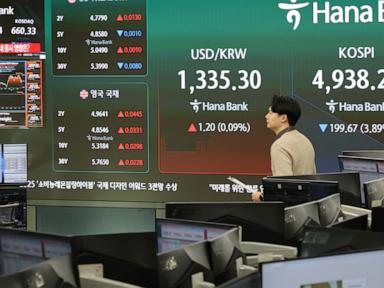
Asian stock markets are bleeding billions of dollars because institutional investors have finally realized that AI infrastructure spending has outrun actual corporate revenue. While wire reports frame the late-November sell-off in Tokyo, Seoul, and Taipei as a knee-jerk reaction to Wall Street's tech slump, the reality runs in the opposite direction. Asian supply chain giants are not merely echoing New York's panic. They are the financial canary in the coal mine, absorbing the immediate shock of a looming capital expenditure cliff that Silicon Valley has spent two years trying to ignore.
Look at the numbers from the trading floors across the Pacific. During the worst of the November rout, Taiwan's Taiex tumbled more than 6% as foundry titan Taiwan Semiconductor Manufacturing Co. (TSMC) sank over 8%. In South Korea, the benchmark Kospi plunged roughly 6%, dragged down by brutal single-day drops of 9% to 11% in memory chip heavyweights Samsung Electronics and SK Hynix. Japan's Nikkei 225 shed nearly 3.6%, punished by a 16.1% collapse in OpenAI backer SoftBank Group and a 15.4% nosedive in memory maker Kioxia.
Standard market commentary treats these losses as passive contagion from the Nasdaq. That surface-level reading misses the structural mechanics of the global technology trade.
The Myth of the Wall Street Echo
Financial news desks love a clean cause-and-effect narrative. New York sells off on Tuesday afternoon, so Tokyo and Seoul follow suit on Wednesday morning. It is easy to write, simple to digest, and fundamentally incomplete.
In truth, Asian capital detected the cracks in the AI trade weeks before New York flinched. Institutional desks in Hong Kong, Singapore, and Shanghai sit directly atop the physical supply chain. They track wafer starts, high-bandwidth memory pricing, and server rack shipments in real time. While Silicon Valley executives were still pitching multi-trillion-dollar infrastructure dreams, fund managers in Asia were looking at order books that no longer matched the hype.
The market events of late November prove how deeply sentiment has soured. Neither Anthropic's historic $81.3 billion initial public offering—the largest in U.S. history—nor the dramatic reinstatement of Jensen Huang as Nvidia's CEO could sustain a rally. Anthropic shares quickly slipped below their $83 debut price, and Nvidia's massive 31% relief surge evaporated within days as S&P placed the chipmaker's credit rating on watch for a potential downgrade. When the two most potent catalysts in modern tech history fail to hold a bid, the market is telling you that the underlying math has broken.
Why Foundry and Memory Stocks Take the First Hit
To understand why Seoul and Taipei suffer worse percentage drops than Silicon Valley during an AI correction, you have to look at operating leverage. Software companies and frontier AI labs sell digital subscriptions and cloud compute. Their marginal costs are relatively flexible.
Chipmakers operate under brutal capital intensity. A single advanced fabrication plant costs upwards of $20 billion to build and equip. TSMC, Samsung, and SK Hynix must commit that capital years before a single chip rolls off the line. When hyperscalers like Microsoft, Alphabet, and Meta hint at even a minor slowdown in future server orders, the financial shockwaves hit Asia with multiplied force.
- Fixed Cost Traps: Semiconductor fabs must run near full capacity to amortize their massive depreciation expenses. A 5% dip in projected demand can wipe out 20% of operating profit.
- Inventory Bullwhip Effects: Cloud providers double-ordered GPUs and high-bandwidth memory throughout 2024 and 2025 to secure allocation. Now that supply has caught up, cancellations hit Asian component suppliers all at once.
- Concentration Risk: Because TSMC and Samsung make up a massive portion of their respective national indexes, foreign institutional outflows automatically trigger broader index-fund selling across Taiwan and South Korea.
The $3.6 Trillion Revenue Gap
Beneath the daily ticker volatility sits a cold mathematical problem that no amount of executive charisma can solve. Technology research firm Gartner forecasts global AI-related spending to hit $2.7 trillion in 2026 and climb to $3.6 trillion in 2027.
For that level of capital expenditure to make economic sense, the businesses buying those AI tools must generate enough new revenue or cost savings to pay for them. Right now, the gap between infrastructure spending and end-user monetization is widening into a chasm.
Research from Singapore-based firm Funda highlights the core issue driving institutional exits. Projected growth rates for corporate enterprise AI budgets through 2027 simply cannot support the revenue targets baked into the valuations of frontier AI labs and chipmakers. Big Tech has increasingly relied on debt-fueled balance sheet expansion to fund data center construction. Bond markets and credit rating agencies are starting to push back against that leverage.
Consider a hypothetical example to see how this plays out in a corporate boardroom. Imagine a mid-sized logistics firm spends $5 million on enterprise AI software licenses and custom cloud compute in 2026, expecting to automate its dispatch operations. By the end of the fiscal year, the system cuts administrative overhead by $1.8 million, leaving a net loss of $3.2 million on the investment. When that company's CFO sets the 2027 budget, they do not double their AI spend. They slash it by half and demand proof of return before signing another contract. Multiply that decision across ten thousand Fortune 500 and mid-market firms, and the entire hardware supply chain feels the freeze.
The Physical Wall Nobody Priced In
Even if corporate demand remained infinite, the AI boom has slammed into a physical bottleneck that financial models completely overlooked. You cannot run advanced silicon without electricity, and the global power grid is out of spare capacity.
Data center projects across North America and Europe are sitting idle, waiting on basic high-voltage electrical components. According to energy consultancy Wood Mackenzie, delivery wait times for large power transformers have stretched past 160 weeks—more than three years. Just a few years ago, utilities could source that same equipment in twelve months.
| Infrastructure Bottleneck | Historical Wait Time | Late 2026 Reality | Financial Consequence |
|---|---|---|---|
| High-Voltage Transformers | ~52 weeks | Over 160 weeks | Delayed facility energization |
| U.S. Grid Connections | 12 to 18 months | 3 to 4 years | Stranded capital expenditure |
| Planned U.S. Capacity | 80%+ built on schedule | Only ~5 GW of 16 GW active | Pushed-out chip delivery dates |
Data from Sightline Climate reveals that out of the 16 gigawatts of U.S. data center capacity scheduled for delivery in 2026, only about 5 gigawatts actually entered construction on time.
This physical reality directly undercuts the bull case for Asian chipmakers. Hyperscalers cannot plug in new clusters of Nvidia accelerators if the local utility cannot connect the building to the grid until 2029. When data center developers delay construction, they defer orders for the servers, memory modules, and logic chips manufactured in Hsinchu, Pyeongtaek, and Kumamoto. Wall Street analysts modeling linear quarterly chip growth missed the fact that transformer shortages were quietly capping hardware deployment.
Macro Headwinds and the Policy Trap
Complicating the sector-specific bubble fears is a hostile macroeconomic environment that leaves central banks with zero room to rescue tech stocks.
In the United States, sticky inflation—evidenced by elevated personal consumption expenditures data—has kept 10-year Treasury yields hovering near 4.8% to 4.9%. High risk-free yields punish long-duration growth assets. When investors can earn nearly 5% sitting in government bonds, paying 40 times forward earnings for a volatile semiconductor stock loses its appeal.
Meanwhile, Asian policymakers find themselves trapped between currency defense and export support:
- Bank of Korea's Rate Dilemma: Despite the stock market sell-off in Seoul, South Korea's central bank actually hiked its benchmark interest rate by 0.25 percentage points in late November. Strong headline semiconductor export figures—which surged nearly 294% year-on-year during the first twenty days of November—forced policymakers to prioritize inflation control over equity market relief.
- Yen Weakness and Import Costs: In Japan, the dollar pushing toward 160 yen has inflated energy and raw material costs for domestic manufacturers, limiting the Bank of Japan's ability to keep monetary policy loose.
- Ineffective State Intervention: Authorities in South Korea and China rolled out market stabilization measures to stem the rout, yet institutional sellers used every state-backed bounce as an opportunity to exit positions.
Where the Smart Money Is Rotating
To be clear, an equity market correction does not mean artificial intelligence is disappearing. Export data out of South Korea proves that physical shipments of high-end chips remain historically strong. Corporations are still adopting automation, and sovereign nations are still building domestic compute clusters.
What has died is the indiscriminate valuation premium applied to anything touching the AI supply chain. For two years, passive funds bought every semiconductor stock, memory vendor, and utility play without asking who held pricing power. That era is over.
Institutional capital is now drawing a hard line between speculative AI beneficiaries and hard-asset bottleneck owners. Companies that already possess secured grid connections and high-voltage power equipment—or chipmakers with locked-in, non-cancellable contracts for next-generation architectures—retain real defensibility. Conversely, second-tier component suppliers, heavily leveraged cloud renters like CoreWeave (which plunged nearly 12% in a single session), and speculative software wrappers face a brutal valuation reset.
Investors looking at Asian markets need to stop watching the Nasdaq closing bell for clues about what happens next in Seoul or Taipei. Watch the transformer delivery schedules, track corporate IT budget revisions, and pay attention to memory spot prices. Until enterprise software revenue catches up to hardware capital expenditure, every rally in Asian tech shares is just another exit door for institutional money.