The mainstream media loves a predictable script.
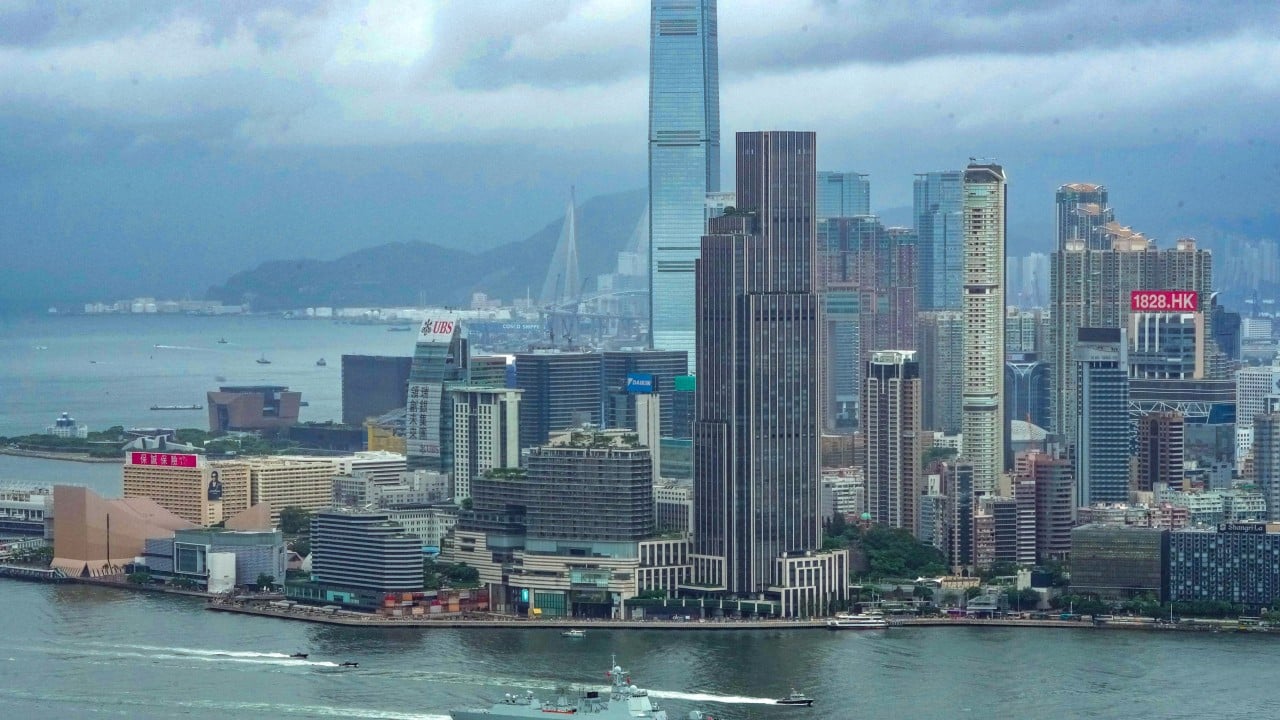
When a fleet of People’s Liberation Army (PLA) warships wraps up a five-day port call in Hong Kong, the narrative writes itself. Journalists queue up to interview weeping retirees waving plastic flags. They track the ticket sales for onboard tours. They quote local pundits talking about "patriotism," "national pride," and the emotional "seeing off" of naval officers.
It is a comfortable, lazy consensus. It frames the entire naval deployment as a localized public relations stunt aimed at winning hearts and minds in Victoria Harbour.
It is also completely wrong.
If you think Beijing sails its advanced guided-missile destroyers and amphibious assault ships through one of the busiest commercial shipping lanes in the world just to give Hong Kong school children a photo-op, you fail to understand maritime geopolitics. I have spent years analyzing regional defense logistics and supply chain vulnerabilities. Let me break reality down for you. This port call was not a charm offensive. It was a massive, calculated demonstration of logistical dominance and economic coercion aimed squarely at global trade networks.
The media fell for the theatre. They missed the leverage.
The Tourism Illusion and the Reality of Strategic Signaling
The standard reporting focused heavily on the optics. We saw lines of citizens waiting in the rain. We heard about the 15,000 tickets distributed for public tours of the Type 052D destroyers.
This is classic misdirection.
In naval strategy, public access is a byproduct, never the objective. When a blue-water navy deploys front-line surface combatants to a global financial hub, it is executing a sovereign showcase. Hong Kong remains the canary in the coal mine for international capital. By embedding heavily armed naval assets directly into the city's maritime landscape, Beijing is sending a clear message to multinational corporations, foreign consulates, and international shipping conglomerates.
The message is simple: We control the choke points.
Consider the geography. The South China Sea handles over one-third of global maritime trade. Hong Kong sits right at the northern apex of this critical corridor. When the PLA Navy docks its latest hardware at the Ngong Shuen Chau Naval Base, it is not just showing off shiny hulls to the locals. It is demonstrating its ability to rapidly project force from mainland shipyards directly into the commercial sea lines of communication (SLOCs).
It is a display of operational readiness meant for Washington, Tokyo, and London, not the local neighborhood watch.
Dismantling the Myth of "Spontaneous Domestic Support"
Let’s address the "People Also Ask" questions that inevitably pop up during these events. Analysts and onlookers frequently ask: Does the presence of the PLA Navy genuinely boost national identity in Hong Kong?
The brutal, honest answer is that it does not matter.
The premise of the question is flawed because it assumes the PLA operates on the logic of a Western political campaign, hunting for approval ratings. The party-state does not need to win a popularity contest in a city where the political architecture has already been fundamentally rewritten over the past several years.
The crowd turnouts are heavily curated, coordinated through pro-Beijing trade unions, district committees, and state-sanctioned youth groups. This is institutional choreography. Treating it as a organic barometer of public sentiment is naive.
To understand the actual mechanics at play, you have to look at the specific vessels deployed. We are talking about top-tier assets: air-defense destroyers capable of tracking hundreds of targets simultaneously and amphibious transport docks designed for expeditionary warfare.
Imagine a scenario where a Western navy docks an entire carrier strike group in New York Harbor under the guise of an "educational weekend." No serious analyst would spend their time reviewing the quality of the tour guides or the emotional state of the tourists on the pier. They would look at the readiness state of the fleet, the integration of regional air defense commands, and the logistical footprint required to sustain those ships in a civilian port.
The Economic Leverage Nobody Wants to Discuss
International commerce relies entirely on the illusion of neutral waters. The global shipping industry is incredibly risk-averse. Insurance syndicates like Lloyd's of London calculate premiums based on stability, predictability, and the absence of military friction.
When a superpower regularizes the deployment of advanced warships into its primary commercial ports, it fundamentally alters the risk profile of that region.
- Insurance Premium Creep: Increased military presence signals a higher baseline of geopolitical tension, which long-term actuaries factor into shipping rates.
- Supply Chain Subjugation: It proves that civilian maritime infrastructure can be co-opted for military logistics at a moment's notice.
- Sovereignty Standardization: It normalizes the sight of grey hulls next to container ships, erasing the distinction between commercial free ports and sovereign military bastions.
I have watched maritime logistics firms re-route capital away from regions that become overly militarized. They do not do it loudly; they do it through subtle shifts in port calls and long-term infrastructure investments. The real story of the five-day port call is how it subtly pressures the commercial sector to accept a new status quo where global trade operates entirely under the shadow of state power.
The Tactical Takeaway for Global Executives
Stop reading the human-interest stories. Stop tracking the flag-waving crowds.
If you operate in global trade, finance, or supply chain management, your takeaway from this naval deployment should be operational, not emotional. The window for treating Hong Kong as a decoupled, neutral sanctuary for international capital is firmly closed. Every asset moving through the region must now be budgeted against the reality of a highly weaponized, highly efficient sovereign territory.
Beijing just showed you exactly how easily it can park its most lethal assets in the center of your financial sandbox.
They did it smoothly. They did it on schedule. And they had the local population clap as they left. That is not a public relations win. That is a masterclass in structural intimidation.