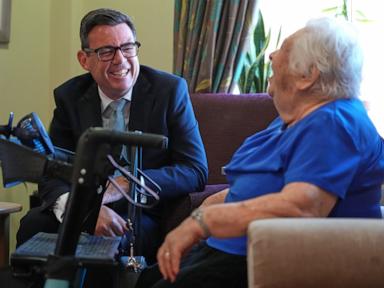
Decades of political cowardice have turned the British social care system into a slow-moving humanitarian catastrophe. Prime Minister Andy Burnham has returned to the fray with a pledge to overhaul the broken apparatus, claiming that England's model is as fundamentally unfair as American healthcare. He is entirely right about the diagnosis, but the treatment plan demands an honest confrontation with economic realities that every previous administration has aggressively ducked.
The Anatomy of Institutional Decay
To understand why social care remains unfixable under current legislative parameters, look closely at the asset threshold. In England, anyone with savings or property worth more than twenty-three thousand pounds receives zero state assistance for their care needs. An elderly person who spent a lifetime paying off a modest family home faces the chilling reality of liquidating that roof over their head to fund basic daily assistance.
One in seven citizens faces catastrophic lifetime care costs exceeding one hundred thousand pounds. Meanwhile, nearly two million people live with needs that completely fail to meet eligibility criteria for state-funded support. They are stranded in a policy dead zone.
The financial pressure does not stop at the domestic doorstep. When local authorities squeeze provider fees to balance their own municipal budgets, private care companies respond by cutting staffing levels and driving wages down to poverty rates. Care workers frequently earn less than supermarket retail assistants. That structural undervaluing creates chronic staff shortages, forcing hospitals to hold medically fit patients in expensive acute beds simply because no package of care exists to support them at home.
The Cost of Political Timidity
Politicians treat social care reform like an explosive device. Touch it, and your career blows up.
In 2010, a previous iteration of Labour proposals for a national care service was successfully weaponized by opponents under the toxic label of a "death tax." Successive Conservative administrations spent the next decade commissioning brilliant reports like the Dilnot review, only to repeatedly postpone implementation dates until the reforms vanished entirely into the parliamentary fog.
This perpetual cycle of delay relies on a dangerous public delusion. Citizens assume the state will step in when vulnerability strikes, mirroring the universal safety net of the National Health Service. When reality hits—when a parent develops advanced dementia and the local council declares the family asset-rich—the resulting shock shatters what little trust remains between the individual and the state.
Hard Choices on the Horizon
Solving this crisis requires abandoning two comforting political lies.
First, you cannot fix structural underfunding without spending more money. General taxation or a dedicated asset levy must enter the equation if the country wants a sustainable model. Burnham has signaled a willingness to court unpopularity and spend political capital, but cross-party consensus remains fragile. The opposition has already drawn rigid lines against tax-funded overhauls, prioritizing short-term partisan positioning over long-term institutional survival.
Second, integrating social care with the National Health Service requires treating care workers as skilled professionals rather than disposable labor. Raising wages to match NHS equivalents requires multi-billion-pound infusions that will inevitably demand difficult fiscal adjustments.
The roulette wheel of aging keeps spinning. Every year of delay pushes more families into destitution and forces the acute health sector deeper into gridlock. If the current administration genuinely intends to build a lasting framework, it must stop treating the care crisis as a PR management exercise and start treating it as an existential test of national survival.