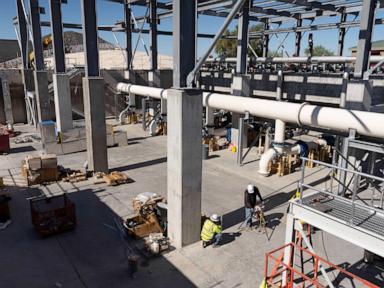
Capital markets are finally waking up to a hard truth. For years, Wall Street treated the infrastructure supporting artificial intelligence as an infinite-growth machine, casually absorbing hundreds of billions in debt to fund server farms across the globe. That era of uncritical check-writing is ending. When major operators like Blackstone-backed QTS recently found themselves forced to slash private debt sales by over half because institutional lenders balked at pricing and overexposure, it signaled a profound shift. The primary obstacle facing digital infrastructure is no longer just finding land or securing high-end graphics processing units. It is the sudden, stubborn resistance of investors who refuse to keep backing multi-billion-dollar bets without clear, tangible proofs of return.
To understand why funding channels are tightening, one must look past the optimistic forecasts thrown around by tech executives. Hyperscalers like Amazon, Microsoft, Alphabet, and Meta have pushed capital expenditure to astronomical heights, treating electricity and concrete as commodities to be bought at any price. Yet, the debt markets supporting this expansion operate under different rules. Lenders are realizing that a massive percentage of planned facilities risk sitting idle or under-powered due to a bottleneck that money alone cannot instantly fix: the electrical grid. Don't forget to check out our earlier article on this related article.
The grid is tapped out. In critical regions across North America and Europe, local utilities are quoting interconnection delays of four years or more. A server facility without a signed, reliable power purchase agreement is little more than an expensive, empty warehouse. When institutional investors are asked to underwrite high-yield notes or private credit facilities for projects that might stall out during the permitting phase or wait half a decade for a substation upgrade, caution takes over. The math no longer checks out for conservative credit committees. Consequently, debt issuance terms are changing, pricing is widening, and the market is splitting cleanly between ultra-secure investments tied directly to top-tier hyperscalers and speculative developments left out in the cold.
This financial pushback coincides with a severe physical reality check. The newest generation of server hardware demands rack densities that make older cooling and power distribution designs obsolete almost overnight. Transitioning to liquid cooling and integrating behind-the-meter power solutions—such as dedicated natural gas turbines or fuel cells—requires entirely separate layers of project financing. Developers are attempting to separate the financing of on-site power generation from the real estate of the data center itself. This creates a complex web of dual-track debt that complicates risk assessment. Lenders are no longer willing to swallow construction risk bundled neatly under vague corporate guarantees. They want granular visibility into how a facility will source its megawatts when local grid operators throw up their hands. If you want more about the background here, Reuters Business offers an excellent summary.
Simultaneously, community opposition has shifted from a localized annoyance into a systemic balance-sheet risk. Across the United States and parts of Europe, local ballot measures and municipal pushback have turned hostile toward new construction. Voters worried about soaring local utility bills, strained water reserves, and industrial sprawl are successfully lobbying for moratoriums. When municipal bodies freeze zoning approvals or deny water permits, the development timeline stretches indefinitely. Investors watching municipal resistance mount know that delayed revenue streams destroy internal rates of return. What starts as a local zoning dispute quickly translates into a credit downgrade risk for corporate bonds tied to delayed projects.
The relationship between tenants and developers is undergoing an equally sharp correction. For years, large cloud providers dictated every line of a lease agreement, imposing hair-trigger exit clauses and strict non-disclosure walls. Today, project financiers are demanding financeable leases. Sponsors cannot secure debt against a contract that allows a tenant to walk away at the first sign of a construction slip. Institutional capital now requires firm rent commencement dates and shared risk distribution. If a tech giant wants dedicated capacity, it must shoulder more of the upfront financial burden or accept tighter covenants that protect the underlying lenders.
This friction forces a necessary market maturation. The gold-rush mentality that dominated digital infrastructure spending is giving way to disciplined asset-backed finance. Projects that rely on speculative neocloud tenants with weak balance sheets are finding it nearly impossible to raise capital without paying punishing yields. Meanwhile, experienced developers with proven operational track records and secured power rights are commanding a heavy premium.
The market is sorting itself out through economic gravity rather than executive optimism. The era of writing blank checks for any facility bearing an artificial intelligence label is finished. What remains is a high-stakes arena where only projects with ironclad power agreements, resilient local political backing, and disciplined capital structures will survive the cut.