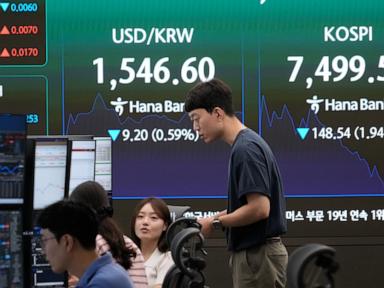
The global technology trade is splitting at the seams. While casual observers celebrated a fresh record high for the Dow Jones Industrial Average and a sharp, sudden rebound in select Asian hardware equities this week, institutional capital is quietly executing a massive internal reallocation. The headline-driven narrative tells a simple story of a resilient market finding its footing after a brief tech-induced sell-off. The reality hidden within the order books is far more brutal. Investors are beginning to realize that the massive capital expenditures poured into building artificial intelligence infrastructure are failing to yield the immediate corporate productivity and revenue growth needed to sustain $4.7 trillion valuations.
What we are witnessing is not a uniform recovery, but the onset of an aggressive structural bifurcation within global equity markets.
The Mirage of the Asymmetrical Bounce
On the surface, the trading session on Friday, July 3, 2026, looked like a triumphant return to form for battered hardware suppliers. South Korea’s Kospi index, which had suffered a punishing drop of nearly 8% just twenty-four hours prior, snapped back with a blistering 5.8% gain. Regional heavyweights Samsung Electronics and SK Hynix surged 8.2% and 10.9% respectively, acting as a highly wound rubber band that finally recoiled after extreme short-term selling pressure.
Yet, treating this violent price action as a clean bill of health misses the underlying structural imbalance. While memory manufacturers in Seoul and Tokyo caught a massive bid, the bleeding did not stop everywhere. The broader semiconductor complex remains under intense structural pressure. Consider the performance of the foundational suppliers to this ecosystem:
- Micron Technology wiped out early gains to finish down 5.5%, compounding a devastating 10.6% drop from the prior session.
- Lam Research cratered by 10.2%, signaling deep institutional skepticism regarding the longevity of current wafer-fabrication equipment spending.
- Nvidia, the undisputed anchor of the modern silicon bull market, slipped another 1.4%, dragging down the market-cap-weighted Nasdaq composite even as mid-cap industrial and financial stocks advanced.
This decoupling reveals a critical shift in market mechanics. The broad-based "buy everything" phase of the computing infrastructure buildout has officially concluded. Smart money is now differentiating between companies that simply consume capital to build speculative data centers and those that possess immediate, locked-in pricing power for raw memory components.
When Capital Spending Outpaces Corporate Use Cases
The core issue destabilizing the tech sector is a widening mismatch between infrastructure supply and commercial demand. Over the past twenty-four months, hyper-scalers and sovereign wealth funds have deployed historic levels of capital to secure state-of-the-art graphics processing units and high-bandwidth memory.
This immense expenditure has generated exceptional revenue for a highly concentrated cluster of semiconductor firms. However, the corporate balance sheets outside the technology sector are not seeing a matching boost in efficiency or profit margins from these early deployments.
The corporate world is finding that integrating sophisticated foundational software models into legacy administrative workflows is an incredibly slow, expensive, and legally fraught endeavor. Regulatory hurdles, persistent accuracy issues, and ballooning API invocation costs have slowed down wide-scale commercial deployments.
Consequently, traditional enterprise software buyers are tightening their budgets. They are questioning why they should pay premium subscription fees for unproven generative features when their own end-consumers are facing distinct macroeconomic headwinds.
Macroeconomic Headwinds and the Rate Cut Fantasy
This equity bifurcation is happening right as global macroeconomic indicators are slowing down. The latest U.S. non-farm payrolls data showed an addition of just 57,000 jobs, falling significantly short of the 100,000 positions that mainstream consensus models had predicted. In normal economic cycles, such a stark hiring slowdown would trigger widespread alarm over a potential corporate earnings recession. Today, Wall Street treats bad economic news as cause for celebration.
The logic behind this market reaction is entirely dependent on central bank intervention. Institutional traders assume that a slowing labor market, combined with crude oil prices stabilizing below $73 a barrel following the temporary escalation of hostilities with Iran, will force the Federal Reserve to abandon its restrictive monetary stance.
Lower interest rates reduce the cost of capital, making it much easier for massive tech firms to borrow billions to fund their data center expansions.
But this reliance on central bank intervention is a double-edged sword. If interest rates drop because the consumer economy is fundamentally fracturing, the broader corporate earnings base will deteriorate. Tech stocks cannot trade in a permanent vacuum. If the retail, logistics, manufacturing, and services sectors pull back on software spending to protect their own shrinking margins, the justification for continuous infrastructure investment completely disappears.
The Institutional Shift to Tangible Value
Faced with this growing uncertainty, a distinct style rotation is playing out across trading desks globally. The Dow Jones Industrial Average managed to print a record high of 52,900.07 because capital is migrating out of hyper-valued, speculative hardware names and into defensive, tangible asset classes. Traditional blue-chip corporations with predictable cash flows, strong pricing power, and transparent capital return programs are suddenly back in style.
Even within speculative markets, a noticeable shift is underway toward liquid financial alternatives. Cryptocurrency infrastructure equities like Coinbase and Robinhood both gained nearly 4% as digital assets caught an independent bid following a deep correction earlier in the week.
When institutional investors choose to park capital in consumer brokerages and defensive industrial conglomerates rather than adding to their positions in the world's largest semiconductor designers, it tells you everything you need to know about their risk tolerance at these current valuations.
The rubber-band bounces seen in Seoul and Tokyo are short-term tactical movements driven by index rebalancing and short-covering. They do not represent a structural resumption of the unrestricted bull market. The market is demanding proof of monetization, and until the software layer of the technology ecosystem can show real, compounding cash flows that justify trillions of dollars in hardware deployment, the cracks in this historic market rally will only continue to widen.