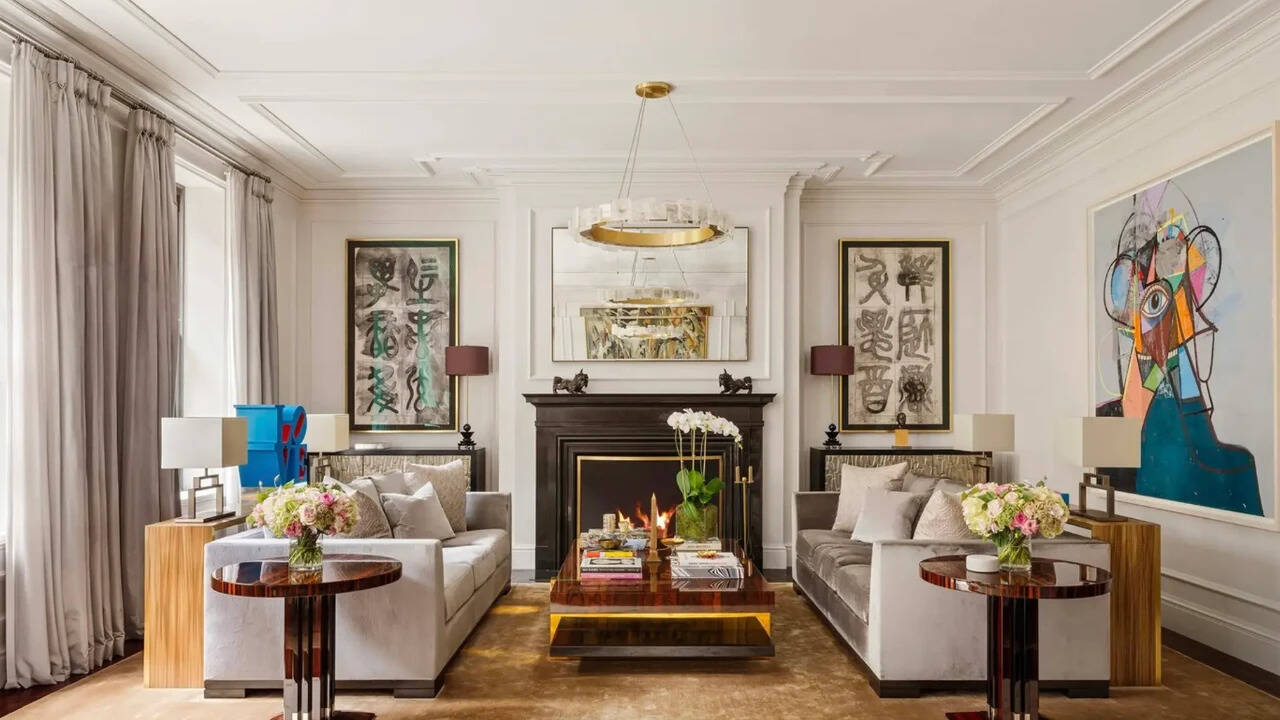
Former Morgan Stanley CEO John Mack and his wife Christy have listed their Upper East Side townhouse at 165 East 70th Street for $80 million, a move that tests whether a single-family conversion can break Manhattan’s residential townhouse sales record. At roughly 16,000 square feet across 20 rooms, the property asks just over $5,000 per square foot. It is an extraordinary number for a building that began life in 1902 as a horse carriage house and later served as a private garage.
Real estate press loves a headline about a Wall Street titan asking for a record price. Most coverage stops right there, ticking off amenities like a 6,300-bottle wine cellar, a 13-seat theater, a wellness suite, and heated sidewalks. That surface reading misses the real story.
This listing is a stress test of carriage-house conversions, carrying costs, and ultra-prime liquidity in New York City. Buying a historic shell for $13.5 million in 2009 and spending years gutting and engineering it is one thing. Convincing a billionaire buyer in 2026 to pay $80 million—and then absorb steep ongoing taxes, maintenance, and staffing—is something else entirely.
How a Horse Barn Became an Eighty-Million-Dollar Bet
Architect C.P.H. Gilbert designed 165 East 70th Street in 1902 for banker Henri P. Wertheim. Back then, wealthy families wanted stables and grooms close enough for convenience, yet tucked away from the primary mansions so the noise and smell stayed put. By 1920, Singer heir Stephen C. Clark had turned it into a garage and chauffeur’s quarters, and later Paul and Bunny Mellon used it as a private garage.
When the Macks bought the building from Bunny Mellon in 2009 for $13.5 million, they were not buying a polished Gilded Age palace. They were buying an aging, utilitarian shell with horse ramps, stalls, and car storage.
Timing mattered. August 2009 sat right in the aftermath of the global financial crisis, a period when trophy Manhattan real estate felt bruised and uncertain. Paying $13.5 million for a 33-by-100-foot footprint—unusually wide for a Manhattan townhouse—looked cheap on paper, yet turning a distressed garage into a quiet, fortified home required years of heavy lifting.
Engineering Around Landmark Constraints
Converting an old carriage house on the Upper East Side is rarely a simple cosmetic refresh. Because the property is landmarked, exterior changes face strict oversight from New York’s Landmarks Preservation Commission.
The Macks kept the Neo-Italian Renaissance limestone facade while adding a floor and reinforcing the structure with steel. They brought in architects at Sawyer Berson and designer Eleanor LaSota to rework the interior geometry, eventually yielding 20 rooms, six bedrooms, 13 baths, a wrought-iron and limestone stair hall under a skylight, and an elevator reaching every level.
That kind of work eats time and capital. Public reporting notes a multi-year renovation spanning roughly six years. In Manhattan construction, six years of permits, neighbor negotiations, supply delays, and union labor carry immense soft costs that never show up on a simple purchase-minus-sale spreadsheet.
Why Asking Price Does Not Equal Market Value
If 165 East 70th Street closes at $80 million, it would edge past the $77.1 million Manhattan townhouse benchmark set in 2019 at 14 East 67th Street. Downtown, two combined 19th-century homes at 138–140 West 11th Street set a Greenwich Village record at $72.5 million in 2024.
Asking $80 million is a statement, not a settled price. Ultra-high-net-worth sellers routinely test the upper edge of the market because there are no true comparables for a one-off, wide, subterranean-and-sky-lit townhouse.
| Metric or Benchmark | 165 East 70th Street (Mack Listing) | 14 East 67th Street (2019 Benchmark) | 138–140 West 11th Street (2024 Downtown) |
|---|---|---|---|
| Status / Price | Listed at $80,000,000 (Oct 2026) | Sold for $77,100,000 (2019) | Sold for $72,500,000 (2024) |
| Neighborhood | Upper East Side (Lenox Hill) | Upper East Side | Greenwich Village |
| Property Profile | ~15,978 sq ft carriage house conversion | Double-wide Upper East Side townhouse | Combined 19th-century homes |
| Key Takeaway | Tests single-asset townhouse ceiling | Set prior Manhattan townhouse mark | Shows strong downtown appetite for scale |
Two counter-forces pull on buyers at this tier. On one side sits turnkey scarcity: billionaires with demanding schedules often refuse to spend five years supervising contractors when they can pay a premium for something finished, secure, and ready.
On the other side sits buyer selectivity. At $80 million, a buyer can compare a 16,000-square-foot townhouse against high-floor penthouses with sweeping park or skyline views, full-building amenities, and doormen. A townhouse gives you privacy and no condo board, but you own every roof membrane, boiler, elevator cable, and facade repair yourself.
The Hidden Math Behind Trophy Townhouses
A gross gap between a $13.5 million purchase price and an $80 million asking price looks dizzying until you layer in real-world friction.
Consider a hypothetical example to see how net proceeds can shrink behind the scenes. Suppose an investor buys a distressed townhouse for $15 million, spends $25 million on structural steel, mechanicals, and interior finishes, pays roughly $1 million a year in combined property taxes, insurance, utilities, and upkeep over a decade, and eventually sells for $75 million. After construction costs, 10 years of carrying expenses, transfer taxes, and brokerage commissions, the net profit is a fraction of the $60 million raw price jump.
Even for a primary residence rather than a flip, carrying costs are real. Public property tax records for 165 East 70th Street show an assessed value near $46.8 million and annual property taxes above $204,000, before counting insurance, security, heating, and maintenance.
What Security and Privacy Signal About Modern Wealth
Look closely at the feature list on East 70th Street: a bulletproof front door, dedicated security offices, an alarm system, and a lower-level garage. Those details say just as much about contemporary finance as marble and mahogany do.
Centuries ago, carriage houses existed because horses needed room and hay. Today, high-profile executives and founders treat street-level garages and hardened entryways as functional shields. Pulling a car directly off a public sidewalk behind heavy doors removes exposure on arrival and departure.
At the same time, grand townhouses carry a well-known lifestyle catch. Sixteen thousand square feet can feel cavernous if only two people live there most of the year. Many ultra-wealthy buyers now split time across multiple homes, leaving massive city residences quiet for months at a time—yet still paying to heat floors, run climate control for wine collections, and maintain mechanical systems.
What Buyers and Sellers Should Watch Next
For anyone tracking New York’s ultra-prime market, this listing is less about one famous banker’s home and more about pricing discipline. High asking prices grab attention in October; actual contract prices and closing dates tell you where real liquidity sits.
If you are evaluating a major renovation or a trophy purchase in a high-tax city, three practical checks cut through the hype:
- Underwrite total cost of ownership, not just purchase price. Factor in annual property taxes, insurance, utilities, staff, and a capital reserve for roofs, elevators, and HVAC before falling in love with square footage.
- Price in construction and permitting drag. Historic conversions routinely take longer and cost more per square foot than initial estimates suggest, especially when structural reinforcement or landmark rules apply.
- Compare against true substitutes. Weigh a townhouse’s street-level privacy and autonomy against top-tier condominiums that shift building operations onto a shared association.
Watch how long 165 East 70th Street stays on the market and whether it trades near ask or takes a haircut—because in Manhattan real estate, the final recorded deed always has the last word.