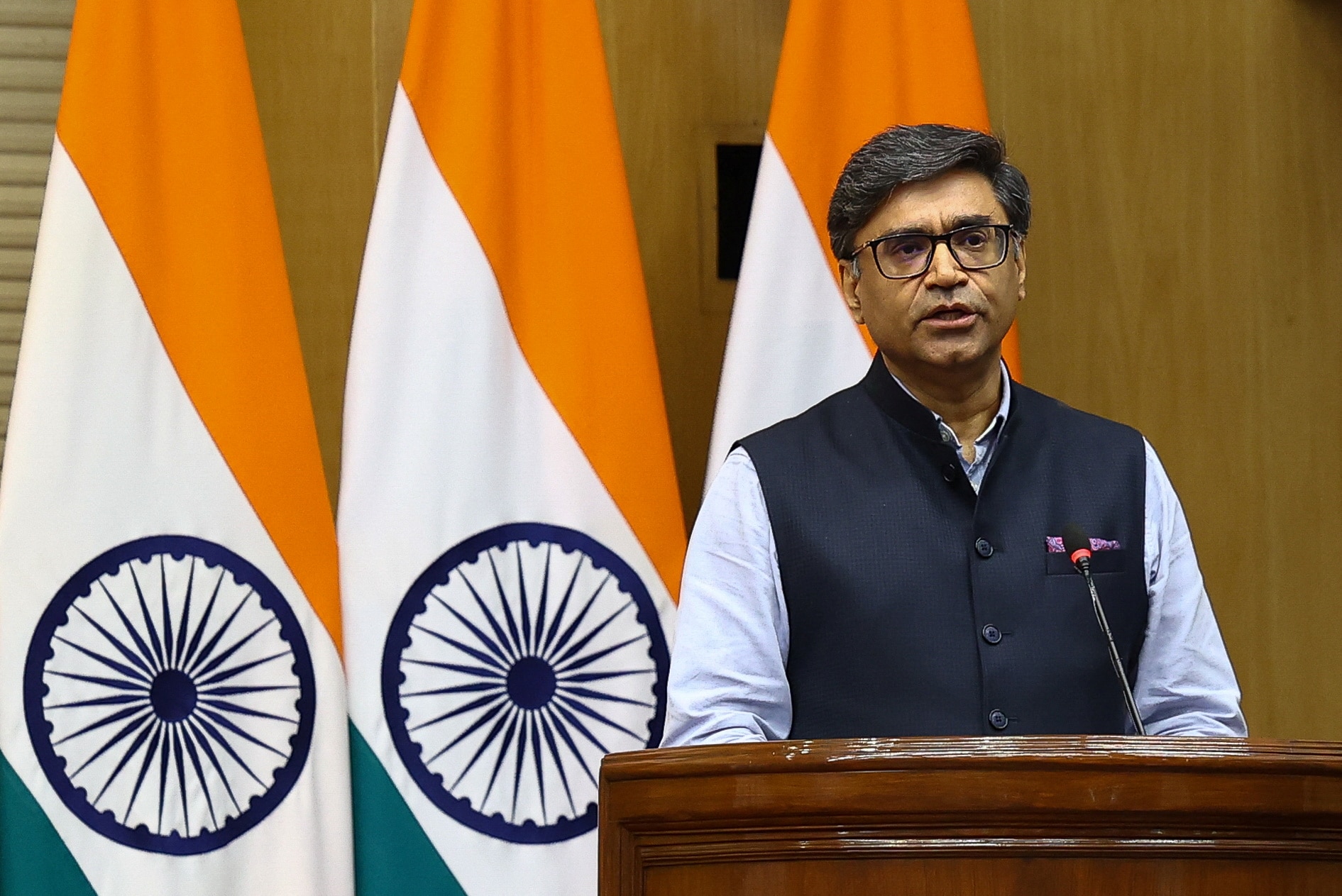
India has publicly welcomed the sudden diplomatic breakthrough between the United States and Iran, declaring its readiness to support stability in West Asia. On the surface, New Delhi’s official response is a textbook exercise in diplomatic compliance, celebrating a deal that promises to lower regional volatility. But behind the closed doors of South Block, the mood is far from celebratory. Indian policymakers are scrambling to assess a shifting geopolitical architecture that threatens to upend India's long-term energy security, its maritime trade routes, and its massive investments in regional infrastructure.
For over a decade, India played a delicate balancing act, navigating Washington’s heavy sanctions while maintaining a lifeline to Tehran. This deal changes the game entirely, but not in the way public relations statements suggest. By removing the friction between the US and Iran, the accord strips India of its unique leverage as a preferred middleman and exposes its strategic vulnerabilities to a rapidly moving regional realignment.
The Crude Reality of India’s Lost Energy Leverage
When Washington imposed crushing sanctions on Iranian crude oil, India adjusted by pivoting heavily toward heavily discounted Russian oil and cementing its ties with Gulf Arab monarchies. New Delhi learned to live without Iranian barrels. Now, the potential return of legal, mainstream Iranian crude to the global market introduces a massive wildcard that Indian state-run refiners are not entirely prepared to exploit.
During the sanctions era, India possessed significant bargaining power. It could negotiate alternative payment mechanisms, like the rupee-rial trade setup, which forced Tehran to buy Indian agricultural products and pharmaceuticals using accumulated oil revenues. A normalized Iran has no reason to accept restricted currencies. It will demand hard fiat, competing directly on the open market.
Furthermore, India's state-owned refineries have spent years reconfiguring their infrastructure to process specific blends from Moscow, Riyadh, and Abu Dhabi. Shifting back to Iranian heavy crude requires technical adjustments that cannot happen overnight. While a drop in global oil prices helps India’s fiscal deficit, the loss of bilateral leverage over Tehran leaves New Delhi with less political influence in the Iranian capital than it possessed during the height of the embargo.
The Chabahar Trap
No project embodies India’s West Asian ambitions more than the Chabahar Port. Developed as a direct counterweight to Pakistan’s Chinese-funded Gwadar Port, Chabahar was designed to give India a transit route into Afghanistan and Central Asia, completely bypassing its hostile neighbor. India poured millions into this maritime gateway, securing a long-term management lease just as the diplomatic winds began to shift.
The US-Iran peace deal undermines the foundational premise of Chabahar's strategic exclusivity.
                  [ Traditional Route ]
         India  ------------------------> Europe
           \ (Longer maritime route via Suez Canal)
            \
             v [ International North-South Transport Corridor ]
          Chabahar ------> Central Asia ------> Russia
For years, the US granted India narrow sanctions exemptions to develop Chabahar, primarily because Washington wanted to keep Afghanistan economically viable. With American forces out of Afghanistan and Washington now dealing directly with Tehran, India's special status as Chabahar's sole Western-approved developer evaporates.
If Iran is fully integrated into the global economy, it will no longer rely solely on Indian capital. Beijing is already waiting in the wings. China’s sweeping 25-year economic and security blueprint with Iran involves hundreds of billions in potential infrastructure spending. Western European logistics conglomerates are also eyeing Iranian coastlines. India suddenly faces a reality where it could be outspent and outmaneuvered in the very port it built, transformed from a primary strategic partner into just one of many tenants in a crowded Iranian market.
The Collapse of Symmetrical Alliances
India’s foreign policy success has long relied on minilateralism, balancing its participation in the US-backed I2U2 grouping—comprising India, Israel, the United Arab Emirates, and the United States—with its independent ties to Iran. This was a fragile ecosystem. The UAE and Saudi Arabia viewed Iran as an existential threat, while Israel remained locked in a shadow war with Tehran. India managed to talk to everyone without alienating anyone.
A direct Washington-Tehran understanding scrambles this entire framework. If the United States normalizes relations with Iran, the immediate security anxieties of Israel and the Gulf states will mutate. UAE and Saudi Arabia have already begun their own cautious thaws with Tehran, but a formal US-sanctioned peace shifts the economic center of gravity.
India risks being left out of the planning stages of the very trade corridors it hoped to dominate. The India-Middle East-Europe Economic Corridor, heavily promoted as an alternative to China's Belt and Road Initiative, was designed around a specific alignment of Gulf Arab states and Israel. If Iran becomes economically viable, the geographic reality of trade routes changes. Central Asian nations, which previously looked to India via Chabahar, may now find more direct overland routes through a rehabilitated Iran straight into Europe, leaving India’s maritime-to-land pipeline secondary.
The Unseen Maritime Security Shift
The economic details of the accord grab the headlines, but the immediate tactical impact will play out in the narrow chokePoints of the Western Indian Ocean. The Bab-el-Mandeb strait and the Strait of Hormuz are vital arteries for Indian merchant shipping. India’s energy supplies and container traffic pass through these waters daily, exposing them to regional proxy conflicts.
While a peace deal suggests a reduction in hostile drone and missile attacks on commercial vessels, the underlying command structures remain unchanged. Tehran commands a vast network of non-state actors throughout the region. If the US shifts its naval focus away from the Persian Gulf as a consequence of this deal, a security vacuum will emerge.
New Delhi cannot afford to assume that a diplomatic signature in Washington guarantees safety for ships heading to Mumbai or Mundra. The Indian Navy has quietly increased its deployment footprint in the Arabian Sea, conducting anti-piracy and maritime security operations independently. This proactive stance reflects a deeper realization that India must secure its own trade lanes rather than relying on an American security umbrella that is visibly reshaping its global priorities.
The Real Cost of Neutrality
For decades, India’s default diplomatic setting has been strategic autonomy, a modern iteration of non-alignment that values flexibility over formal alliances. This approach works exceptionally well when global powers are locked in predictable rivalries. It fails when those powers suddenly decide to rewrite the rules of engagement without consulting external stakeholders.
The US-Iran peace deal demonstrates that Washington is entirely willing to alter its sanctions regimes and regional partnerships based strictly on its own domestic political timeline and shifting strategic focus toward the Indo-Pacific. India, which structured its West Asian policy around the permanent friction between Washington and Tehran, is left holding the bag on expensive, half-finished infrastructure and outdated energy strategies.
Accepting the new reality requires more than issuing polite statements from the Ministry of External Affairs. India must rapidly transition from a reactive posture to an aggressive economic defense. This means restructuring the Chabahar contracts to lock in operational control before European and Chinese competitors flood the market, and diversifying its energy partnerships to insulate itself from the inevitable price shocks of a re-regulated market.
The diplomatic landscape of West Asia has fractured, and the old assumptions that guided Indian statecraft for twenty years are officially obsolete. New Delhi's immediate task is to stop celebrating a peace it did not negotiate and start protecting the vital economic assets that this new peace threatens to marginalize.


