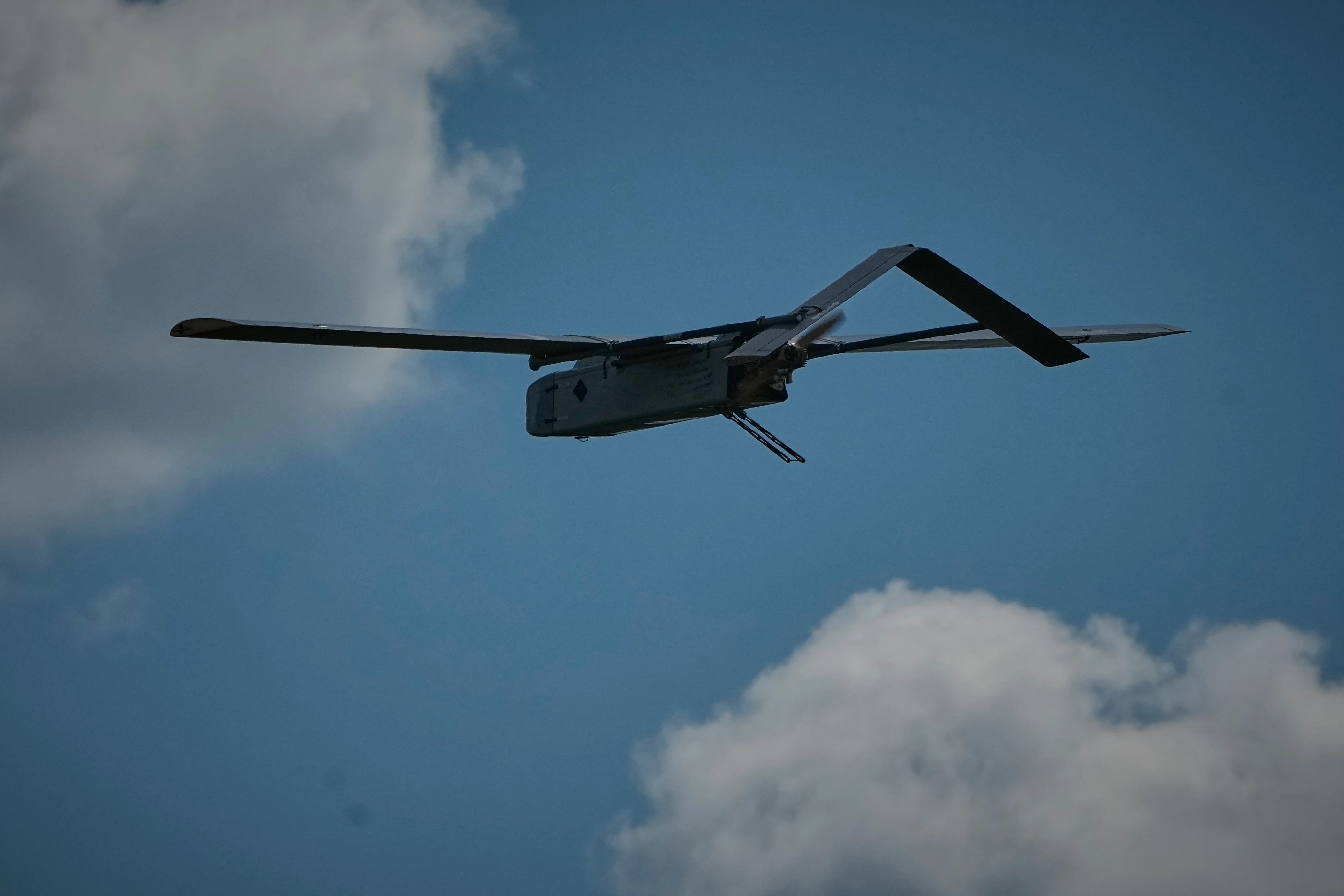
Diplomats in Geneva have spent more than a decade debating the future of lethal autonomous weapons systems, colloquially known as killer robots, yet they remain deadlocked on a legally binding treaty. The talks fail repeatedly because the Convention on Certain Conventional Weapons (CCW) operates on strict consensus, allowing major military powers to veto any enforceable ban while continuing to develop and deploy AI-guided weaponry on modern battlefields.
Watch the diplomatic corridors at the Palais des Nations long enough and a familiar pattern emerges. Every few months, delegates gather under the fluorescent lights of Room XIX, read carefully vetted statements expressing concern over human dignity, and leave without a single binding signature. The media headlines always frame these adjournments as sudden diplomatic breakdowns or missed opportunities. They are neither. The deadlock is a structural feature of how international arms control was designed to protect great-power military advantages.
How Consensus Diplomacy Protects Military Innovation
To understand why these negotiations go nowhere, you have to look at the mechanics of the venue. The CCW is not a majority-rule legislature. It is a consensus-based forum. Under its rules of procedure, a single state can block the adoption of a mandate, a report, or a treaty proposal.
When nations like the United States, Russia, China, Israel, and India sit at the same table as Austria, Costa Rica, and New Zealand, consensus becomes an automatic shield for the status quo. The states pouring billions into military artificial intelligence have zero incentive to sign away a technological edge before they even know its full strategic value.
Instead of an outright "no," the major powers use procedural friction. They argue over definitions. They insist that existing international humanitarian law (IHL) is already sufficient to govern autonomous weapons, even when legal scholars point out massive accountability gaps. By keeping the mandate restricted to "discussions" and "exchanges of views" within the Group of Governmental Experts, the major militaries buy time. Time to test algorithms. Time to integrate sensor fusion into loitering munitions. Time to make autonomous targeting an irreversible fact on the ground before a single law is drafted.
The Definition Trap
Ask five defense officials what constitutes an autonomous weapon, and you will get five different answers. This ambiguity is not an accident; it is a primary diplomatic weapon.
Advocates for a ban want to prohibit weapons that select and engage targets without meaningful human control. On paper, that sounds straightforward. In practice, modern military hardware blurs the line between automated and autonomous systems until the distinction becomes nearly meaningless.
Consider a hypothetical example of a modern air-defense battery protecting a naval vessel. The radar detects an incoming supersonic anti-ship missile. Human reaction times are measured in seconds; the engagement window is measured in milliseconds. If a human operator must manually click a button to authorize every interceptor launch, the ship sinks. Therefore, the system operates in an automated mode, tracking, prioritizing, and firing based on pre-programmed parameters.
Military delegations in Geneva point to defensive systems like these—which have existed for decades—and argue that a sweeping ban on autonomy would outlaw essential self-defense technologies. Meanwhile, civil society groups and non-aligned nations point toward offensive loitering munitions and drone swarms that can roam a designated kill box, identify vehicles or human silhouettes using computer vision, and strike without a live human-in-the-loop.
Because software updates can turn a remotely piloted drone into a fully autonomous hunter-killer overnight, regulating the hardware is nearly impossible. You cannot easily inspect a line of code from a satellite. Unlike nuclear centrifuges or chemical weapons precursors, the dual-use software driving autonomous targeting looks identical to the machine-learning algorithms used in commercial logistics, self-driving cars, and medical imaging.
The Battlefield Reality Outpaces the Palais des Nations
While diplomats debate semantics in Switzerland, actual wars are serving as live-fire testing grounds for algorithmic warfare. Conflicts in Eastern Europe and the Middle East have accelerated the shift toward autonomy faster than any defense white paper predicted.
Electronic warfare is the primary driver. When both sides deploy heavy radio-frequency jamming, the communication link between a drone operator and their aircraft severs. A remotely piloted drone that loses its signal becomes useless—it either crashes or returns to base. An autonomous drone equipped with onboard edge computing and visual target-recognition software simply switches to terminal guidance, locks onto the heat signature or visual profile of an armored vehicle, and completes its strike.
Jamming has turned autonomy from a theoretical luxury into a battlefield necessity. Commanders facing contested electromagnetic spectrums are demanding systems that do not need human babysitting during the final stages of an engagement. Once a military experiences the tactical advantage of a munition that cannot be jammed because it thinks for itself, no diplomat in Geneva is going to convince that country's general staff to give it up.
The Two-Tier Regulatory Push
Faced with paralysis at the CCW, a growing coalition of nations has begun looking outside the traditional consensus framework. They are taking cues from the Ottawa Treaty on anti-personnel landmines and the Convention on Cluster Munitions, both of which bypassed deadlocked UN forums to establish international norms through independent diplomatic processes.
This split has created a two-tier regulatory landscape:
- The Political Declaration Route: Led by the United States and endorsed by dozens of allies, this approach favors non-binding norms, responsible AI principles, and military-to-military transparency. Critics rightly point out that voluntary guidelines carry no legal penalties and rely entirely on the good faith of the states deploying the weapons.
- The UN General Assembly Track: Frustrated by the CCW veto, a broad coalition of states pushed resolutions through the First Committee of the UN General Assembly, bringing the issue to a majority-vote body for the first time. While General Assembly resolutions are non-binding, they strip away the ability of a single country to silence the debate.
Neither track solves the core enforcement problem. A treaty signed by 120 nations that possess no autonomous weapons programs will not restrain the five or six nations that build and export them. History shows that arms control treaties only stick when the major producers recognize that mutual restraint serves their own security interests—a calculus that drove Cold War nuclear treaties, where both Washington and Moscow feared catastrophic escalation. With autonomous weapons, the major powers still believe the technology offers an asymmetric advantage rather than mutual destruction.
The Accountability Vacuum
Strip away the sci-fi tropes of humanoid terminators, and the real crisis of killer robots comes down to legal responsibility. International humanitarian law rests on two foundational pillars: distinction (separating combatants from civilians) and proportionality (ensuring civilian harm is not excessive relative to the military advantage gained).
Making those judgments requires contextual awareness that machine-learning models simply do not possess. An algorithm trained to recognize a rifle can misidentify a farmer carrying a shovel or a journalist holding a tripod. A neural network cannot understand surrender, recognize that a soldier is incapacitated, or weigh the political fallout of striking a dual-use bridge during rush hour.
More troubling is what happens when an autonomous system commits a war crime. Under existing military law, accountability flows up the chain of command. If a pilot bombs a hospital, investigators examine the intelligence, the orders given, and the pilot's actions. If a self-learning algorithm selects an unauthorized target due to emergent behavior or corrupted sensor data, who stands trial in The Hague?
The software engineer wrote code months earlier in a suburban office park. The procurement officer bought a certified system. The field commander activated the drone within legal geographic boundaries. The machine itself cannot be imprisoned or stripped of rank. Without strict rules governing human-machine teaming and mandatory human accountability for every lethal engagement, autonomous weapons create a moral buffer that allows states to wage war while diffusing blame into a black box of proprietary code.
Commercial Tech Is Driving the Arms Race
The traditional defense procurement model is dead. During the Cold War, governments funded basic research in secret laboratories, and technologies eventually trickled down to the civilian sector. Today, that pipeline runs in reverse.
Breakthroughs in computer vision, autonomous navigation, and multi-agent coordination are happening inside commercial tech companies, university robotics labs, and venture-backed startups. A small team of software engineers can now build target-tracking software using open-source machine learning libraries and off-the-shelf commercial processors.
This democratization lowers the barrier to entry for both state militaries and non-state armed groups. You no longer need a multi-billion-dollar aerospace industrial base to field autonomous strike capabilities. Cheap commercial quadcopters paired with open-source object-detection models can be assembled in a garage for a few thousand dollars.
Regulators trying to draft export controls or ban specific components face an impossible task. Restricting the sale of specialized guidance chips or dual-use AI models threatens trillions of dollars in legitimate commercial trade, prompting fierce pushback from industry lobbyists and commerce ministries alike.
What Meaningful Regulation Would Actually Require
If diplomats ever break the stalemate, a functional treaty cannot rely on sweeping, idealistic bans that ignore military reality. To work, international rules would need to focus on narrow, verifiable constraints rather than broad prohibitions on "autonomy."
First, any viable framework must establish a clear ban on anti-personnel autonomous weapons—systems designed to target humans directly based on biometric or behavioral profiles rather than targeting military hardware like tanks, ships, or radar installations. Eliminating algorithmic targeting of human beings addresses the most acute ethical violations while leaving room for automated defensive systems against incoming missiles or drones.
Second, regulations must mandate strict spatial, temporal, and operational limits. An autonomous munition loitering over an empty stretch of ocean for ten minutes poses a vastly different humanitarian risk than an algorithm roaming an urban neighborhood for hours without human supervision.
Third, transparency mechanisms must require states to conduct rigorous legal reviews under Article 36 of Additional Protocol I to the Geneva Conventions before deploying new weapons systems, backed by independent verification standards rather than opaque national security classifications.
Until the major military powers view unrestrained algorithmic warfare as a threat to their own strategic stability rather than a shortcut to battlefield dominance, the talks in Geneva will remain an exercise in diplomatic theater. The code is already compiled, the hardware is already in the air, and the law is still waiting for permission to catch up.