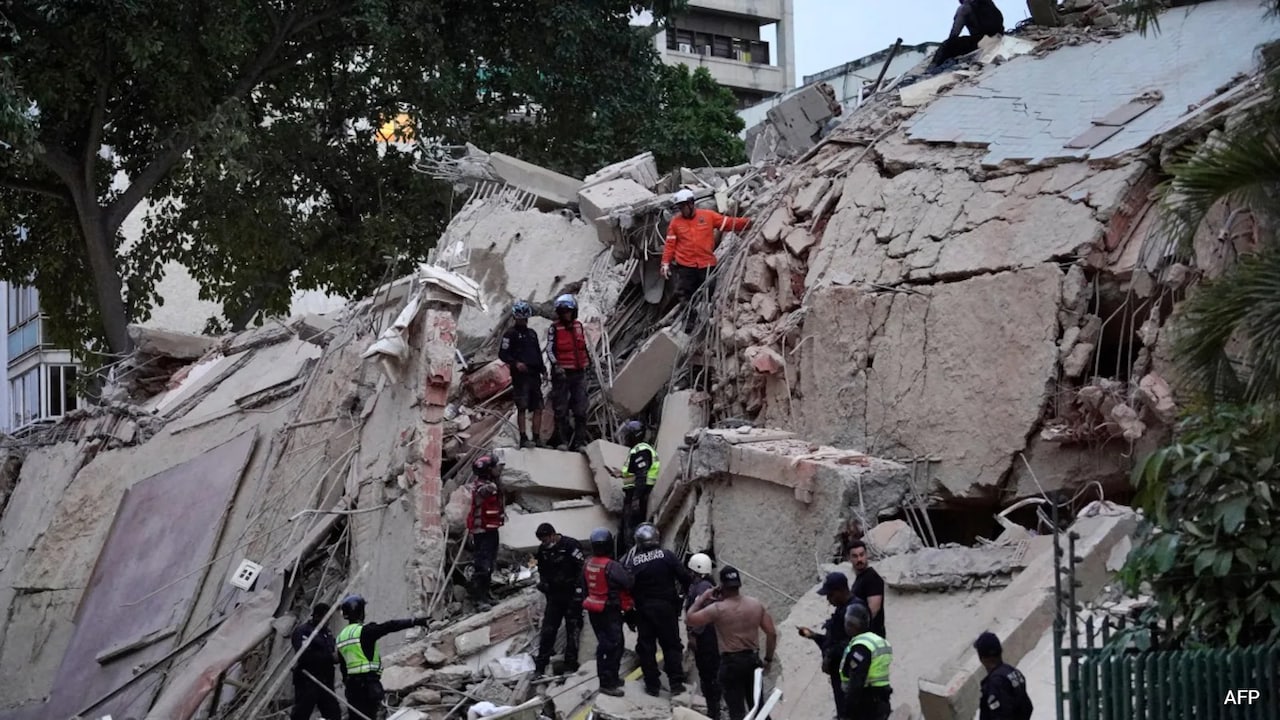
A devastating doublet earthquake event shattered northern Venezuela on June 24, 2026, dropping the nation into an immediate humanitarian crisis. Two massive strike-slip tremors, measuring magnitudes 7.2 and 7.5, struck within 39 seconds of each other just after 6 p.m. local time. The epicenters were located in the Veroes municipality of Yaracuy state, but the shockwaves rippled far beyond, causing severe destruction across Caracas, La Guaira, Aragua, Carabobo, and Miranda.
Acting President Delcy Rodríguez declared a state of emergency as the initial death toll jumped sharply to 164 people, with at least 971 injured and over 10,000 reported missing. In the capital's affluent Altamira neighborhood, a 22-story building completely collapsed into a mountain of concrete and twisted metal. As night fell and a widespread blackout blanketed the city, volunteers and first responders clawed through the debris using their bare hands. "We need flashlights," went the desperate cry from the rubble, highlighting the stark lack of equipment on the ground.
The Mechanics of a Doublet Catastrophe
This wasn't a standard mainshock-aftershock scenario. The U.S. Geological Survey (USGS) confirmed that Venezuela suffered a rare "doublet" event. The first 7.2 magnitude quake acted as a foreshock, rupturing a shallow fault line at a depth of roughly 20 kilometers. Less than a minute later, a second, more powerful 7.5 magnitude earthquake struck along the same fault system, confined to a 150-by-20-kilometer area.
Because the second quake occurred at a shallower depth of 10 kilometers, the ground shaking was exponentially more violent. The back-to-back hits meant structures already weakened by the first tremor simply crumbled when the second one arrived. According to the USGS PAGER system, which estimates earthquake fatalities and economic losses, there is a very high probability that the casualty figures will escalate significantly as search teams reach deep into heavily populated urban zones.
The violent shaking triggered evacuations as far away as northeastern Colombia and northern Brazil, with residents fleeing high-rise buildings in Manaus and Belém.
Infrastructure Failures and Isolated Regions
Caracas and its coastal neighbor, La Guaira, took the brunt of the structural damage. Interior Minister Diosdado Cabello reported that the eastern municipalities of Chacao, Los Palos Grandes, and Altamira are among the hardest hit in the capital. High-rise apartment buildings in southeastern Caracas sustained critical structural failures, with columns shattering and entire exterior walls sloughing off onto the streets below.
The transportation and communication corridors that rescuers rely on are currently broken.
- Air Travel: Simón Bolívar International Airport in Maiquetía sustained severe damage to its terminal buildings and runways, forcing an indefinite closure of all inbound and outbound flights.
- Communications: Widespread power outages instantly knocked out cellular towers and internet routing hubs, leaving families unable to check on missing relatives.
- Medical Strain: The Venezuelan Red Cross reported critical damage to its own national headquarters and local hospital infrastructure. Emergency rooms are overwhelmed with trauma patients suffering from severe crush injuries and fractures.
Emergency crews are shifting personnel from stable states toward La Guaira and the capital district. However, blocked highways and debris-strewn roads are slowing down heavy machinery, forcing civilian volunteers to handle the initial wave of search and rescue operations.
Immediate Emergency Response Requirements
Medical relief organization Direct Relief mobilized emergency medical supplies, focusing on wound care, antibiotics, and surgical kits to support local field clinics. The Colombian Red Cross placed its specialized search and rescue teams on high alert for international deployment, while regional crisis hubs are setting up along Venezuela's borders.
With more than 20 aftershocks recorded within the first few hours—the largest measuring a magnitude 4.5—the immediate priority is stabilizing partially collapsed structures so rescue teams can enter safely.
If you are looking to support relief efforts or are currently handling emergency preparation, focus your resources on these immediate local needs:
- Power and Illumination: High-output industrial flashlights, headlamps, and heavy-duty portable generators are the most requested items on the ground right now.
- First Aid and Trauma Supplies: Sterile bandages, splints, burn care ointments, and broad-spectrum antibiotics are critical as local hospital supplies run low.
- Clean Water and Sanitation: Water treatment tablets and portable filtration units are vital to prevent the spread of waterborne illnesses in temporary displacement camps.