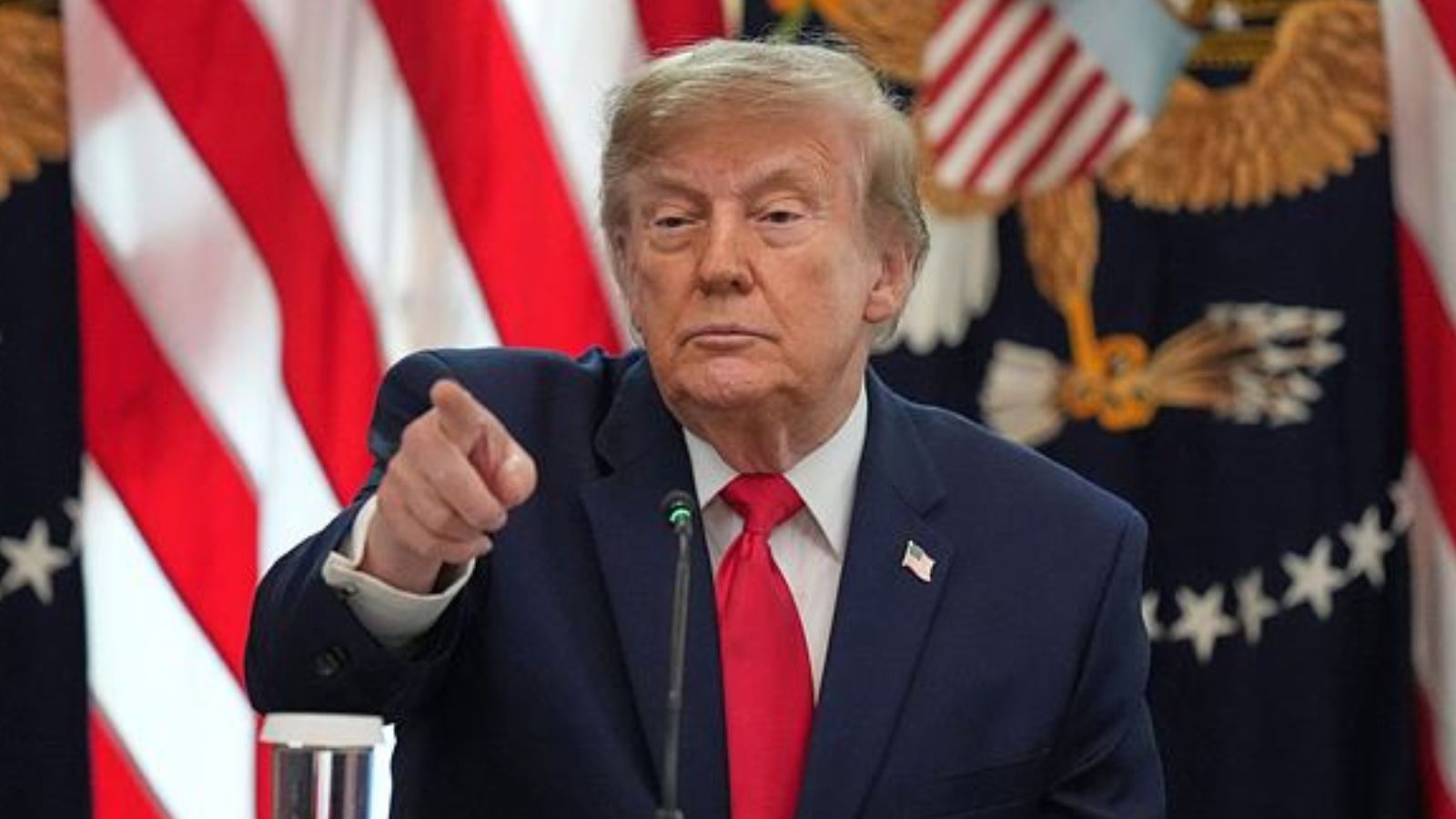
In January 2018, Donald Trump stood inside the Oval Office and wished the United States took in more immigrants from places like Norway. Fast forward to late 2025, and the rhetoric completely flipped on its head. During a fiery rally in Mount Pocono, Pennsylvania, Trump looked out at the crowd and grouped Norway with Somalia, labeling it a "shit house country" while questioning why America allows people from there to enter its borders.
People were confused. Honestly, I was too when the clip first started circulating across social media. Why would a president who spent years praising Scandinavian nations as the gold standard for immigration suddenly lump Oslo in with Mogadishu? In similar updates, read about: Inside Azerbaijan's School Hijab Ban and the Rare Protests Testing State Control.
If you only read the viral headlines, you miss the actual context behind the outburst. The reality involves a mix of rally-stage improvisation, shifting political grievances against European allies, and a complete misunderstanding of how many Norwegians actually move to the United States in the first place.
The Mount Pocono Rally and the Viral Quote
Let's look at what actually happened on that stage in Pennsylvania. Trump wasn't reading from a prepared policy speech written by State Department aides. He was riffing. Anyone who has watched his rallies over the last decade knows how his stream-of-consciousness style works when he feeds off a loud crowd. USA Today has provided coverage on this important issue in extensive detail.
He started talking about border security and merit-based immigration, a familiar staple of his stump speeches. Then he brought up his infamous 2018 Oval Office meeting—the one where he reportedly asked lawmakers why the U.S. was accepting people from "shithole countries" like Haiti and El Salvador instead of places like Norway.
Except this time, he remixed his own history. Instead of holding Norway up as the ideal example, he turned on it. He told the crowd that people from Norway, Denmark, and Sweden weren't doing the U.S. any favors by coming over, dropping the "shit house" label right in the middle of a rant about foreign nations taking advantage of American generosity.
The internet exploded within minutes. Norwegian politicians, who usually stay pretty quiet about American domestic politics, felt forced to respond. Commentators in Oslo pointed out the obvious irony. Seven years earlier, Prime Minister Erna Solberg had to awkwardly explain to the press why Norwegians weren't rushing to pack their bags for America. Now, her successors were being told they weren't welcome anyway.
Why Trump Turned on Scandinavia
You might wonder what changed between 2018 and 2025 to sour Trump on the Nordic region. It didn't happen overnight. Several friction points built up over time, turning a country he once admired into an easy punching bag at political rallies.
First, there's the ongoing tension over NATO and defense spending. Trump has spent years hammering European allies for relying on the American military umbrella while pouring their own tax revenues into generous domestic social programs. Norway sits on one of the largest sovereign wealth funds in the world, built on North Sea oil and gas. To Trump and his base, seeing wealthy European nations fund free healthcare and college tuition while lagging behind on defense commitments feels like a bad deal for American taxpayers.
Second, right-wing media ecosystems in the U.S. have drastically changed how they talk about Sweden and Norway over the past few years. Back in 2018, Scandinavia was held up as a homogenous, prosperous model. Today, conservative commentators frequently portray Nordic countries as cautionary tales of European decline, pointing to rising crime rates in certain urban areas and strict climate policies that clash with Trump's "drill, baby, drill" agenda.
When Trump steps up to a microphone in rural Pennsylvania, he reflects the grievances of that specific audience. Calling Norway a "shit house country" wasn't a carefully calibrated diplomatic insult aimed at Oslo. It was a populist jab aimed at wealthy European elites who lecture the United States on climate change and human rights.
The Reality of Norwegian Immigration to the US
Here is the funniest part about the whole controversy. Nobody from Norway is actually trying to immigrate to the United States in significant numbers.
We can look directly at the numbers from the Department of Homeland Security and the Pew Research Center to see how lopsided this narrative is. Every single year, the U.S. grants lawful permanent resident status—green cards—to roughly one million people worldwide. How many of those go to Norwegian citizens? Usually fewer than 400 per year.
Think about that. Out of a million new permanent residents, Norwegians make up about 0.04 percent. More people move to New York City from New Jersey on a random Tuesday than Norwegians immigrate to the entire United States in twelve months.
Why don't Norwegians want to move here? The math is pretty simple if you look at quality-of-life metrics.
- Healthcare costs: Norway provides universal healthcare with minimal out-of-pocket expenses, whereas moving to the U.S. means navigating private insurance premiums and deductibles.
- Work-life balance: Norwegian workers get a statutory minimum of 25 paid vacation days a year, plus generous parental leave policies that last nearly a year.
- Economic safety nets: With a GDP per capita that consistently ranks among the top five globally, the average citizen in Oslo enjoys higher baseline financial security than the average resident in most American states.
- Education: Public universities in Norway charge zero tuition fees for domestic students, allowing young adults to enter the workforce without crushing student loan debt.
In the late 1800s and early 1900s, over 800,000 Norwegians fled poverty and rocky farmland to settle in Minnesota, Wisconsin, and the Dakotas. That migration wave ended a century ago. Today, migration between the two countries is mostly corporate transfers, university exchange students, and the occasional marriage. Banning or discouraging Norwegian immigrants is like putting a "No Trespassing" sign on a door nobody is trying to open.
How Media Outlets Covered the Outburst
Watching the press cover this story revealed a lot about how political journalism operates right now. Many digital outlets immediately jumped on the shock value of the quote, framing it as a major diplomatic crisis or a concrete new immigration restriction.
If you read past the clickbait headlines, though, you realize there is no executive order banning Norwegians. There is no State Department directive revoking visas in Oslo. When you cover politics for a living, you learn to separate rally rhetoric from actual policy mechanisms. A president saying someone isn't welcome during a campaign-style speech carries zero legal weight at a U.S. Customs and Border Protection checkpoint.
At the same time, dismissing the comments completely is a mistake. Words from the Oval Office—or from the leader of the free world on a stage in Pennsylvania—carry massive soft-power consequences. Foreign ministries in Europe track these remarks closely. Even if they know it's red meat for a domestic crowd, allies start questioning how reliable the United States really is as a long-term partner.
What This Means for US and European Relations
Diplomatic trust erodes slowly, then all at once. Norway isn't just a random small country in northern Europe; it's a founding member of NATO that shares a direct land border with Russia in the Arctic.
The U.S. military relies heavily on Norwegian intelligence, radar installations, and naval bases to monitor Russian submarine activity in the High North. For decades, Oslo has been one of Washington's most loyal, quiet partners, buying American F-35 fighter jets and aligning closely with U.S. foreign policy goals.
When an American leader casually insults a country like that on national television, it gives ammunition to critics in Europe who argue that the continent needs to decouple from Washington. You see this debate happening right now in Brussels, Berlin, and Oslo. European lawmakers are actively pushing for "strategic autonomy," which basically means building up their own defense industries so they don't have to rely on the whims of American domestic politics.
If you're trying to follow international news without getting swept up in daily outrage cycles, pay attention to the gap between what politicians say at rallies and what their governments actually sign on paper. Check the U.S. State Department's official bilateral fact sheets or look up actual visa issuance statistics on travel.state.gov before assuming a viral clip means a sudden change in border policy. Watching the real data—like NATO defense spending percentages and bilateral trade agreements—will tell you way more about where America stands with Europe than a five-second soundbite ever will.