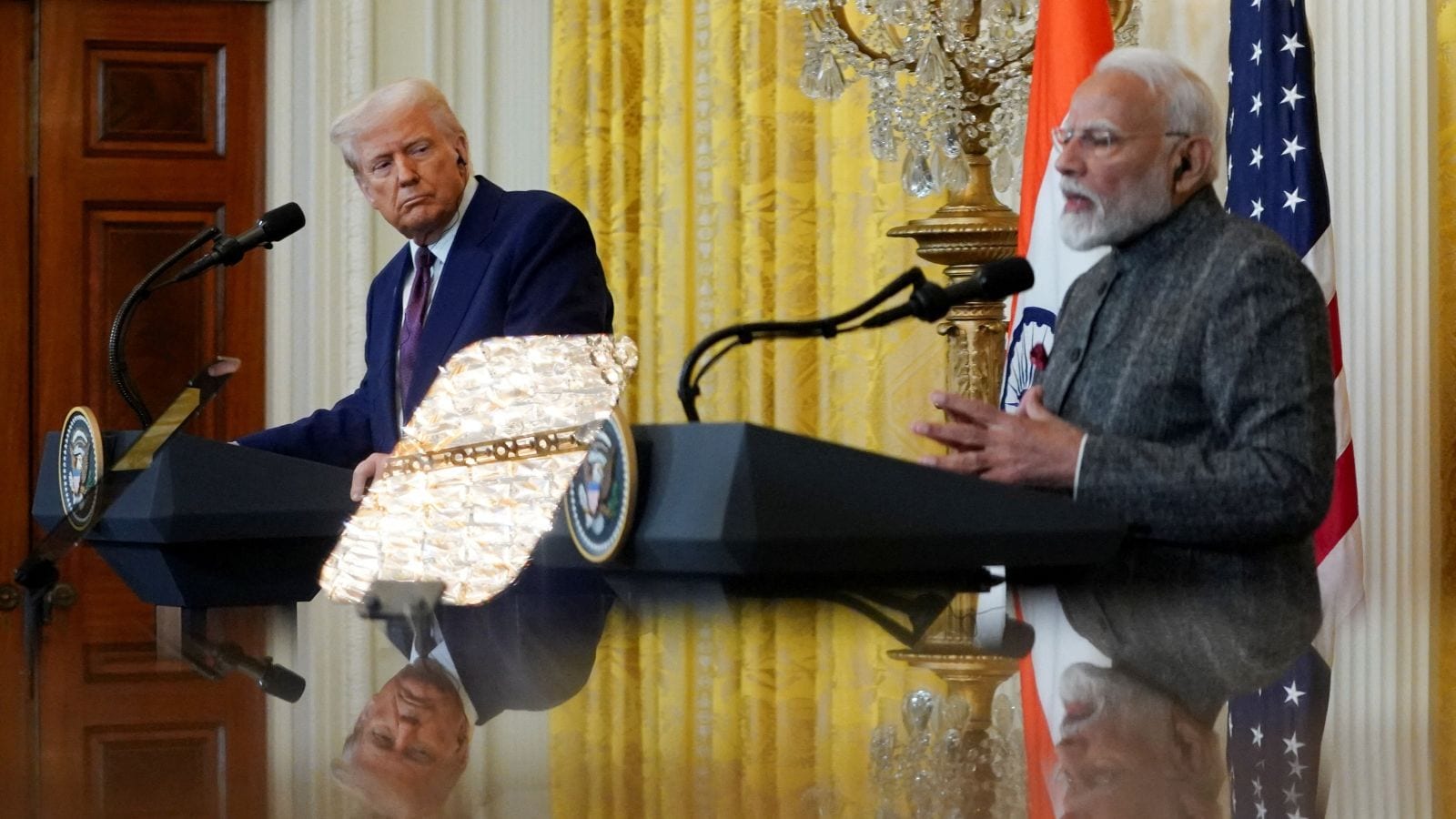
Two years. That's how long it took to get the leaders of the United States, India, Japan, and Australia into the same room again. When news first leaked that Donald Trump and the other Quad leaders would meet in Manila on Tuesday, November 17, 2026, diplomatic circles in Washington and New Delhi buzzed with speculation. Was the coalition dead? Had Trump's second-term trade policies hollowed out the Indo-Pacific's favorite informal alliance?
Not quite. The Manila gathering—held right on the sidelines of the ASEAN summit—delivered five concrete initiatives, a surprising shift toward "Super Intelligence" governance, and a clear signal about how these four democracies plan to police the region's waters in 2027.
Yet if you only read the initial wire reports predicting the meeting, you missed the real tension in the room. Trump spent barely 21 hours in the Philippine capital before flying off toward Shenzhen for high-stakes talks with China. That tight window forced the Quad to cut the diplomatic fluff and focus strictly on hard infrastructure, maritime tracking, and private-sector cash.
Why the Manila Quad Summit Was Different From 2024
The last time the Quad held a leaders' summit was back in September 2024 in Delaware. That felt like a farewell tour for the Biden administration. Since returning to the White House in January 2025, Trump hadn't attended a single Quad leaders' meeting, leaving critics to wonder if he viewed the grouping as just another multilateral talking shop.
Manila changed the roster and the vibe. Sitting across from Trump were Indian Prime Minister Narendra Modi, Australian Prime Minister Anthony Albanese, and Japan's Prime Minister Sanae Takaichi.
Notice the dynamic here. Unlike NATO, the Quad doesn't have a headquarters, a permanent secretariat, or a mutual defense treaty. It survives purely on political willpower. When I look at how this grouping operates, its biggest weakness is also its greatest strength: nobody is legally bound to show up, so when all four leaders actually clear their schedules to sit in Manila, the deliverables have to be transactional enough to justify the flight.
Trump doesn't care about lofty communiqués praising rules-based orders. He cares about deals, defense burden-sharing, and tech dominance. The Manila joint statement reflects that shift completely.
The Five Core Outcomes From the November 17 Meeting
According to the official White House joint press release, the four leaders walked out of their Tuesday session with five specific commitments. None of them involve forming a military bloc, though Beijing will inevitably claim otherwise.
1. Joint Maritime Patrols and Surveillance in 2027
Water security remains the Quad's bread and butter. The leaders launched the Indo-Pacific Maritime Surveillance Collaboration, designed to pool intelligence and track vessel movements across contested waters.
Here's the concrete detail that matters: in 2027, P-8 and P-3C maritime patrol aircraft from the U.S., India, Japan, and Australia will fly together in a coordinated maritime exercise for the very first time under a Quad banner. Hosting this announcement in Manila—a capital locked in ongoing maritime friction in the South China Sea—wasn't an accident.
2. The Quad Business Leaders Forum
Governments talk; corporations build supply chains. To move away from pure state-funded aid, the leaders announced the inaugural Quad Business Leaders Forum, set to convene in early 2027.
It brings together private-sector executives, policy experts, and government officials to hammer out commercial partnerships. Honestly, this is classic Trump-era diplomacy. If you want India, Japan, and Australia to decouple critical supply chains from regional competitors, you put CEOs in a room and let them sign contracts rather than writing another 40-page white paper.
3. The Super Intelligence Accelerator
Look closely at the wording in the Manila joint statement and you'll catch a fascinating diplomatic quirk. The leaders reaffirmed support for the Super Intelligence (SI) Accelerator, an initiative first rolled out by their foreign ministers in Atlanta.
A footnote in the White House text explicitly clarifies that in Australia, India, and Japan, "Super Intelligence" refers to artificial intelligence. Washington pushed the SI branding, while its partners kept their standard AI terminology. Semantics aside, the fund coordinates technical assistance and trusted deployment of advanced compute systems across the Indo-Pacific so smaller nations aren't forced to rely on a single supplier for their digital backbone.
4. Subsea and Electricity Cable Resilience
Data doesn't float through magic clouds; it travels through thick fiber-optic cables sitting on the ocean floor. The Quad expanded its Partnership for Cable Connectivity and Resilience, with Australia stepping up its financial and technical contribution to focus specifically on undersea electricity cables.
They also greenlit upcoming undersea telecom cable projects across the Indian Ocean. When you're trying to secure regional energy and internet infrastructure against physical tampering or outages, owning the repair ships and laying the cables yourself is the only real insurance policy.
5. Cybersecurity and Counterterrorism Alignment
The final two pillars target asymmetric threats. Facing a spike in state-sponsored and criminal hacks across Asia, the four countries launched Enhanced Quad Cybersecurity Cooperation to harden regional networks. They also issued a blunt condemnation of cross-border terrorism and violent extremism, pledging tighter intelligence sharing among their security agencies.
What Critics and Analysts Are Getting Wrong
If you read foreign policy commentary right after the summit—including sharp critiques published in outlets like The Hill—you'll see a growing narrative that the Quad is losing momentum and risking strategic irrelevance.
Their argument rests on optics. Trump stayed in Manila for less than a day. He skipped a traditional formal ASEAN summit session in favor of a quick working dinner, then immediately headed toward China. Critics argue that treating Manila as a brief stopover signals that Washington cares more about striking a bilateral bargain with Beijing than tending to its alliances.
I think that analysis misses how modern Indo-Pacific diplomacy actually works.
First, expecting the Quad to act like an Asian NATO is a category error. India has never wanted a formal military alliance, and Prime Minister Modi wouldn't sign onto one even if Washington begged. The Quad's value lies in quiet operational plumbing—sharing P-8 surveillance feeds, funding Indian Ocean telecom cables, and aligning export controls on advanced AI.
Second, stopping in Manila before meeting Chinese leadership isn't a sign of weakness. It's basic positioning. By locking in maritime surveillance drills and tech alignment with Tokyo, New Delhi, and Canberra first, Trump walked into his subsequent talks in China holding a unified front rather than negotiating in isolation.
The Bigger Picture for the Philippines and ASEAN
Manila wasn't just a neutral venue. Hosting the Quad alongside the ASEAN meetings put Philippine President Ferdinand Marcos Jr. directly at the center of Indo-Pacific power politics.
Notice how carefully the Quad leaders phrased their support for Southeast Asia. The joint statement explicitly reaffirmed "unwavering support for ASEAN centrality and unity". Diplomats repeat that phrase like a mantra because Southeast Asian nations get nervous whenever big powers form exclusive clubs in their backyard.
For Manila, the payoff is tangible. Enhanced maritime domain awareness from Quad P-8 aircraft gives the Philippines far better visibility into vessels operating near its Exclusive Economic Zone without requiring the U.S. Navy to park an aircraft carrier on every reef. Meanwhile, the push for critical mineral supply chains and undersea cable investments positions the Philippines as a manufacturing and digital hub rather than just a military outpost.
Still, announcements don't lay fiber-optic cables or fuel patrol planes. As regional observers in Manila rightly pointed out following Trump's departure, the real test happens over the next twelve months. Will the early-2027 Business Leaders Forum produce signed factory deals, or just photo ops? Will the 2027 P-8 maritime exercise expand into routine joint patrols?
How to Track What Comes Next for the Quad
If you're following Indo-Pacific geopolitics, supply chain shifts, or defense markets, don't wait for the next leaders' summit to see whether the Manila agreements hold water. Watch these three concrete benchmarks between now and mid-2027:
- Q1 2027 Business Forum Rosters: Check which semiconductor, telecom, and critical mineral executives actually show up to the inaugural Quad Business Leaders Forum. If tier-one private capital attends, the supply-chain shift is real.
- Indian Ocean Cable Tenders: Monitor infrastructure contracts awarded under the Quad Partnership for Cable Connectivity and Resilience. Actual capital disbursement from Canberra and Tokyo will prove whether the energy and data cable expansion is funded.
- Flight Paths of P-8 and P-3C Squadrons: Watch defense ministry readouts from New Delhi and Canberra for the exact coordinates and scope of the 2027 joint maritime surveillance drills. Closer integration near the Malacca Strait or South China Sea will tell you everything you need to know about how hard the Quad is willing to push back.
Watch the Manila Quad Leaders Summit coverage for direct footage of Trump, Modi, Albanese, and Takaichi meeting on the sidelines of the ASEAN summit in Pasay City.