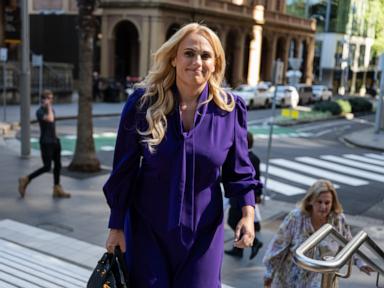
Hollywood loves a good courtroom drama, mostly because it distracts everyone from the fact that the actual product is broken. When Rebel Wilson hauled producers into a Sydney courtroom over the messy collapse of The Deb, the headlines treated it like a classic David versus Goliath showdown. Independent cinema versus shadowy financiers. Artistic vision versus cold-hearted spreadsheets.
It makes for juicy press. It also completely misunderstands how the entertainment business actually operates.
I have spent years watching producers, directors, and actors bleed cash into vanity projects while treating distribution economics like an afterthought. Everyone wants to point fingers at the money men or the temperamental stars when a production goes sideways. Nobody wants to admit that the entire indie financing model is built on wishful thinking and legal duct tape. Wilson fighting over The Deb in New South Wales is not a noble crusade for creative freedom. It is a symptom of a systemic disease that infests mid-budget filmmaking on both sides of the Pacific.
Let us dismantle the lazy consensus.
The Illusion of Artistic Control
The narrative surrounding this legal brawl relies on a comforting fairy tale: an auteur actor steps behind the camera to champion a scrappy musical, only to be kneecapped by incompetent or malicious backers.
Reality is much uglier.
When you finance an independent film, you are not engaging in pure philanthropy. You are entering a high-risk venture capital arrangement where every stakeholder is trying to pass the bag of risk to someone else. Actors turned directors often assume that star power translates to operational mastery on set. It does not. Directing a feature film requires ruthless prioritization, budget discipline, and an intimate understanding of completion bonds.
When creative ambitions collide with hard cash limits, a collision is guaranteed. The courts are now being asked to sort out bruised egos and broken contracts, but a legal judgment will never fix a flawed pre-production strategy.
Look at how independent financing actually works. You cobble together soft money, tax rebates, foreign pre-sales, and private equity. Every single one of those funding sources comes with strings attached. Pre-sales demand specific cast members. Tax credits demand local crew quotas. Private investors demand completion guarantees. By the time the first camera rolls, the director is already fighting a hundred silent wars just to keep the lights on.
Throwing a lawsuit into the mix does not rescue the art. It just ensures that lawyers collect the profits that should have gone to the cast and crew.
The Mythos of the Indie Producer
On the other side of the courtroom, the producers are trotting out their own defense, painting themselves as pragmatic stewards protecting investor capital from an out-of-control vanity project.
Let us call nonsense on that as well.
I have seen production companies walk into regional financing deals with zero intention of finishing a film on budget. They rely on the sunk cost fallacy. Once a regional film commission or a wealthy backer has sunk a few million dollars into local production costs, they are trapped. They have to keep writing checks to avoid the catastrophic PR of a collapsed production.
To pretend that producers are innocent bystanders caught in the crossfire of a celebrity's directorial debut is laughable. Many independent producers survive not by making profitable films, but by collecting administrative fees during pre-production before the cameras even roll. If the movie collapses, they have already secured their cut. The talent loses their reputation, the investors lose their principal, and the producers move on to the next pitch deck.
Wilson taking this to court highlights a glaring flaw in how disputes are handled in this sector. Instead of building mediation clauses or realistic exit ramps into contracts, parties rely on scorched-earth litigation once the cameras stop rolling.
What Everyone Gets Wrong About Festival Politics
The fight over The Deb originally centered around its selection as the closing night film at the Toronto International Film Festival, followed by its abrupt withdrawal. The media framed this as a petty turf war.
It was actually a desperate scramble to control the narrative.
Festivals are not objective showcases of artistic merit. They are high-stakes stock exchanges. A premiere slot at a major festival dictates whether a film gets a global streaming deal or gets dumped onto a transactional video-on-demand platform on a Tuesday night. When a production descends into a legal bloodbath before the premiere, festival programmers run for the hills. They have reputations to protect. They do not want their closing night tainted by injunctions and defamation claims.
The mistake here was treating a festival slot as a validation milestone rather than a commercial transaction. If a film is embroiled in ownership disputes, premiering it is cinematic Russian roulette. Pulling it was arguably the only sane move made by anyone involved, even if the reasons given to the public were wrapped in corporate PR speak.
The Brutal Math of Musical Comedies
Strip away the personalities, the Sydney courtroom drama, and the dueling press releases, and you are left with a sobering financial reality. The Deb is a regional musical comedy.
Let’s look at the data. Mid-budget musicals are among the most financially volatile assets in entertainment. They cost significantly more to produce than standard dramas because of music licensing, choreography, large ensemble casts, and specialized sound design. At the same time, their theatrical ceiling is often limited unless they feature globally recognized intellectual property or proven box-office titans.
When you finance a musical independently, you are betting against the house. If the distribution landscape shifts even slightly—if a buyer drops out or a streaming platform alters its acquisition strategy—the entire financial model collapses.
Blaming sabotage is easier than admitting that the business model relies on margins that do not exist anymore.
The Uncomfortable Takeaway
Rebel Wilson has every right to defend her reputation and her vision in court. But let us not pretend that this legal battle is going to reform the industry. It is a localized dumpster fire fueled by ego, broken communication channels, and an outdated financing ecosystem.
Until independent filmmakers stop treating budgets like suggestions and investors stop pretending they are running a charity, we are going to keep seeing vanity projects implode in front of judges who would rather be looking at literally any other docket.
Stop looking for villains in Hollywood. Look at the math. The math is never on your side.