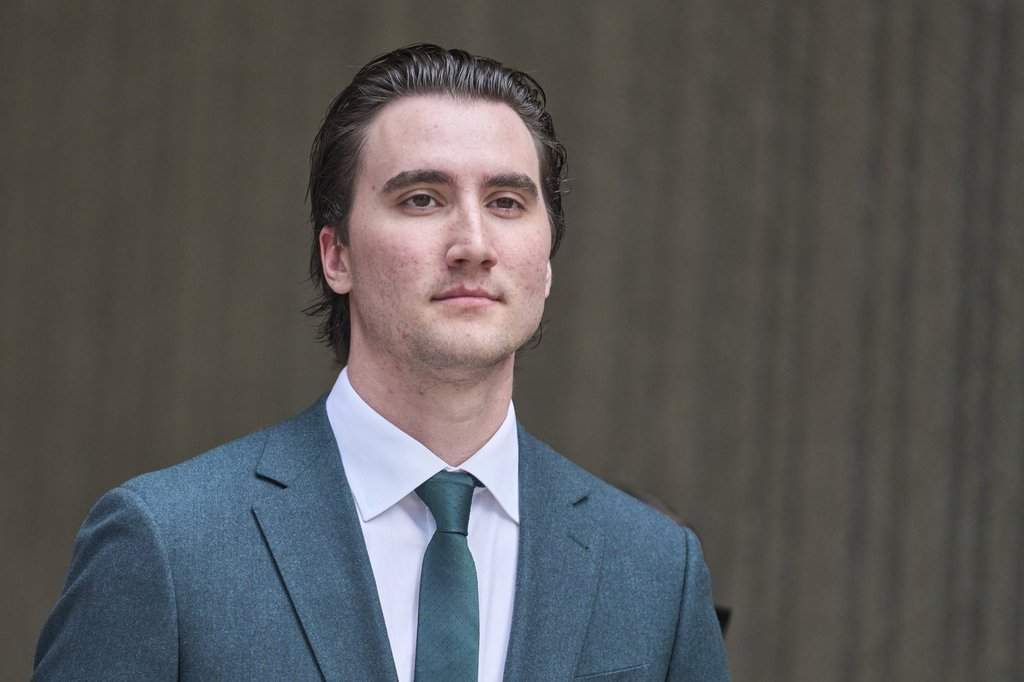
Red Bull has officially secured eleven-year-old karting competitor Robin Räikkönen—son of 2007 Formula 1 World Champion Kimi Räikkönen—into its elite driver development programme starting in 2027. For an organization that operates like a cold-blooded talent foundry, securing a bloodline carrying the DNA of the last Ferrari champion is a masterstroke of marketing and institutional positioning. Yet, behind the paddock handshakes and the carefully scripted announcements from Milton Keynes, this signing exposes the frantic, increasingly absurd arms race to monopolize human potential before children even reach high school.
Motorsport development has shifted from a meritocracy of late teens into an aggressive extraction industry. Teams no longer wait for a driver to prove themselves in junior formulae. They stake claims in the karting paddock while drivers still lose baby teeth. Meanwhile, you can find related developments here: Why Larry Scott Championing Player Pay Is The Ultimate Athletic Irony.
The mechanics of modern driver recruitment are built on an uncomfortable truth. Talent alone is cheap and infinitely abundant. What is scarce is the financial and operational bandwidth required to filter out the noise. When Red Bull signs an eleven-year-old, they are not just buying lap times recorded in Rotax and WSK championships. They are buying exclusivity, data pipelines, and a psychological stranglehold over a minor asset before a rival academy can step in.
Consider the mathematics of contemporary junior development. A competitive karting campaign across international circuits easily drains six figures annually. By absorbing these costs, providing top-tier telemetry analysis, and wrapping a child in corporate logistics, Red Bull creates an artificial ecosystem that independent families can never replicate. To explore the full picture, we recommend the recent report by FOX Sports.
Kimi Räikkönen understands this machinery better than most. The man they called "The Iceman" spent two decades treating the Formula 1 media circus with utter contempt, yet he has willingly handed his eldest son over to the most aggressive corporate talent mill in the sport. Why? Because surviving the modern single-seater ladder without institutional backing is financial suicide.
The public narrative presented by Red Bull leadership emphasizes patience. Team management insists the priority is shielding the young Finn from undue pressure, allowing him to grow without the crushing weight of his surname.
History suggests otherwise.
The Red Bull Junior Team is famous for its ruthless efficiency. It is a pressure cooker that has forged world champions like Sebastian Vettel and Max Verstappen, but it has also chewed up and discarded dozens of teenagers whose development stalled by a single tenth of a second. To place an eleven-year-old child inside that orbit is to sentence him to a decade-long audition where one bad season results in swift excision.
The scrutiny faced by the younger Räikkönen is unprecedented for someone who has not yet driven a car with a roof, let one go through FIA single-seater testing. Every lock-up in a heat at Lonato or Zuera will be hyper-analyzed across social media channels by adults with nothing better to do than tear down a child.
This brings us to the core contradiction of the modern development model. Teams claim they want to nurture raw human ability, yet they subject children to commercial pressures that would break seasoned professionals. The psychological toll of being labeled a chosen one before puberty is a variable no telemetry system can measure.
We have watched second-generation drivers enter the paddock before. Some, like Max Verstappen, carry the heavy burden of a racing dynasty and forge something terrifyingly dominant. Others crack under the constant comparison to a parent's legacy.
When Robin Räikkönen steps into the Red Bull setup for the 2027 season, he will not just be racing against his peers. He will be racing against the ghost of a world champion father who famously cared very little for the politics of the sport, managed by a team that feeds entirely on political and competitive dominance.
The machinery is in motion. The contracts are signed. And a child's hobby has officially become a corporate asset.