A microscopic war rages inside the human body every second. For most people, the red blood cells moving through their veins are plump, pliable spheres. They glide effortlessly through capillary walls, delivering life-sustaining oxygen like a fleet of well-kept ships.
But for millions born with a single typo in their genetic code, those ships are warped. They bend into rigid, jagged crescents. Sickles.
These misshapen cells do not glide. They snag. They pile up in the narrowest passageways of the circulatory system, forming microscopic logjams that cut off oxygen to tissue and bone. The result is a crisis of pain so agonizing that patients describe it as a physical assault—as if someone is drilling directly into their marrow, or pounding their joints with a sledgehammer.
This is sickle cell disease, known in French-speaking West Africa as la drépanocytose. For decades, this inherited blood disorder has cast a long, suffocating shadow over Senegal. It is a quiet crisis, devastating families behind closed doors, draining resources, and cutting young lives short. Yet, a quiet revolution is unfolding in the medical wards of Dakar. A new treatment is shifting the narrative from desperate management to genuine, breathing hope.
To understand the weight of this moment, you have to look past the clinical statistics and step into the heat of a waiting room at the Albert Royer Children's Hospital in Dakar.
The Weight of the Sickle
Imagine a mother sitting on a wooden bench, holding her five-year-old son. Let us call him Amadou. This is a composite portrait of a thousand children who pass through Senegal's healthcare system. Amadou is crying, a high-pitched, exhausted wail that cuts through the humid air. His hands and feet are severely swollen—a classic manifestation of hand-foot syndrome, often the first cruel signal of the disease in infancy.
His mother can do nothing but rock him. She knows the routine. The sudden onset of a vaso-occlusive crisis means days of hospitalization, heavy narcotics that only dull the edges of the pain, and the terrifying knowledge that each crisis damages his organs just a little bit more.
[Image of sickle cell vs normal red blood cell]
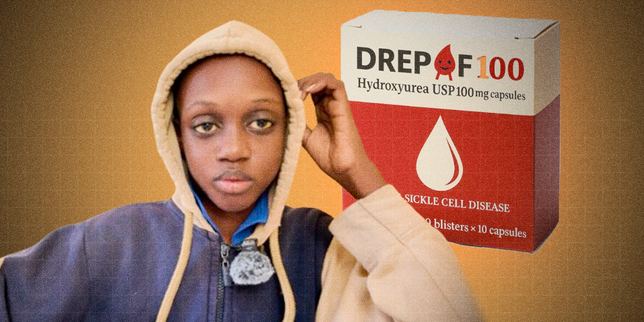
In Senegal, where the trait is deeply embedded in the population, Amadou’s story is a common thread. Roughly one in ten Senegalese carries the sickle cell trait, and thousands suffer from the full, severe form of the disease. It is a heavy tax on a developing healthcare infrastructure. Blood transfusions are a frequent necessity, yet supply lines are perpetually fragile. Hydroxyurea, long the standard pharmaceutical defense to reduce the frequency of crises, is a lifelong commitment, fraught with monitoring requirements and varying degrees of efficacy.
For generations, the diagnosis felt like a sentence of limitations. Parents watched their children miss school, fall behind, and struggle to summon the energy for a simple game of football in the dust. The psychological toll is a heavy fog. Families live in constant fear of the next crisis, knowing it could be triggered by something as trivial as a sudden drop in temperature, a mild infection, or minor dehydration.
The Shift in Dakar’s Wards
But the medical landscape is not static. In Dakar, hematologists and specialists are witnessing a profound shift. The introduction of targeted, next-generation therapies is changing what it means to live with the condition.
While gene therapies make headlines in wealthy Western nations with price tags running into millions of dollars per patient, Senegal’s medical community is focusing on scalable, highly effective therapeutic interventions that can actually be deployed on the ground. The recent introduction of advanced monoclonal antibodies and specialized daily treatments has altered the trajectory of the disease for patients enrolled in clinical programs.
These new treatments work by addressing the root mechanics of the cellular pile-up. Instead of merely treating the pain after the logjam occurs, the therapies work to prevent the cells from sticking together in the first place, or they alter the hemoglobin composition to keep the cells flexible.
Consider the difference this makes on a cellular level. When the jagged cells are kept from adhering to the blood vessel walls, the traffic jam never forms. The oxygen keeps flowing. The drill never touches the bone.
The data emerging from local trials and implementation programs is striking. Specialists are observing a drastic reduction in the frequency of painful crises and a corresponding drop in hospital readmission rates. For a healthcare system like Senegal's, this is a massive relief. Every bed freed up in a pediatric ward means more resources for overall public health, and every transfusion avoided relieves pressure on the national blood banks.
The Unseen Hurdles of the Cure
The science is triumphant, but the street is complicated. A medical breakthrough is only as good as its delivery system, and in Senegal, the path from the laboratory bench to the patient's bedside is riddled with real-world obstacles.
The first hurdle is economic. High-tier, modern medications come with a cost that threatens to price out the very families who need them most. Without state subsidies, international partnerships, or robust health insurance systems, these life-altering treatments risk becoming privileges reserved exclusively for the wealthy elite of Dakar.
Then comes the logistical gauntlet. Many of these modern therapies require precise storage conditions, including strict cold-chain maintenance. In a country where rural clinics frequently face power outages and fluctuating temperatures, keeping a sensitive medication perfectly chilled is a logistical nightmare.
Furthermore, the deep-seated cultural stigma surrounding genetic illnesses cannot be ignored. In many communities, a child born with a chronic illness is viewed through a lens of superstition or unexpressed blame. Mothers are often unfairly held responsible for passing down the trait, leading to marital strain and social isolation.
To combat this, Senegalese doctors are not just prescribing pills; they are acting as community advocates. They are taking to the airwaves, partnering with local leaders, and using digital media to explain that sickle cell is a biological reality, not a spiritual curse. They are demystifying the blood, showing that with the right medical intervention, a child can grow, thrive, and contribute fully to society.
A New Rhythm of Life
The true measure of this medical advancement is found in the quiet moments of a restored childhood.
Think back to Amadou, the young boy on the hospital bench. Picture him three years later, having gained access to the new therapeutic regimen through a dedicated clinical initiative. He is no longer the frail, exhausted child huddled in his mother’s arms.
Instead, he is running through the courtyard of a school in the Medina neighborhood, laughing as he chases a ball. His skin has lost the subtle, jaundiced tint common in severe sickle cell patients. His attendance record at school is spotless. His mother no longer wakes up in the middle of the night to check his breathing, her heart pounding with the dread of an impending crisis.
This is the human face of the scientific struggle. It is not just about altering a statistical curve on a public health chart; it is about reclaiming the ordinary rhythm of life. It is about allowing a child to just be a child, free from the terror of their own blood turning against them.
The battle against sickle cell disease in Senegal is far from over. True victory will require sustained funding, systemic healthcare reform, and an unyielding commitment to logistical equity across all regions, from the capital to the most remote villages along the river. But the door has been opened. The specialists in Dakar have tasted what is possible when modern science is paired with local determination, and they are refusing to look back.
The crescent cell is losing its grip, one heartbeat at a time.