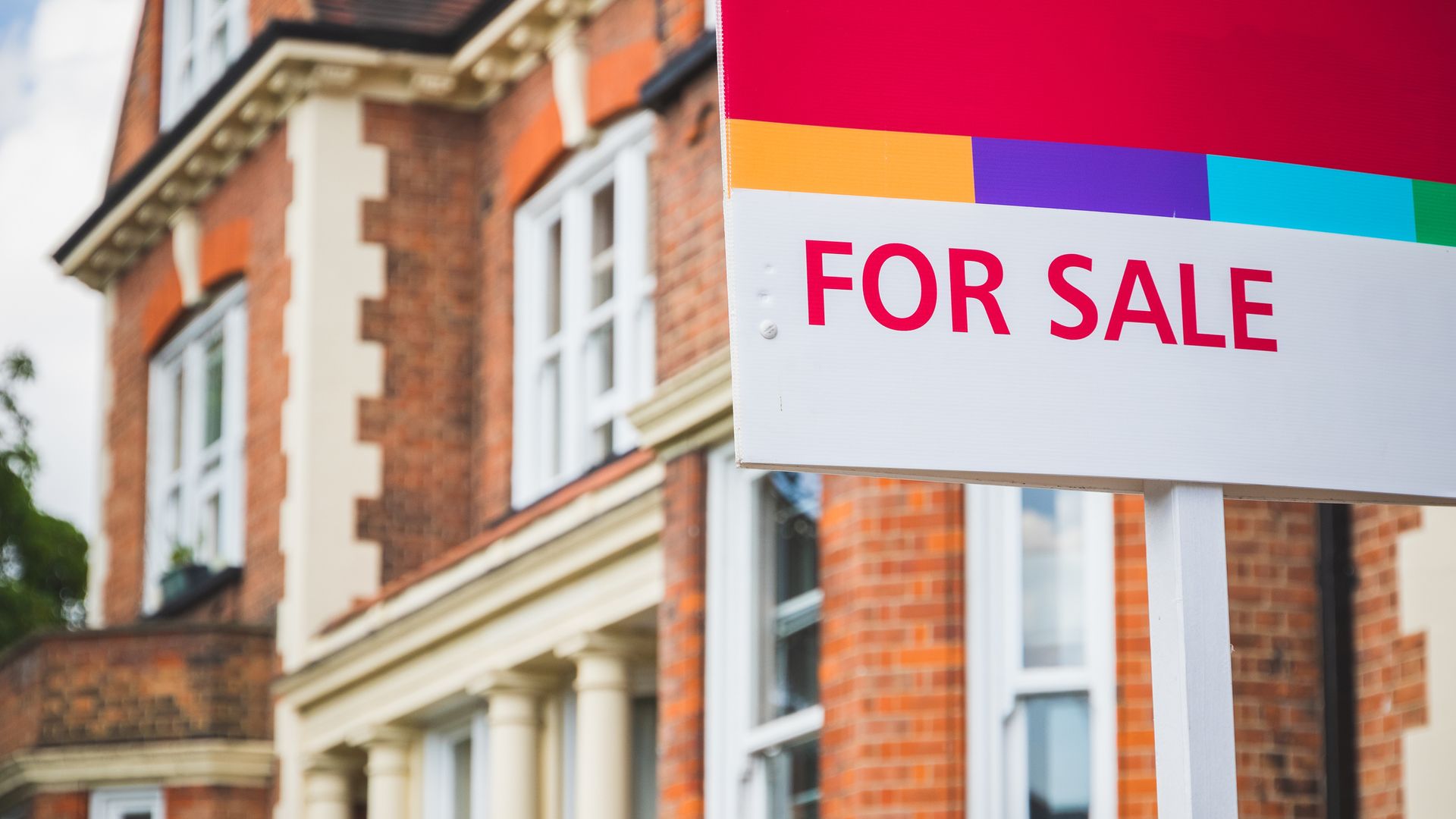
The coffee in the mug has gone cold. It sits on a cheap kitchen table next to a mountain of paperwork, three open laptops, and a toy truck with a broken wheel. Sarah and David had done everything right. They saved for seven years, skipping holidays and driving a car held together by hope and duct tape. They found the house—a modest three-bedroom semi-detached with a garden just big enough for a swing set. Their offer was accepted. The champagne cork had popped.
Then the surveyor walked in.
He didn't look like a villain. He wore a damp raincoat and carried a digital tape measure. He spent forty-five minutes poking at floorboards, tapping walls, and typing silently into a tablet. He didn't say much before he left, just a polite nod and a promise that the report would reach the lender by Friday.
When the email arrived, the number at the bottom felt like a physical blow. The agreed price was £350,000. The bank’s valuation? £315,000.
A thirty-five-thousand-pound ghost.
This is the reality of the down-valuation epidemic currently sweeping through the property market. It is happening at a scale never seen before, quietly dismantling thousands of transactions every week. It is a invisible crisis of confidence, where mathematical models collide violently with human aspirations.
To understand why this is happening, we have to look past the bricks and mortar. We have to look at the psychology of panic.
The Gap in the Ledger
When a buyer and a seller agree on a price, it feels like a done deal. It represents a meeting of minds, a mutual agreement on value born out of weekends spent viewing properties and hours spent analyzing local listings. But a mortgage lender does not care about your emotional connection to a south-facing garden.
Lenders rely on surveyors. Surveyors rely on comparable evidence—hard, historical data of what similar houses in the immediate area sold for over the last three to six months.
Herein lies the friction. The market moves fast. Human desire moves fast. The bureaucratic machinery of banking moves at a crawl. When prices fluctuate rapidly or when economic uncertainty looms, surveyors become risk-averse. They look backward to justify a number today, while buyers are looking forward to building a life tomorrow.
Think of it as a financial safety tether. The bank is willing to lend you money, but only if they are certain they can claw that money back if everything goes wrong. If you default on your mortgage, the bank repossesses the house and sells it. If they loaned you £350,000 for a property they can only sell for £315,000, they take a bath on the remaining £35,000.
To protect themselves, they use the surveyor’s red pen to slash the valuation. The result is a sudden, yawning chasm between what the house is apparently worth on paper and what someone is actually willing to pay for it.
The Domino Effect on the Chain
The shockwave of a single down-valuation rarely stops at one front door. Property purchases in this country are interconnected webs, delicate ecosystems known as housing chains.
Consider the wider view of Sarah and David’s dilemma. The person selling to them is a woman named Eleanor, an eighty-year-old widow downsizing to a retirement cottage. Eleanor needs the full £350,000 from her sale to buy her new home outright. The developers of the retirement cottage are waiting for Eleanor’s funds to pay their contractors.
When Sarah and David’s bank cuts the valuation by £35,000, the mortgage offer shrinks proportionally. The buyers don’t have an extra £35,000 sitting under the mattress. They are already stretched to their absolute limit.
The chain begins to rattle.
Sarah and David call their estate agent in tears. The agent calls Eleanor. Eleanor calls her solicitor. Suddenly, four different households, three legal firms, and a handful of financial advisors are locked in a tense standoff over money that existed only as a promise forty-eight hours prior.
The options in this scenario are universally painful:
- The buyers find the shortfall through loans, family handouts, or emptied retirement funds.
- The seller agrees to drop their price to match the bank's cold reality.
- The parties meet in the middle, splitting the difference through tense, resentful negotiations.
- The deal collapses entirely.
When a deal collapses, everyone loses. The legal fees already spent are gone. The survey costs are gone. The months of waiting are erased, and everyone returns to square one, bruised and significantly poorer.
Why the Rules Changed Overnight
This phenomenon isn't born out of malice. It is a systemic reaction to a volatile economic climate. When interest rates dance unpredictably and inflation squeezed household budgets, the financial sector went into a defensive crouch.
Surveyors are facing immense pressure. If they value a property too high and the market dips, they can be held legally liable by the lenders for professional negligence. Caution has become their default setting. They are no longer just assessing the house; they are insuring themselves against a worst-case scenario.
This caution manifests as a blanket discounting of local trends. If a house down the street sold for a premium three months ago because two buyers got into a bidding war, the surveyor might dismiss that as an anomaly rather than a benchmark. They look for the lowest common denominator to protect the capital.
The problem has grown so pervasive that estate agents now report a sense of dread whenever a surveyor is booked. It has changed the nature of valuation itself. A property is no longer worth what a willing buyer will pay; it is worth whatever the most pessimistic algorithm in a banking hall says it is worth.
Navigating the Rubble
For those caught in this financial gears, the path forward requires a cold head at a time when emotions are running hot. There are no easy fixes, but there are strategies to mitigate the damage.
The first step is often an appeal, though its success rate is notoriously low. To challenge a surveyor’s valuation, you cannot simply argue that the house is beautiful or that you love it. You must provide hard, undeniable evidence of comparable sales that the surveyor missed. It requires finding three similar properties within a tight geographic radius that sold for the contested amount within the last ninety days. It is an administrative uphill battle, fighting data with data.
Alternatively, buyers are forced to shop for a new lender. Different banks use different structural surveyors and have varying appetites for risk. A property down-valued by one institution might be approved by another with a more optimistic outlook on the local area. But this route takes time, and time is the one luxury a housing chain rarely possesses.
The most common outcome is the hard conversation: renegotiation. It requires a brutal reassessment of leverage. If a seller refuses to drop the price, they must put the house back on the market and risk the exact same thing happening with the next buyer's surveyor. This realization often forces a grim compromise.
The Quiet Street
The sun sets over the suburb, casting long shadows across the neatly manicured lawns and the rows of identical brick chimneys. On the surface, everything looks serene. The sold signs glint in the fading light.
But behind those windows, calculator apps are running late into the night. People are staring at screens, trying to figure out how to bridge gaps that shouldn't exist, wondering why the home they built, or the home they want to buy, has been reduced to a disputed math problem.
The real cost of the down-valuation crisis isn't measured in percentages or bank reserves. It is measured in the quiet, exhausting stress that fills living rooms, the stalled plans of young families, and the sudden, jarring realization that the biggest purchase of your life can be undone by a stranger with a clipboard and a deadline.