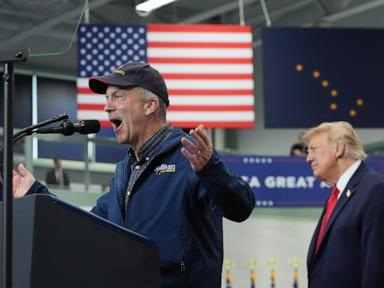
The presidential pardon extended to two Alaska diesel repair shop owners during a Wasilla political rally highlights a structural collision between federal environmental mandates and localized economic survival. Rather than viewing this event through the lens of traditional political theater, a rigorous institutional analysis requires examining the underlying friction points: the cost function of federal emissions compliance, the mechanics of prosecutorial discretion, and the systemic divergence between macro-regulatory frameworks and regional operational realities.
Federal oversight of vehicle emissions relies on statutory authorities prohibiting the removal or disabling of emissions-control equipment, commonly referred to as defeat devices or emissions deletion. For operators of heavy-duty diesel engines operating in extreme environments such as interior Alaska, factory emissions systems can present operational failure points, reduced fuel efficiency, and prohibitive maintenance costs. When federal regulatory agencies enforce statutory compliance through criminal prosecution rather than administrative remediation, the enforcement mechanism transforms into a high-stakes liability vector for micro-enterprises. Meanwhile, you can explore related stories here: Why a Preliminary Injunction Blocking a Media Ban Changes Nothing About Power.
The economic profile of independent repair shops restricts their capacity to absorb compliance friction. Standard operating margins in automotive repair do not accommodate the acquisition and maintenance of proprietary diagnostic software required to service complex, computerized emissions loops. Consequently, a shadow market for software and hardware modifications emerges. Federal prosecution of these modifications treats independent mechanics as primary actors in pollution generation, while the targeted business operators view their services as essential infrastructure maintenance required to keep heavy equipment operational under severe weather conditions.
Executive clemency in this context functions as an extraordinary override of administrative law enforcement priorities. When a sitting executive utilizes the pardon power publicly during a campaign rally to counter previous Department of Justice prosecutions, it signals a sharp shift in enforcement signaling. This dynamic creates a distinct regulatory hazard: legal uncertainty for regulated entities. If enforcement intensity fluctuates based on political administration changes, long-term capital allocation decisions within the automotive and logistics sectors become distorted. Operators face a shifting cost-benefit analysis where adherence to federal law depends heavily on executive branch priorities rather than statutory stability. To explore the full picture, check out the detailed analysis by The Washington Post.
The operational reality for diesel mechanics operating under these competing pressures exposes the limits of uniform federal environmental mandates. Without structural adjustments to federal oversight or targeted exemptions for extreme climates, the friction between statutory clean air enforcement and localized equipment reliability will persist, keeping independent repair shops vulnerable to systemic legal shocks.