What Remains When the Sirens Stop in France
Glass.
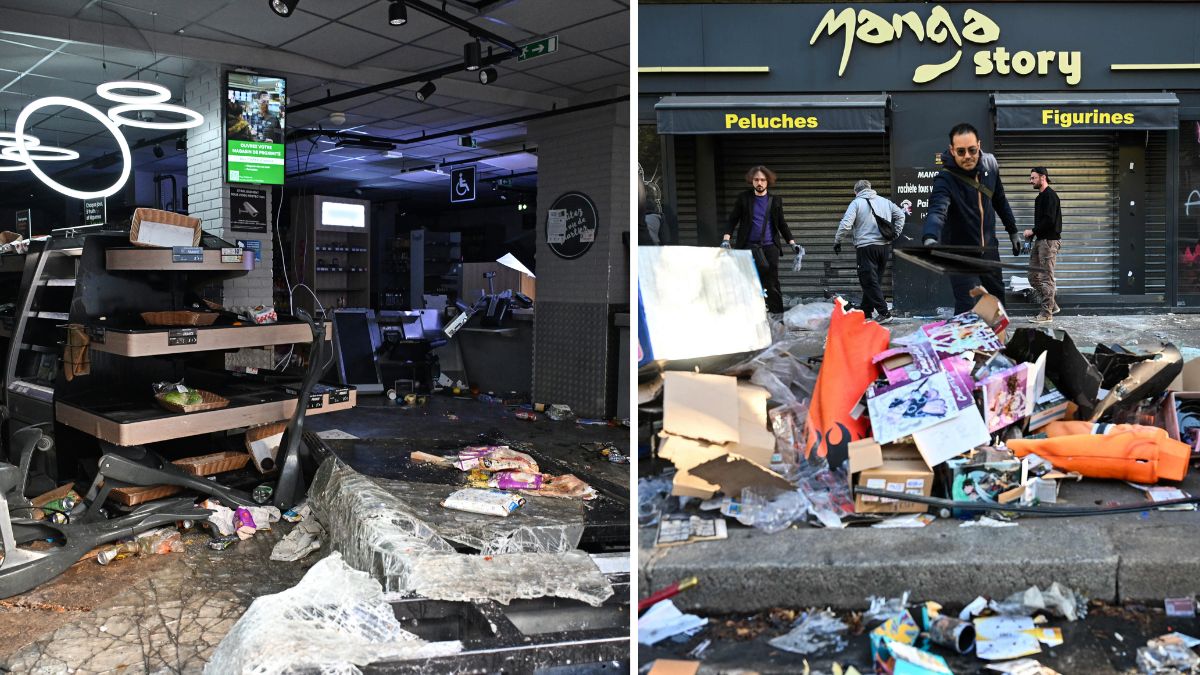
That is the first sound you hear when a neighborhood wakes up after a night of unrest in France—not the roar of crowds or the wail of sirens, which fade toward dawn, but the tiny, crystalline clink of safety glass being swept off wet pavement by a broom that has seen too many mornings like this.
News wires summarize nights like that in neat, surgical ratios. Hundreds of shops looted or destroyed. Streets littered with debris in the aftermath. Eight hundred fifty-five arrests. Those numbers give your brain something solid to hold onto when the world feels chaotic. They create borders around a sprawling event. Yet numbers are flat. They tell you how many shutters were pried open, not what it feels like to stand in front of an empty display case where your grandfather once arranged warm loaves of bread at four in the morning.
I have stood on sidewalks the day after unrest, smelling burnt rubber and cold espresso, watching shopkeepers stare at splintered wood as if the wood itself had betrayed them. It is confusing. It is scary. If you are reading from afar, it is easy to pick a side before noon and lock your opinion in place. Part of me wishes the story were that simple—a clean ledger of villains and victims, causes and cures. It never is.
Consider a hypothetical character to help ground what happens behind those headlines: Nadia, a shop owner running a small corner market and haberdashery on a bustling avenue outside a major French city. Nadia is not a statistic from the competitor's headline, nor is she a political symbol. She is someone who spent fifteen years learning the rhythm of her street—which neighbors buy milk before work, which teenagers stop by for change after school, which deliveries arrive late on rainy Tuesdays.
On the morning after a night of rioting, Nadia does not see "hundreds of shops" in the abstract. She sees her own threshold. A shattered pane lets in the damp air. Boxes sit torn on damp tile. Down the block, a larger chain store has its metal grille buckled inward, while a smaller bakery two doors over has an intact window only because its owners boarded it up at dusk and stayed inside listening to footsteps rush past.
Why does a single spark turn into broken storefronts and hundreds of arrests? Sociologists and historians who study urban unrest in France point to a recurring pattern: grief, anger, and long-simmering frustration colliding with flashpoints in dense neighborhoods where opportunity and alienation often share the same zip code. When tension builds for months or years without a release valve, a sudden shock can ignite streets that were already dry tinder.
Think of a neighborhood under chronic pressure like a pressure cooker with a stuck valve. The heat comes from real grievances—economic strain, strained trust between residents and authorities, housing pressures, and the feeling among young people that doors are closed before they even knock. For a long time, the pot just hums on the stove. When the lid finally rattles or blows, people outside see the steam and the mess on the counter; people inside point to years of high heat that nobody bothered to turn down. That cooker image is a metaphor, of course, meant to clarify how slow pressures turn into sudden explosions without reducing real human choices to mere physics.
Still, metaphors can hide sharp edges if we let them do all the work. A shopkeeper whose livelihood was wiped out in twenty minutes does not experience unrest as a sociological diagram. She experiences it as rent coming due next month, insurance adjusters asking endless questions, and staff wondering whether there will be shifts to work next week.
The Invisible Ledger Behind Every Arrest
Eight hundred fifty-five arrests sound like a decisive tally until you look closely at what happens inside a police station, a courthouse, and a family living room over the next forty-eight hours.
Arrests are a snapshot in time, not the end of the story. Some people taken into custody are seasoned instigators or opportunistic looters who treat chaos as a shopping trip with zero prices. Others are teenagers swept up in a crowd because they ran the wrong way when tear gas drifted down a side street. Still others are older siblings or parents getting a midnight call asking where their son or daughter is being held.
In France, rapid judicial procedures often move cases through the courts quickly after large-scale disturbances. Magistrates face heavy dockets; defense lawyers juggle back-to-back hearings; families wait in corridors trying to understand charges and bail conditions. To the outside observer, "855 arrested" reads like order being restored. To a mother sitting on a plastic chair outside a precinct at three in the morning, it reads like a life suddenly knocked off its rails.
There is a temptation, whenever streets are littered with debris, to treat order and justice as identical twins. They are not. Order is the absence of immediate disruption; justice is sorting out who did what, why it happened, and what accountability actually repairs. When hundreds of arrests happen in a single sweep, the system has to work overtime just to separate genuine harm from panicked bystander behavior.
I catch myself falling into binary thinking too, especially when watching clips on a screen. One clip shows flames and shattered glass; another shows exhausted officers holding lines for ten hours straight; another shows residents sweeping broken bottles while cameras keep rolling. Each frame is real, and none of them contains the whole truth by itself.
What Gets Broken That Isn't Made of Glass
Streets get cleaned. Municipal sweepers arrive with brushes, water trucks, and dumpsters, and within a day or two a boulevard can look almost normal from fifty paces away.
Look closer, though, and the quieter damage lingers.
A small merchant who loses inventory during riots often faces a brutal arithmetic. Insurance policies sometimes carry exclusions, high deductibles, or slow payout timelines that leave a business owner covering payroll and supplier invoices out of dwindling savings. Even when coverage applies, rebuilding takes time—waiting for glaziers, contractors, and deliveries while regulars drift to other shops out of habit.
Consider another hypothetical scenario: Marc, a young warehouse worker living two stops away on the metro line. Marc did not smash a window or throw a stone. He spent the night watching livestreams on his phone, feeling a knot in his stomach that he could barely name—part anger at unfairness he sees every day, part fear that his little brother might go out and get caught in the middle of something irreversible. The next morning, Marc takes the train to work past charred bins and boarded-up facades. Nobody asks Marc how he feels. Nobody puts his quiet dread into a headline.
Yet Marc's mood matters just as much as Nadia's broken window. Cities run on trust—the unwritten agreement that strangers can walk past one another without bracing for impact, that rules apply fairly, that tomorrow will resemble today closely enough to plan a life. When that trust frays, the cost shows up in subtle ways: shutters coming down earlier in the evening, neighborhood associations meeting with heavier hearts, young people feeling even more estranged from institutions they already distrusted.
History shows that France has wrestled with these fault lines across generations, from mid-century urban shifts to later waves of street protests and suburban unrest. Each episode has its own trigger and political vocabulary, yet the recurring tension remains unmistakable: how a society balances firm public order with genuine inclusion and economic dignity.
If you only read the tally of looted shops and arrests, you might conclude that toughness alone solves the problem. If you only read about root causes, you might downplay the immediate terror of watching a crowd swarm a storefront you built with your own hands. Both truths sit on the same street at the same time.
The Quiet Work After the Cameras Leave
Television crews pack up cables once the dramatic visuals fade. A city's real test begins on the quiet Tuesday three weeks later, when there is no breaking news banner at the bottom of the screen.
For shopkeepers like Nadia, recovery is measured in small, unglamorous victories: a regular customer coming back for coffee, a neighbor lending a hand to clear storage shelves, a bank officer agreeing to a breathing room arrangement so the lights stay on. For local leaders, community workers, and families, the harder work lies in keeping channels open before anger curdles into permanent division.
Why does that middle space matter so much? Because streets rarely stay calm by force alone for very long. Force can clear a junction at midnight; it cannot make a nineteen-year-old feel he has a stake in his own neighborhood at noon on a Friday. Conversely, empathy without clear boundaries leaves shopkeepers and residents feeling unprotected when chaos erupts.
The tension is real, and there is no neat formula that resolves it overnight. Anyone claiming a single silver bullet is selling certainty where there is mostly hard work. Still, paying attention to the human cost on every side of the line—the ruined business, the strained officer, the arrested youth, the anxious neighbor—keeps us from turning complex human lives into cardboard cutouts.
Dawn eventually comes over every avenue, turning dark smoke and harsh streetlamp glare into ordinary morning light. A broom scrapes against concrete. A shutter rolls halfway up, pauses, and finishes rising. Someone sets a fresh tray of bread on the counter, steps to the door, and looks down the block to see who is walking toward them.