The fog clings to the Monterey coastline like a wet wool blanket, hiding the jagged rocks where the Pacific crashes with indifferent fury. Stand on the boardwalk long enough, and you can smell it: the heavy, brine-soaked air of a marine ecosystem that has spent decades balancing on a knife-edge.
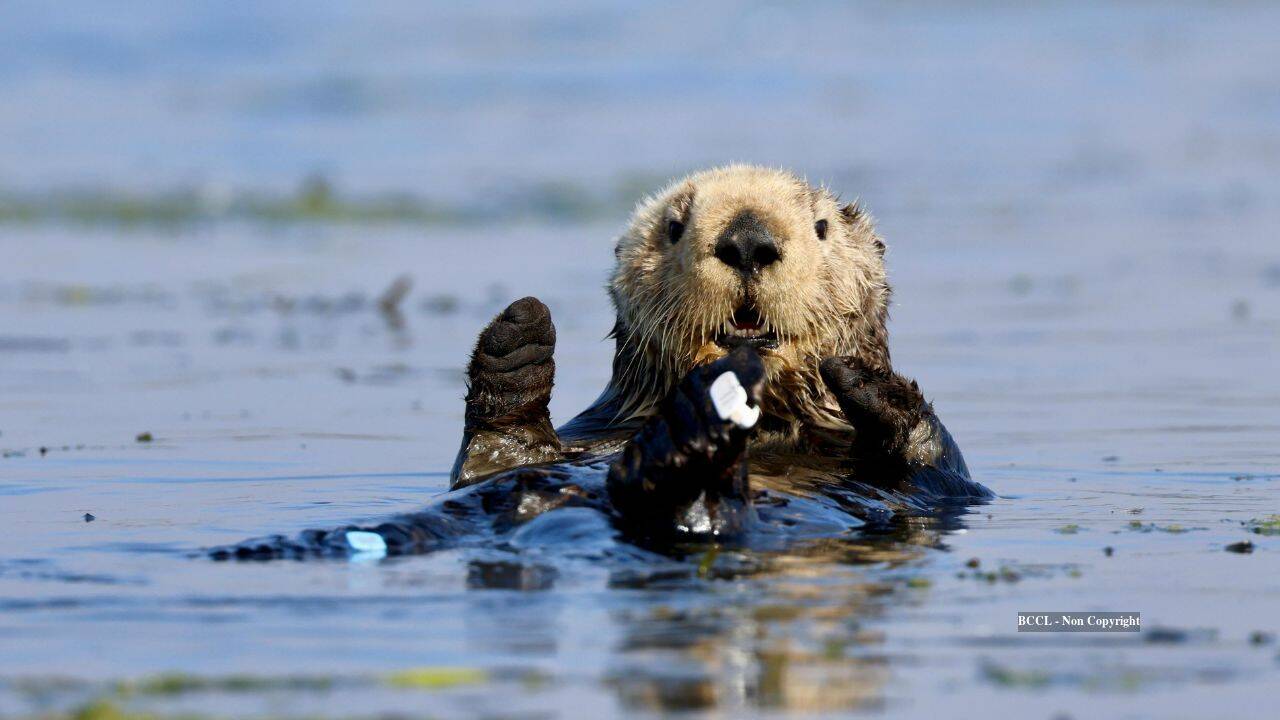
Saltwater drips from the whiskers of a young sea otter floating a hundred yards offshore. To the casual tourist sipping coffee from a paper cup, it is simply a postcard moment. A furry head bobbing in the kelp. A playful twist, a casual roll, a moment of effortless grace in the churning tide. Also making headlines recently: Cultural Countermobilization The Economics of Art As Political Resistance.
It is an illusion.
Beneath that playful exterior lies a desperate, high-stakes survival story. Every otter out in that bay is fighting a silent war against habitat loss, pollution, and the brutal physics of the open ocean. And for more than a thousand of them over the years, that fight was won not by nature alone, but by a quiet army working behind the scenes with fish knives, syringes, and round-the-clock dedication. Additional details into this topic are covered by Al Jazeera.
Money makes things move. But empathy keeps them alive.
Decades ago, a fifty-seven-million-dollar gift laid the foundation for the Monterey Bay Aquarium. That number sounds distant, a cold corporate statistic printed in an annual report. But dollars do not rescue drowning animals. Dollars do not wrap shivering, oil-soaked fur in warm towels or feed orphaned pups through rubber tubes every two hours around the clock.
People do.
Consider what happens when a newborn pup is separated from its mother during a winter storm. Without intervention, its fate is sealed within hours. Hypothermia takes hold. Energy reserves vanish. The ocean does not stop to mourn a casualty.
Enter the behind-the-scenes reality of marine conservation. It smells of dead squid, antiseptic soap, and wet neoprene.
Picture a cramped, sterile room lit by harsh fluorescent bulbs. A veterinary technician cradles a creature that fits in the palm of a hand, its eyes still milky-blue and uncomprehending. This is not a scientific specimen. This is a patient. Every heartbeat matters. Every gram of weight gained on the morning scale is a victory shouted in whispers across a quiet medical ward.
We forget how fragile these systems are. We look at the ocean and assume it is infinite. We watch documentaries with swelling orchestral scores and believe that wild animals simply manage, that nature always finds a way.
Nature is ruthless.
When human intervention altered the balance of the California coast a century ago through unchecked hunting, the sea otter population plummeted to the brink of absolute extinction. A landscape once teeming with life fell silent. The kelp forests—those underwater cathedrals that absorb carbon and shelter countless fish—began to wither away because the otters, their primary protectors, were gone. Without otters to eat sea urchins, the urchins chewed the kelp down to bare rock.
The collapse of one species triggered the unravelling of an entire ecosystem.
That is the invisible stakes of the Monterey program. Saving a thousand otters was never just about the cute factor. It was about stitching a torn web back together, thread by thread, animal by animal.
To understand this, you have to look past the public exhibits where children press their hands against thick glass. You have to walk down the secure hallways where surrogate mothers—rehabilitated adult otters—teach human-raised pups how to be wild.
Yes, surrogate mothers.
This is where science meets sheer ingenuity. You cannot simply release a rescued otter pup back into the wild and expect it to survive. It does not know how to crack a crab shell. It does not know how to groom its fur so that trapped air keeps it warm in freezing water. If a human handler teaches it too well, the pup imprints on people, rendering it unreleaseable.
The solution was brilliantly unorthodox. Use experienced, non-releasable adult female otters as foster mothers.
Imagine watching an orphaned pup approach a stern, veteran female swimming in a private saltwater pool. The foster mother looks at the intruder. For a tense minute, the handlers holding their breath behind a blind wonder if she will reject it, or worse. Then, she scoops the pup onto her chest, tucking it securely beneath her chin just as a biological mother would.
Miracles are rarely loud. They sound like the soft splashing of whiskers in a pool at three o'clock in the morning.
Over the decades, the people holding the clipboards and wearing heavy rubber aprons have refined this process into a science. They track metabolic rates. They monitor contaminant levels in the local food web. They fight state and federal battles over protected marine zones.
Yet, numbers on a spreadsheet fail to capture the grit of the daily grind.
Ask any veteran keeper about the winter of nineteen-ninety-something, or any particularly brutal storm season, and you will see a flash in their eyes. They remember the long nights sleeping on concrete floors beside incubators. They remember the sting of salt spray freezing on their eyelashes during midnight rescue boat launches. They remember the ones that slipped away despite every heroic effort.
Grief is part of the job description.
Because when you dedicate your life to saving a species on the edge, loss is inevitable. An oil spill leaks miles down the coast. A shark bite inflicts terminal damage. A mysterious pathogen sweeps through the kelp beds. You cannot save them all.
And yet, the work continues at dawn.
The tides rise and fall regardless of our triumphs or our failures. Out in Monterey Bay today, a mother otter dives deep into the emerald gloom, emerges with a fat crab, and rolls onto her back to feast while her pup rests securely on her stomach.
That casual, sunlit scene exists because someone, decades ago, decided that a fifty-seven-million-dollar investment should buy more than just a tourist attraction. It bought a second chance.
The fog rolls back out to sea, leaving the water glassy and clear under a pale morning sun. Somewhere out there, a thousand rescued ancestors of the current population are swimming, diving, and keeping the kelp forests alive.
The ocean remains deep, cold, and indifferent.
We are not.