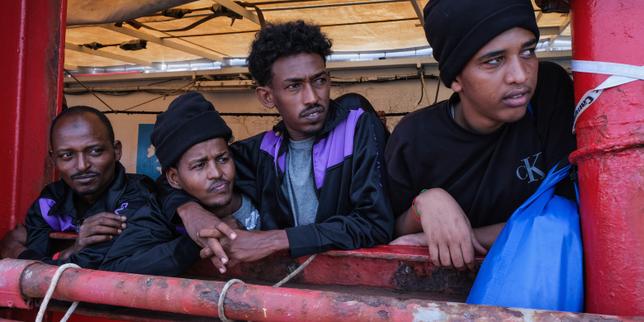
Every single summer, the routine repeats. Grainy footage of rubber dinghoes packed to the gunwales. Sobbing survivors hauled onto pristine steel decks of NGO vessels. Heartbreaking headlines detailing the horrors of Libyan detention camps where extortion, forced labor, and systematic abuse are documented facts. The media frames this through a single, flattening moral lens: Europe is a fortress, the sea is a graveyard, and the only righteous act is pulling every last soul out of the water and bringing them north.
It is a narrative designed to bypass the cerebral cortex and trigger pure emotional compliance. Anyone who questions the mechanics of this operation is immediately cast as heartless, indifferent to human suffering.
Let us drop the pretense.
The standard commentary surrounding central Mediterranean migration focuses entirely on rescue logistics, border cruelty, and legal obligations under maritime law. It treats the phenomenon as a weather event, an unpreventable humanitarian tragedy that washes up on European shores by pure misfortune. This is a profound analytical failure. The current setup is not a solution to a crisis; it is the primary engine driving it. By maintaining an unconditional reception model right at the edge of European territorial waters, humanitarian fleets have inadvertently created the ultimate perverse incentive structure.
I have watched policy debates circle this drain for a decade. The truth nobody in the mainstream commentariat dares utter aloud is that the current approach maximizes the exact misery it claims to alleviate. If you guarantee rescue within miles of departure, you alter the cost-benefit calculus for every economic migrant and criminal smuggling cartel from sub-Saharan Africa to the North African coast. You eliminate the risk component of an inherently perilous maritime crossing, turning a high-risk gamble into a reliable ferry service managed by transnational syndicates.
To understand why the prevailing model is broken, we have to look past the immediate humanitarian impulse and examine the structural mechanics of human smuggling economics.
The Economics of the Central Route
Smugglers operating out of Sabratha and Zuwara do not sell passage to Europe; they sell a lottery ticket. The product is not a seaworthy vessel. It is a calculated gamble on interception. A flimsy Zodiac laden with fuel and desperate passengers costs a fraction of what smugglers rake in per head. The math is brutal: pack enough people into a craft that barely floats, push it off the beach in the dead of night, and let maritime rescue coordination centers handle the logistics.
International maritime law dictates that any vessel in distress must be assisted, and rescued individuals must be brought to a place of safety. For decades, the interpretation of a safe port has meant European shores, predominantly Italy and Malta. When humanitarian NGOs position their ships just outside Libyan territorial waters, they function less as independent rescuers and more as an offshore reception desk.
Smuggling networks factor this presence directly into their business model. Why invest in better boats or trained pilots when the pickup is guaranteed fifty miles out? Every successful interception by a charity ship validates the smugglers' marketing pitch. The more boats rescued, the more departures scheduled, the more revenue flows into criminal pockets, and the higher the eventual death toll when volume inevitably outpaces rescue capacity.
We are subsidizing a human trafficking market under the banner of compassion. That is not solidarity. That is complicity.
The human rights industry has built an ecosystem where the measure of virtue is the volume of people pulled from the sea, completely divorced from any accountability for the conditions that pushed them onto the water in the first place.
Dismantling the Libyan Detention Myth
When commentators discuss Libya, they paint a monochrome picture of a failed state where every migrant is an innocent refugee fleeing targeted persecution. International organizations like the UNHCR and various NGO coalitions churn out reports highlighting the horrific conditions in official and unofficial detention centers run by Libyan authorities.
The abuses are real. Nobody living in reality denies the brutality of the Libyan Directorate for Combating Illegal Migration facilities. Extortion, beatings, and arbitrary detention are documented realities.
Where the mainstream narrative goes entirely off the rails is the attribution of causality. The existence of these camps is cited as proof that migrants must be rescued at all costs and brought to Europe. But it completely ignores the role that European externalization policies and domestic Libyan politics play in this ecosystem.
Libya is not merely a transit country by accident. It is a fractured nation with a multi-billion-dollar shadow economy built around the migration industry. For local militias and political factions, controlling detention centers is a revenue stream. They capture migrants, lock them up, and wait for ransom or international aid packages.
When European governments funnel funds, equipment, and training to the Libyan Coast Guard to intercept boats before they reach international waters, they are attempting to outsource border enforcement to a country incapable of upholding basic human rights standards. The result is a predictable humanitarian bottleneck. Migrants are pushed back into camps where they face abuse, which in turn fuels fresh campaigns for European NGOs to deploy more ships.
It is a closed loop of self-reinforcing failure. Europe pays Libya to stop departures; the camps fill up; conditions deteriorate; media outlets broadcast the horrors; public outrage mounts; NGOs launch more rescue vessels; smugglers adapt their routes; and the cycle repeats.
The Alternative Nobody Dares Name
If the current model is a catastrophic failure that incentivizes smuggling and empowers militias, what is the alternative? The answer requires abandoning the comforting fiction that borders can be magically erased by good intentions or that massive demographic shifts can be managed through perpetual emergency rescue operations.
A rational, humane, and sustainable policy framework requires three radical shifts in perspective:
First, cut the feedback loop of unconditioned rescue. If maritime rescue operations continue to drop off survivors on European soil while offering no pathway to return, the incentive to launch unseaworthy vessels remains absolute. Rescue at sea must happen, as maritime tradition demands, but the destination matters. Under international law, rescued individuals should be returned to the nearest safe port. If North African ports are deemed unsafe due to human rights abuses, the focus must shift to establishing processing centers on secure, neutral ground within transit regions—jointly administered by international bodies and regional partners—where asylum claims can be vetted before anyone sets foot on a rubber raft.
Second, dismantle the smuggling networks through aggressive financial and logistical interdiction. Right now, law enforcement focuses on the low-level foot soldiers: the kids driving the boats. That is like arresting the cashier while ignoring the bank executives. The money behind Mediterranean smuggling flows through international hawala networks, cryptocurrency, and formal banking systems in North Africa, Turkey, and Europe. Target the money. Freeze the assets of the syndicate leaders living openly in Tripoli, Istanbul, and European capitals.
Third, introduce managed, strictly enforced economic migration channels that replace the chaotic lottery of illegal crossings with a merit- and labor-market-based system. If Europe needs workers, let them apply through functional consular offices abroad with clear quotas tied to domestic integration capacity. For those who attempt illegal entry and bypass legal frameworks, immediate and swift repatriation is the only policy that signals the end of the open-door lottery.
Compassion without boundaries is not kindness; it is chaos. By refusing to confront the structural realities of the Mediterranean crossing, we condemn thousands to drown in pursuit of a false promise, enrich criminal cartels, and tear apart the social fabric of destination countries.
Stop funding the illusion. Secure the borders, smash the cartels, and build a system based on rules rather than rescue roulette.