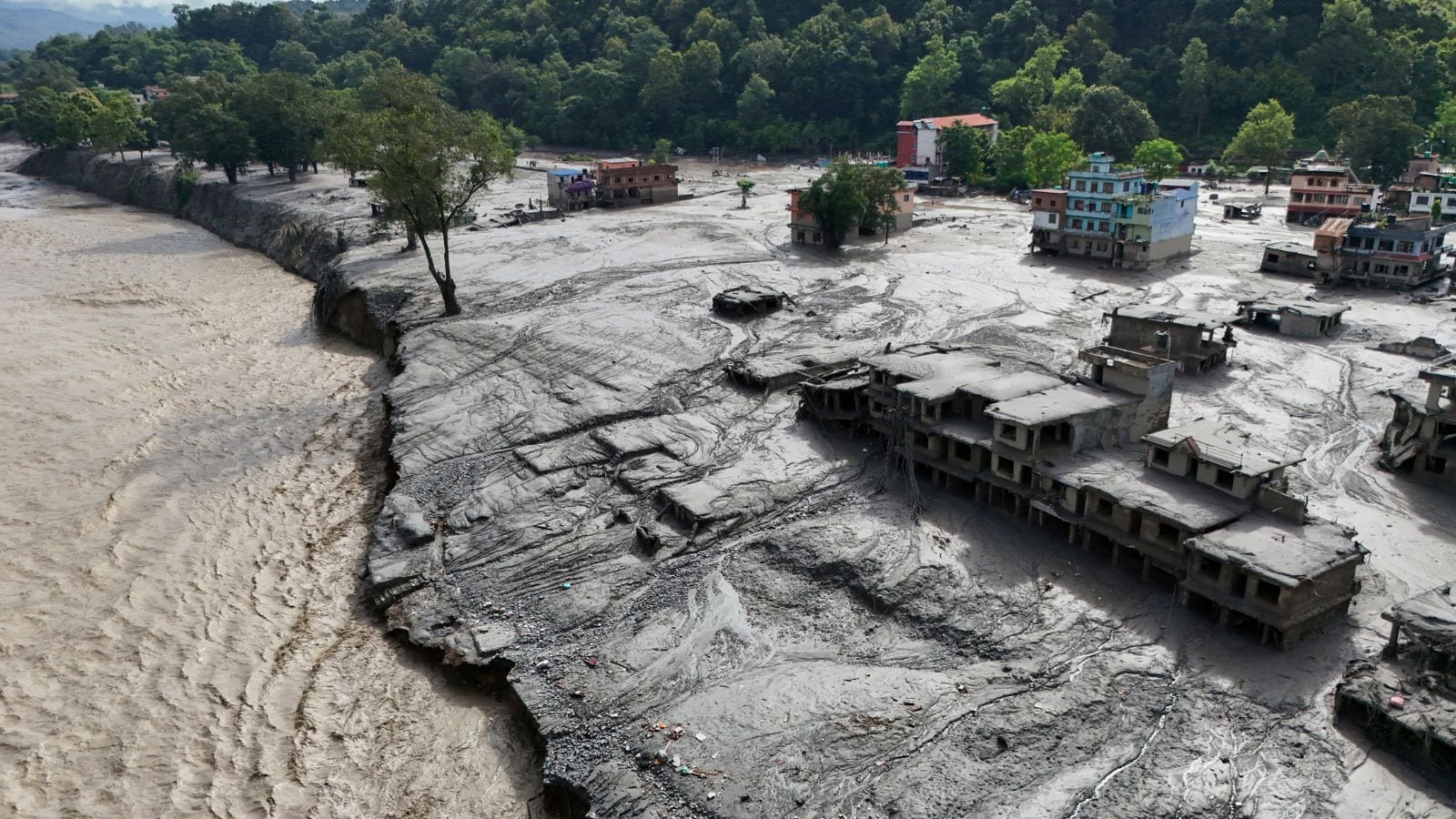
Water has a memory, and it always remembers the path it carved before humans built their lives across its floodplains.
Down in the low-lying plains of Uttar Pradesh, across districts like Maharajganj and Siddharthnagar, the air changes character long before the water arrives. It gets heavy, thick with the smell of wet earth, rotting vegetation, and an indefinable electric charge that descends from the northern peaks. People who have lived within sight of the Gandak River for generations do not check weather apps first thing in the morning; they look at the color of the horizon where the plains meet the foothills of Nepal. Discover more on a similar issue: this related article.
When the cloudbursts hit the higher elevations, the runoff doesn't ask permission. It funnels down steep gorges, swelling icy mountain streams into brown, churning behemoths before spilling out flatly, hungrily, across international borders.
In a hypothetical village just a few miles south of the border, a farmer named Ramesh finishes tying down his corrugated tin roof with heavy jute ropes. He has done this choreography three times already this monsoon season. He knows the cadence of crisis. A phone call comes from a cousin upstream: the barrage gates are lifting. Millions of liters of water are currently carving a path south, racing against the clock to find whatever low ground it can occupy. Additional analysis by Associated Press delves into similar perspectives on this issue.
The administration calls it intensified monitoring. On paper, that sounds clean, bureaucratic, and reassuring. It looks like officers sitting in air-conditioned district headquarters staring at telemetry data, tracking gauge readings at Valmiki Nagar and Tribeni. It looks like alerts sent via priority text messages to local magistrates.
On the ground, monitoring looks like an old man standing on an embankment with a bamboo stick, watching the brown waterline inch past a carved notch in the mud. It looks like school buildings hastily cleared of desks to make room for rows of emergency cots. It looks like an entire community holding its collective breath, waiting to see if the earthen dykes will hold or if the river will reclaim what was once its permanent bed.
Rivers like the Gandak do not care about political boundaries drawn on parchment maps. They do not pause at border checkpoints to show their papers. They simply obey gravity. When heavy monsoon rains lash central and western Nepal, the geography of northern India becomes an immediate sponge. Every tributary, every canal, every low-lying depression fills to the brim with terrifying speed.
Consider the mathematics of disaster response. When water levels cross the danger mark, administrators have mere hours—sometimes minutes—to transition from routine governance to active evacuation. Two districts are on high alert, but alertness is an exhausting state. You cannot sleep with your boots off when the river is breathing against your doorstep.
(Note: The descriptions of Ramesh and his village are hypothetical scenarios constructed to illustrate the lived reality behind official district alert bulletins.)
The irony of the monsoon is its dual nature. It is the lifeblood of agrarian life, the very engine that fills grain stores and feeds millions. Without these seasonal deluges, the Gangetic plain would wither into dust. Yet, that same water, untamed and overflowing, becomes an instrument of swift displacement. It washes away standing paddy crops just weeks before harvest, turning months of backbreaking labor into floating debris.
As the monitoring intensifies across Maharajganj and Siddharthnagar, teams of disaster response personnel position themselves near vulnerable embankment points. They carry satellite phones, diesel pumps, and rescue boats. They are the human buffer between an ancient geological force and modern settlements.
Night falls quickly over the waterlogged plains. The only light comes from the erratic sweep of flashlights cutting through the thick mist rising off the swollen current. Somewhere out there in the dark, the Gandak keeps moving, whispering its ancient reminder that humanity merely leases space along its banks.