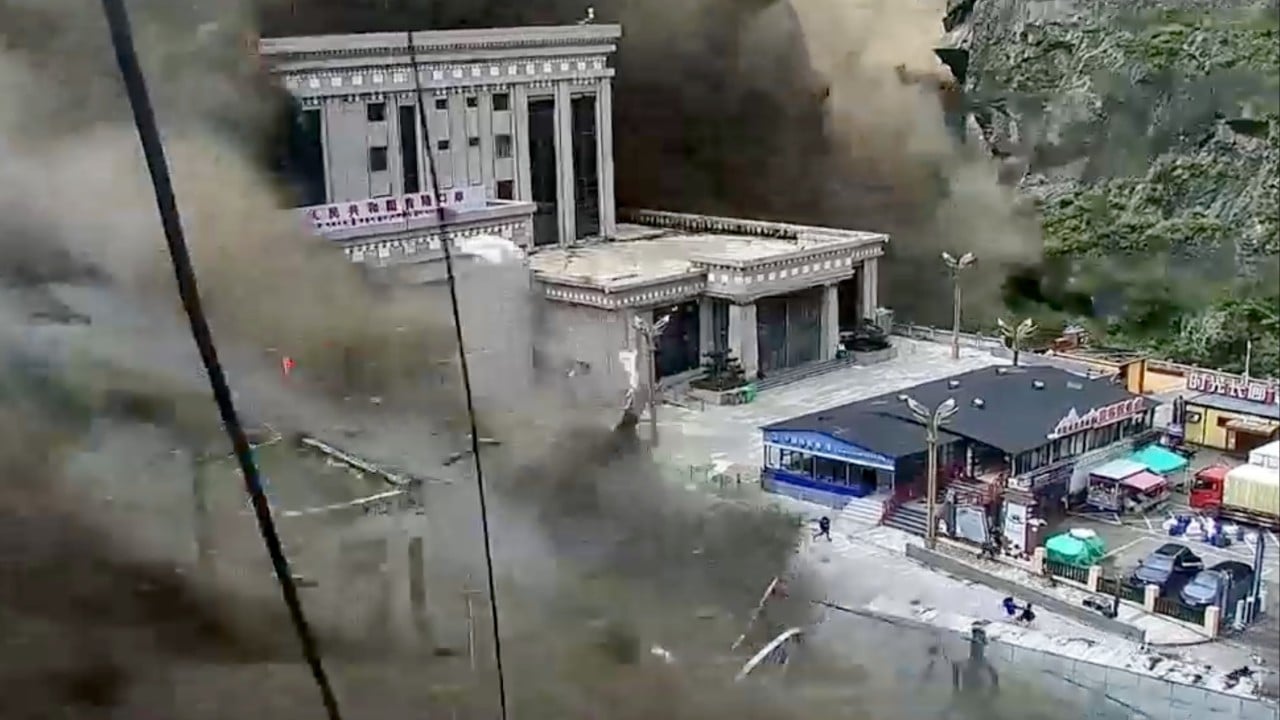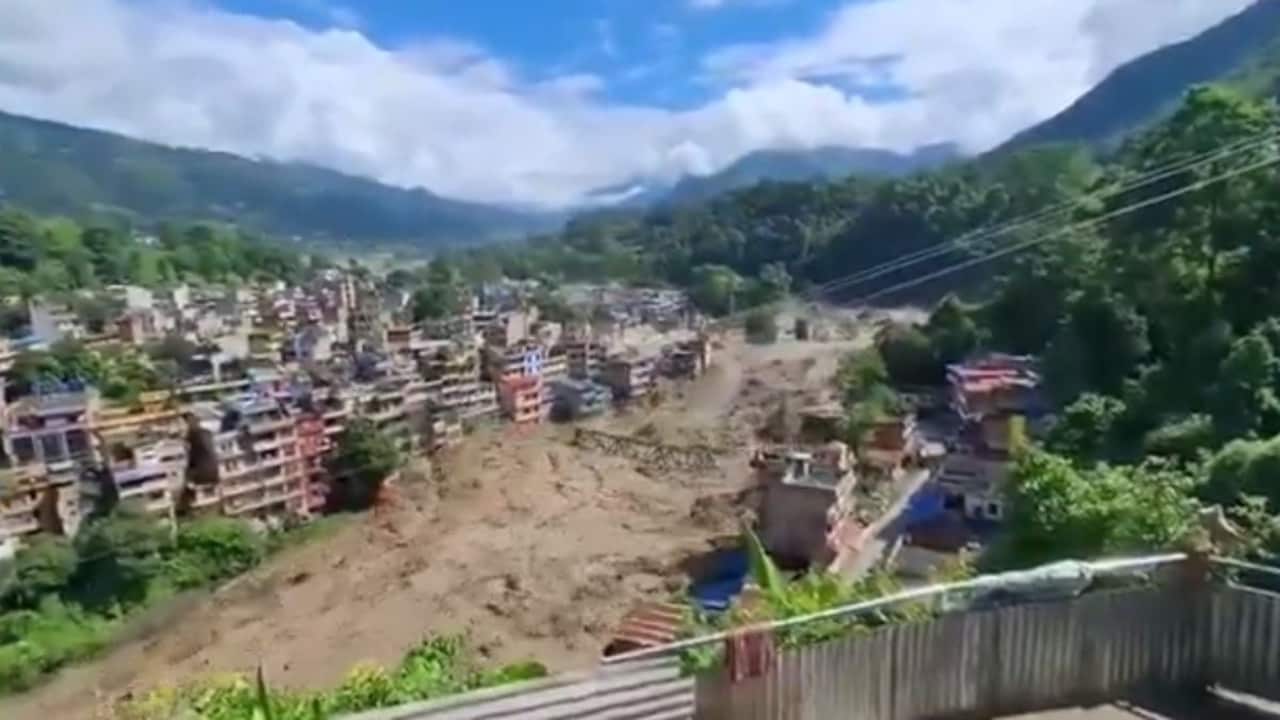
The air smelled of wet slate and woodsmoke. It was the kind of morning that usually promised nothing more complicated than the slow burn of dried pine in a clay stove and the clinking of brass tea mugs. In the mountain valleys where the earth tilts sharply toward the sky, mornings belong to the mist. They belong to the way the light spills over ridge lines, turning pine needles into tiny, shivering needles of gold.
Then came the sound.
It wasn't a roar, not at first. It started as a deep, subterranean thrum, like a heavy engine idling beneath the floorboards of the world. By the time people stepped out onto their porches to look toward the riverbed, the sound had grown teeth.
Water does not usually move like a living thing. On most days, the rivers carving through Nepal are braided ribbons of turquoise and white, tumbling over smooth river stones with a musical haste. But physics has a breaking point. When relentless monsoon rains overfill the high-altitude bowls, gravity stops being a quiet law and turns into an executioner.
(Note: While the following character is a composite based on dozens of verified accounts from survivors of the catastrophic flash floods, Ramesh represents the lived reality of families caught in the sudden surge.)
Ramesh had lived within earshot of the river for forty years. He knew its moods. He knew how it shrank to a lazy trickle in the blistering heat of May, and how it snarled and swelled when the June monsoons arrived. But he had never seen a wall of liquid mud traveling at the speed of a galloping horse.
He didn't have minutes. He had seconds.
One moment, the stone bridge connecting his village to the lower trade route stood sturdy against the spray. The next, the concrete pylons groaned—a sound like breaking bones—and simply dissolved into the froth. A two-story concrete home, built by a neighbor who spent a decade working abroad to afford the rebar and cement, tilted on its axis. It didn't collapse. It floated for half a breath, heavy and bewildered, before the current cracked it open like an eggshell and swallowed it whole.
Gone.
Entire lives, compressed into the span of a heartbeat.
The Anatomy of a Mountain Tsunami
We talk about weather in statistics. We say rainfall exceeded seasonal averages by forty percent. We say river gauges breached danger levels. These numbers are meant to comfort us by making tragedy measurable. They wrap chaos in the sterile vocabulary of science.
But numbers cannot capture the texture of terror.
To understand why a mountain river can transform from a babbling brook into an engine of total erasure, you have to look up. Way up. High in the Himalayas, the topography is a vertical trap. When unprecedented downpours saturate soil that has already been destabilized by deforestation, road construction, and shifting climate patterns, the mountains begin to unburden themselves.
Landslides act as temporary dams. Tons of earth, rock, and uprooted pine trees slide into narrow gorges, choking the natural flow of the water. Behind these makeshift walls, invisible lakes grow larger and deeper by the minute, straining against unstable barriers of wet mud and loose shale.
And then, the dam gives way.
The release is catastrophic. It is the hydrologic equivalent of pulling the plug on a bathtub, except the bathtub is a mile-high canyon and the water is carrying entire forests and boulders the size of delivery trucks. By the time the surge reaches human settlements hugging the riverbanks, it is no longer just water. It is a dense, slurry batter of silt and debris possessing immense kinetic energy.
Cameras capture the horror from a distance—shaky phone footage shot by terrified onlookers standing on safe, elevated ground. A bridge vanishes mid-frame. A roof bobs in the brown chaos for a second before vanishing beneath the surface. These videos go viral because they violate our fundamental assumption about the earth beneath our feet: that it is permanent.
We watch pixels on a screen dissolve, and for a fleeting moment, we feel the cold draft of our own fragility.
The Aftermath of Silence
When the flood passes, it leaves behind something worse than destruction. It leaves silence.
The mud settles into a thick, gray crust that hardens under the returning sun like concrete. Fields that were green with maize yesterday look like a lunar wasteland today. Roads are severed, cutting off isolated communities from medical help, food supplies, and communication lines. Helicopters become the only lifeline, buzzing through narrow mountain passes like dragonflies, dropping sacks of rice and lifting the injured off jagged promontories.
In the days that follow, survivors walk the new edges of the river.
They search for things that cannot be replaced, but mostly they search for familiarity. The geography of home has been rewritten overnight. Where there was once a cluster of tea shops, there is now only a widening gash of gray gravel. Neighbors look at each other with haunted eyes, bound now by a shared survival that feels uncomfortably close to luck. Why did that house remain standing while the one fifty feet upstream vanished? Why did the warning whistle sound a fraction of a second too late?
These are questions that do not have answers.
Nature does not negotiate with history, and it does not offer moral judgments. It simply follows the merciless logic of gravity and volume.
Yet, resilience in these valleys is as stubborn as the mountains themselves. Before the mud has even finished drying, shovels appear. Hands that lost everything begin clearing paths through the debris, not out of naive optimism, but because survival requires movement. You cannot stand still when the ground beneath you has already tried to wash you away.
The river continues its journey downward, eventually feeding into the massive river systems of the subcontinent, carrying away the memory of the houses, the bridges, and the morning that changed everything. But high in the passes, the mist still rises at dawn, clinging to the scars in the earth, waiting for the next quiet rain.