When the Mountain Breaks
Water does not ask permission. It accumulates in the high, silent places where the air tastes of stone and ice, gathering drop by invisible drop in the glacial crevices of the Himalayas until the weight becomes a secret too heavy to keep. Then, it moves.
I remember the sound before the sight. It is not the rush of a clean stream over smooth gravel. It is a low, subterranean groan, like the Earth grinding its teeth in its sleep. Then comes the smell: thick mud, crushed pine, and the terrifyingly sterile odor of pulverized rock.
In Nepal, the monsoon is an ancient punctuation mark. It divides the year into the parched, dusty months of waiting and the roaring, emerald weeks of renewal. But the rhythm has broken. The sky no longer knows how to measure its own grief. When cloudbursts turn mountain valleys into chutes of churning chocolate water, entire communities do not merely flood. They are unmade.
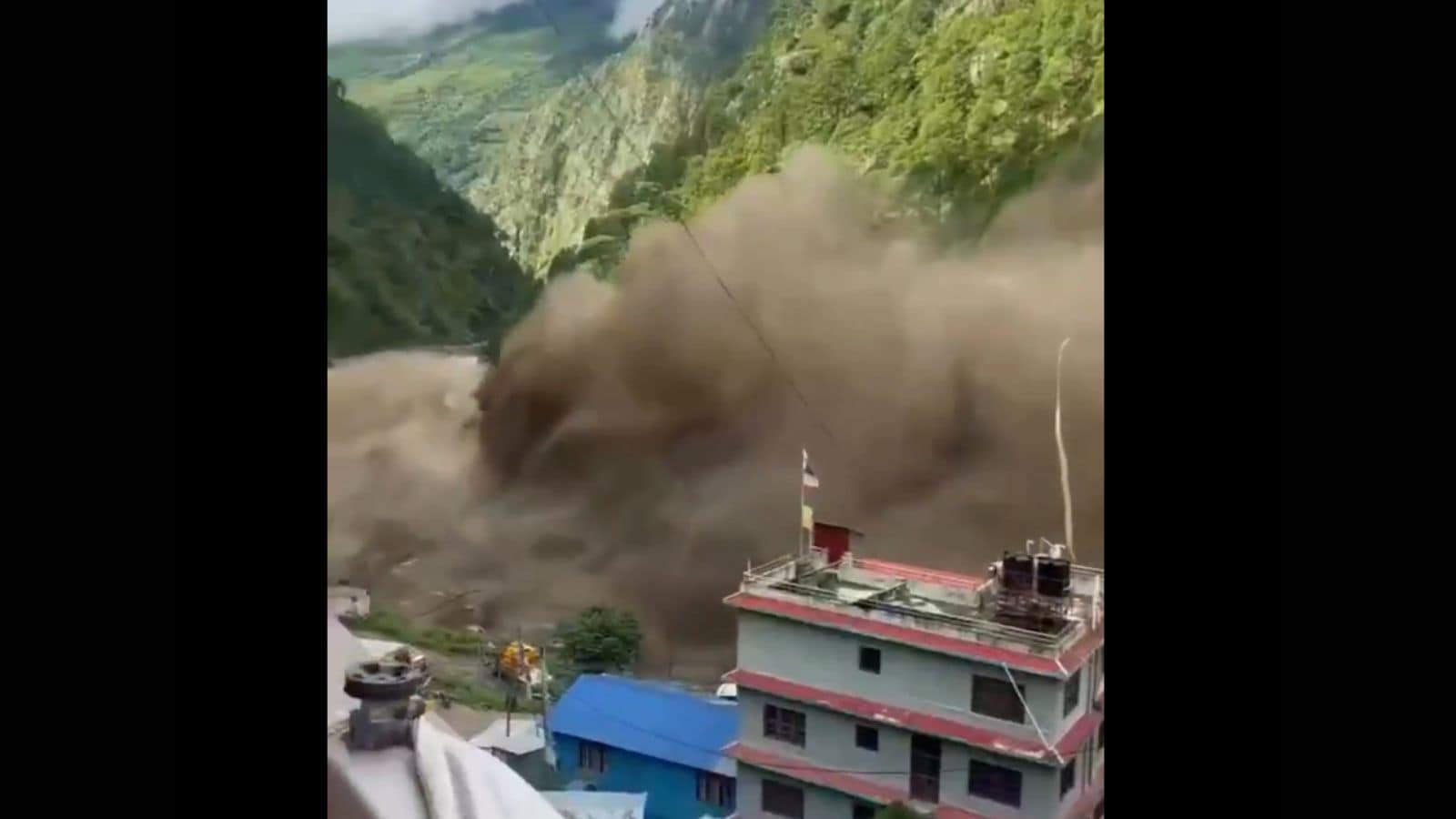
Consider what happened along the banks of the swollen rivers this season. Video footage flickered across screens worldwide—grainy cell phone captures of houses tilting, hesitating for a heartbeat on a crumbling mudbank, and then dissolving into the torrent like sugar in hot tea. Roads that took decades to carve into vertical cliffs simply vanished, leaving vertical drop-offs where buses and trucks had stood moments before. Bridges, engineered to withstand the fury of centuries, snapped like dry twigs under the impact of careening boulders the size of houses.
Behind the pixelated screens and the dry casualty counts lie the human coordinates.
Take Maya, a hypothetical shopkeeper in a village nestled beside a Himalayan tributary, whose daily reality reflects thousands of actual accounts gathered by disaster response monitors. At dawn, Maya heard the chickens falling silent—a natural barometer more reliable than any government weather app. By the time she stepped outside to check the iron-grey sky, the river had already crept across her threshold, carrying away the morning's fresh bread and the wooden stool her grandfather carved. There was no grand evacuation siren. There was only the rising cold against her ankles and the frantic scramble up the terraced hillside while her village dissolved below.
The Anatomy of a Flash Flood
Why do these catastrophes feel increasingly personal, even to those watching from thousands of miles away?
The physics of a flash flood in steep topography are merciless. When torrential rainfall batters deforested hillsides—stripped of root systems by unchecked development and timber clearing—the soil cannot absorb the deluge. Gravity takes over. Water mixes with earth and debris, transforming ordinary rainfall into a debris flow, a dense slurry that moves with the kinetic energy of a freight train.
Statistics tell part of the story. Monsoon-induced floods and landslides routinely displace tens of thousands of families across South Asia, claiming hundreds of lives annually. Yet numbers flatten human tragedy into administrative checkboxes. They fail to convey the terrifying speed of water rising four feet in ten minutes. They omit the paralyzing choice of whether to run for high ground or salvage a lifetime of savings locked in a tin box under the floorboards.
We often talk about climate resilience as if it were a spreadsheet problem. More concrete walls. Better early warning systems. Satellite mapping. These tools matter, deeply. But they overlook the psychological erosion that occurs every time a river rewrites the geography of home.
When you lose a bridge, you lose more than a commute. You lose the market town where you sell your cardamom, the hospital five valleys over, the school where children learn the names of peaks they can no longer reach. Isolation descends faster than the floodwaters.
Living on the Edge of Uncertainty
Uncertainty is a heavy garment. Living through these repeated shocks changes a community's relationship with the earth beneath its feet. Every dark cloud overhead becomes a potential precursor to disaster. Every rumble of thunder is scrutinized for that low, ominous bass note that signals a breach upstream.
We are left to grapple with a profound vulnerability. Human engineering, for all its cleverness, remains a temporary tenant in a landscape governed by planetary forces. The mountains are growing, pushing upward against the tectonic plates even as rains scour their flanks downward. Change is the only constant, but the velocity of that change has outpaced our cultural memory.
Look closely at the footage of the washed-out bridges. Notice the iron reinforcing bars twisted into grotesque shapes. They stand as monuments to human ambition colliding with geological indifference. Yet, adjacent to those ruins, resilience unfurls just as fiercely. Neighbors haul ropes through chest-deep water. Makeshift suspension cables of braided wire are strung across chasms within forty-eight hours of a collapse. People rebuild. They must.
The water eventually recedes. It leaves behind a landscape coated in a thick, gray silt that cakes the fields, silts up irrigation canals, and hides the foundations of lost homes. The sun comes out, glaring and merciless, baking the mud until it cracks like old porcelain. In that dry silence, the survivors walk down to the new edge of the riverbank, looking for where the path used to be, and begin to dig.