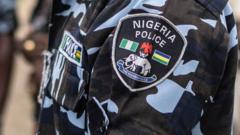
The heat on a Nigerian highway can feel heavy enough to crush the spirit. Dust clings to everything: the asphalt, the faded blue uniforms, the cracked glass of overloaded minivans trying to dodge potholes. At a makeshift checkpoint along a sun-baked stretch of road, officers stood in the midday haze doing what had long been treated as daily routine. They flagged down an approaching car, stepped casually to the driver's window, and made their familiar pitch.
A few bills. A small bribe to speed up the journey and avoid manufactured delay. Also making headlines lately: Inside the Xinjiang Legislation Engineering Mandatory Unity.
It was a scene played out thousands of times across thousands of miles. Pay the token, keep moving, pretend it never happened. Only this time, the script broke. The man sitting inside the vehicle was not a timid trader or an anxious driver late for work. He was the top official leading the country's national anti-corruption agency.
The silence that followed inside that car must have felt colder than the noon heat. More insights regarding the matter are detailed by The New York Times.
Within moments, the routine extortion attempt collapsed into a disaster for the officers involved. Handcuffs replaced the expected cash, and what was supposed to be an ordinary shift on the beat turned into an immediate arrest.
Corruption is rarely abstract for the people who live under its shadow. It is not defined by policy papers or statistics discussed in air-conditioned conference rooms in distant capitals. It is defined by the heavy hand on the car door, the subtle nod toward an open pocket, the quiet understanding that basic rights carry an extra fee.
When roadside bribery becomes institutionalized, it creates a silent tax on everyday survival. Small-scale extortion at police checkpoints operates like a tax on movement itself. A farmer bringing produce to market pays at three separate stops before reaching the city square. A commercial bus driver builds extra costs into every ticket just to appease those stationed along his route. The expense is passed down, compounding until the poorest citizens bear the entire weight of the system.
What makes the highway checkpoint so stark is the absolute imbalance of power. On one side stands an armed authority figure with the power to detain, delay, or seize property. On the other side sits a citizen whose only goal is to reach home safely. In that dynamic, compliance becomes a survival instinct rather than an admission of guilt.
Consider the risk calculated by those officers when they flagged down that unmarked car. They did not wake up expecting to confront the head of the anti-corruption commission. They expected an easy target. The system had rewarded that exact behavior for so long that the risk of consequence felt virtually non-existent.
Extortion thrives when impunity is guaranteed.
When those officers reached into that window, they were relying on a psychological contract built over decades of silence. They assumed that even if the driver was influential, the social norm of looking the other way would prevail. The sudden break in that pattern was more than just a bad day for two individuals; it exposed the sheer randomness of accountability.
If justice only strikes when the chairman of an anti-corruption body happens to drive through a checkpoint, the fundamental structure remains unbroken. Real systemic reform requires that a citizen with no title, no authority, and no platform receives the exact same protection under the law as the highest official in the land.
The incident highlights a deep paradox at the heart of public trust. Law enforcement officers are charged with protecting citizens and upholding justice. Yet, when the uniform becomes synonymous with predatory behavior, the social contract breaks down entirely. Communities begin to view the police not as defenders, but as hazards to be avoided.
When citizens fear the enforcers of the law more than they trust the legal process, the entire foundation of civic order erodes.
Rebuilding that trust demands more than publicized arrests of low-level offenders who happened to stop the wrong car. It requires structural transparency, decent pay for officers, strict body-worn oversight, and an unyielding commitment to investigate extortion at every rank.
The story of a roadside bribe gone wrong makes for a compelling headline, but its true lesson lies in what happens after the news cycle moves on. The test of a society is not whether a powerful boss can avoid paying a bribe on the highway.
The test is whether the next ordinary driver, traveling that same road at midnight, can pass through safely without paying a single cent.