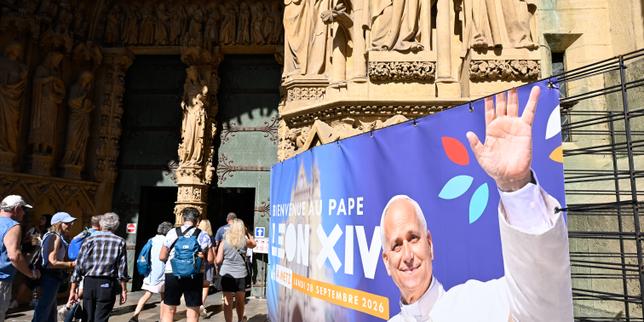
The stone of Metz remembers blood, treaties, and the heavy boots of marching empires. For centuries, this city on the Moselle has stood as a scarred hinge between rival cultures, a place where French and German echoes bleed into one another across the riverbanks. On a crisp morning, the Gothic ribs of the Saint-Étienne cathedral catch a pale, bruised light that seems borrowed from another century. Inside, the air smells of cold incense, damp wool, and centuries of whispered prayers.
Today, however, the whispers belong to politicians. Learn more on a related issue: this related article.
The pews are crowded with figures whose names usually dominate evening news broadcasts across twenty-seven capitals. Prime ministers, presidents, commissioners, and ministers have laid aside their briefcases and their practiced diplomatic smiles. They sit in unaccustomed silence under stained-glass windows that have watched nations rise, shatter, and rebuild.
At the altar stands Pope Leo XIV. And in the front row, looking up with a mixture of calculated ambition and genuine, nervous urgency, is Emmanuel Macron. More journalism by The Washington Post explores similar perspectives on this issue.
This gathering is not a routine summit. There are no late-night budget negotiations in windowless Brussels rooms, no tense press conferences under glaring television lights. This is something rarer and more fragile. It is an invitation issued by the French president to every leader of the European Union, summoning them not to sign a treaty, but to listen. To hear a moral authority speak on the soul of a continent that has spent the last decade tearing at its own seams.
Consider what brought them here.
For years, the European project has been run by spreadsheets, directives, and emergency bailout funds. It has become an enormous, humming machine of regulations, managing everything from mobile roaming charges to agricultural subsidies. Yet, efficiency has a way of feeling cold. When citizens look toward Brussels, many do not see a grand vision of human solidarity; they see an opaque bureaucracy arbitrating technocratic compromises. Populism has rushed into that vacuum, offering the warm, dangerous blanket of exclusionary nationalism. Borders have stiffened in people's minds. Trust has frayed.
Macron understood this anxiety with the clarity of a strategist who fears his own house is on fire. A united market cannot survive if it lacks a united spirit. So, he looked south to Rome, and west to history, and orchestrated a moment that defies the usual cadence of international politics. He brought the European continent's political elite to Metz to listen to the Vatican speak about what holds a civilization together when the economic tide goes out.
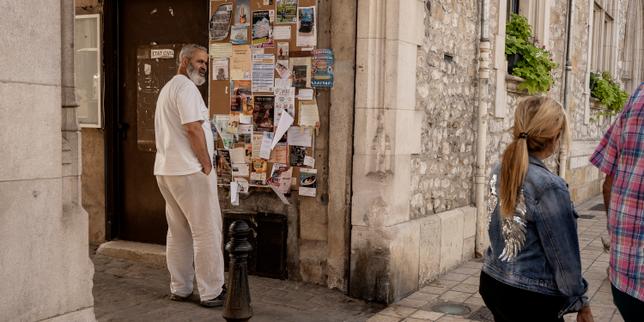
Imagine walking the streets of Metz on this morning. Local bakeries are busier than usual, their owners peering out at motorcades slipping quietly past Gothic facades. Police officers stand at cold intersections, breath pluming in the crisp air, watching black sedans bear licence plates from Berlin, Warsaw, Rome, Madrid, and Athens. For the ordinary resident of this border city, the presence of Europe's entire leadership cadre feels surreal, almost intrusive—a sudden storm of security and symbolism descending upon a quiet Tuesday.
Inside the cathedral, the tension is palpable. Diplomats are trained to negotiate interests, to weigh sovereignty against cooperation, to calculate domestic electoral costs. They are not trained for repentance, reflection, or moral introspection. Yet as the white-robed figure begins to speak, the rustle of papers stops.
Pope Leo XIV does not speak the language of gross domestic product or fiscal deficits. He speaks of fraternity. He speaks of memory. He reminds the assembly that Europe is not merely a geographic expression or a customs union, but a spiritual adventure born from the ashes of unimaginable devastation.
"You have built walls of laws," the Pope's voice resonates softly against the ancient vaults, carried by hidden microphones into the furthest corners of the nave, "yet you forget the walls within your own citizens' hearts. A continent that loses its capacity for empathy is a continent waiting to fracture."
In the pews, expressions shift. Some leaders nod slowly, recognizing the uncomfortable truth in the warning. Others maintain a rigid, neutral mask, calculating how these words will play back home in parliaments already hostile to European integration. But none can look away. The setting strips away the armor of office. Beneath the tailored suits and the heavy security details, these are mortals burdened with the stewardship of half a billion lives, listening to an ancient institution that has outlived empires.
The choice of Metz is no accident. This city is a living monument to the tragedy of Franco-German enmity and the miracle of reconciliation. To stand here is to remember that the European Union was never just about free trade in coal and steel; it was a desperate, courageous vow whispered by men like Robert Schuman and Konrad Adenauer: Never again.
Yet, memory is fading. The generations who survived the trenches and concentration camps have almost entirely passed away. They have been replaced by voters and politicians for whom peace is not a hard-won miracle, but an invisible baseline assumption—like the air they breathe. And much like air, people only truly notice it when it begins to run out.
As the address continues, the narrative of modern Europe is laid bare. It is a story of profound paradox. Never has the continent been so wealthy, so technologically advanced, and so legally integrated. Yet, never in recent decades has it felt so politically brittle. Energy crises, migration pressures, housing shortages, and the psychological hangover of a pandemic have left citizens feeling exposed and abandoned by the elites who govern them.
The politicians invited by Macron came to Metz because they sensed this vulnerability. They know that elections can swing on a knife-edge of grievance. They know that the old European consensus—the comforting belief that history always bends toward greater integration and prosperity—has cracked.
When the speech concludes, silence lingers in the cathedral for a long, heavy moment. It is the kind of silence that demands a response, even if no one is quite sure what that response should be.
Then, the slow scraping of wooden pews breaks the spell. Leaders begin to file out into the cold Metz daylight. The transition from the sacred hush of the cathedral to the chaotic hum of the modern world is jarring. Flashing lights, clicking camera shutters, and the low rumble of idling engines snap everyone back to reality.
Outside, small crowds of onlookers line the metal barricades. They watch the prime ministers and presidents emerge. There are no cheers, just a curious, watchful quiet. A teenage girl sitting on a low stone wall near the cathedral steps watches the German Chancellor walk past. She holds a smartphone, not taking a photo, just scrolling aimlessly, her face lit by a cold blue glow. She represents the demographic that Europe's leaders struggle most to reach—the generation inheriting a union of open borders and closed economic futures, wondering what it all means for them.
Later that afternoon, the delegations reconvene not for a solemn service, but for a closed-door working session in a municipal hall nearby. The mood has shifted. The poetic cadence of the cathedral gives way to the gritty friction of political reality.
Arguments flare. How do we fund defense without abandoning our green transition? How do we secure our borders without betraying our humanitarian values? How do we speak to angry voters who feel left behind by digital economies and globalization?
These are not questions that can be solved by a papal blessing. They require compromise, endurance, and courage. They require leaders to look beyond the next national election cycle and think in terms of decades, if not centuries.
Yet, something in the room has subtly altered. The shared experience of sitting together in the dark of Saint-Étienne, listening to a critique of their shared civilization, has broken through the habitual cynicism of political life. For a few hours, they were not just competing national delegates guarding their turf; they were Europeans, bound by a common history and a terrifyingly fragile future.
History is rarely made in cinematic flashes of inspiration. More often, it is ground out in endless committee meetings, late-night phone calls, and uneasy compromises. But every so often, a moment arrives that forces a civilization to stop, look in the mirror, and ask itself who it really is.
Macron's gamble in Metz was precisely that kind of moment. By dragging the entire political leadership of the European Union out of their sterile Brussels boardrooms and into an ancient French cathedral, he forced them to confront the invisible stakes of their work.
The motorcades eventually leave Metz. The flashing lights disappear down the highway toward Paris and Strasbourg. The barricades are dismantled, and the streets return to their ordinary rhythms.
Yet the questions remain, hanging in the damp air over the Moselle river. A continent cannot survive on regulations alone. It needs a narrative of belonging. It needs a reason to care about its neighbors when times get hard. And as the leaders fly back to their respective capitals, carrying the heavy memory of stone arches and moral warnings, they know the real test has only just begun.
The machine of Europe is still running. Whether it still has a soul depends entirely on what these leaders do tomorrow.