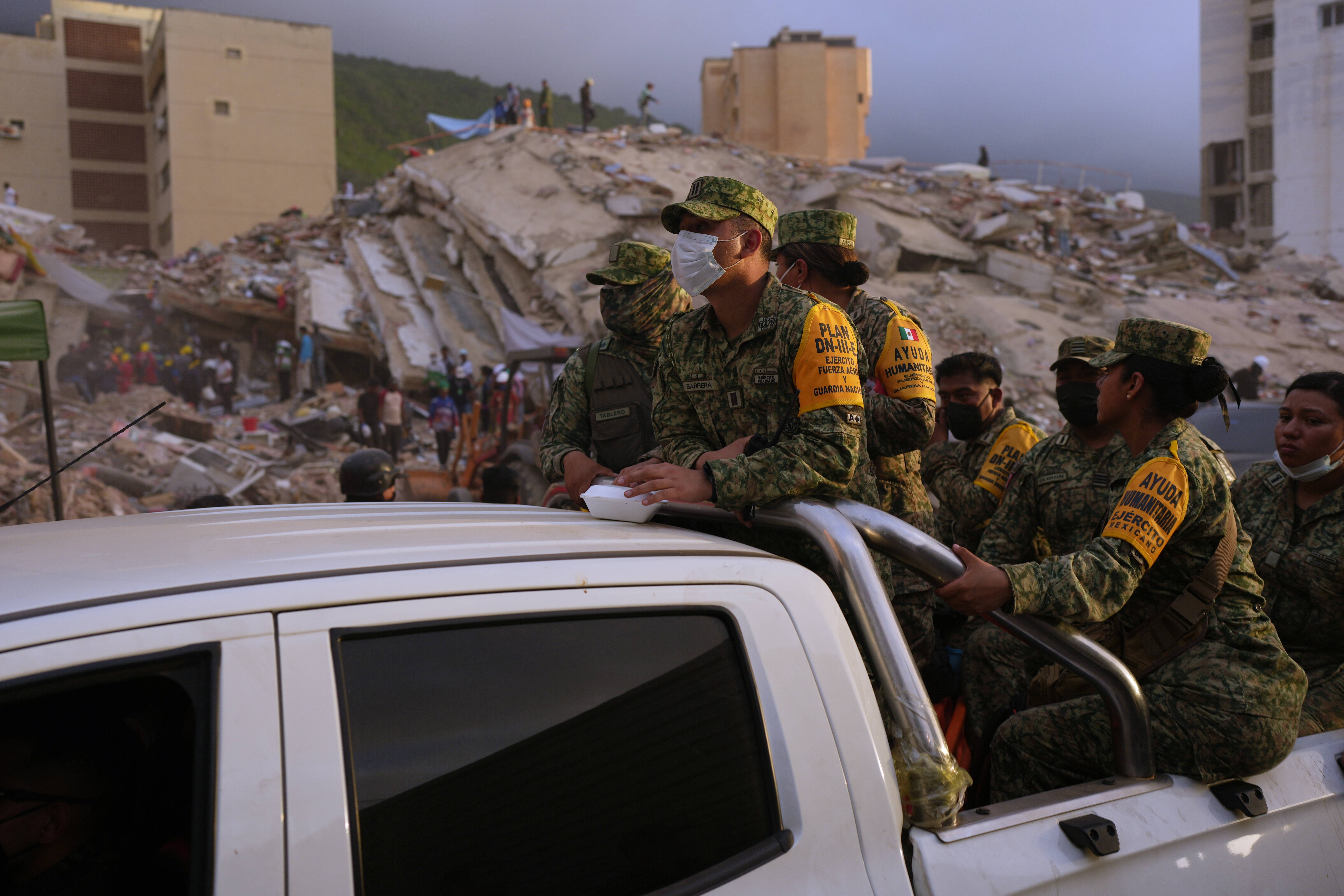
"If you are alive, make any noise." It is a line engineered for Hollywood. It pulls at the heartstrings, dominates the 24-hour news cycle, and keeps millions glued to social media feeds while rescue crews pick through collapsed concrete in Venezuela on day four of a disaster.
But it is also a tragic, resource-draining illusion.
The media loves the narrative of the heroic, late-stage miracle rescue. We are conditioned to believe that pouring international specialists, heavy machinery, and acoustic listening devices into a four-day-old collapse site is the pinnacle of humanitarian response. It is not. By day four, the math of urban search and rescue (USAR) turns brutal, predictable, and unforgiving.
Chasing the statistical anomaly of a day-four miracle is a systemic misallocation of finite resources. It is disaster response as public relations, prioritizing high-visibility theater over unglamorous, systemic prevention and rapid, localized deployment. If we actually cared about saving lives in vulnerable urban environments, we would stop obsessing over the rubble and start dismantling the cycle that builds it.
The Brutal Math of the Golden Hours
Disaster response operates on a strict exponential decay curve. The data compiled by organizations like the International Search and Rescue Advisory Group (INSARAG) paints a stark picture that legacy news outlets routinely ignore to preserve their dramatic narratives.
Within the first 24 hours—the true Golden Hours—the survival rate for individuals trapped under structural collapse hovers around 80% to 90%. These are the people saved by neighbors, local first responders, and immediate, chaotic community action. By 48 hours, that number plummets below 30%. By day four? The probability of extraction with life-sustained outcomes drops into the single digits, usually hovering around 5% to 7%, depending heavily on ambient temperature and access to void spaces with air.
Imagine a scenario where a country allocates millions of dollars to fly in elite international teams on day three. They arrive with seismic sensors and elite canine units, set up a base camp, and spend 48 hours tunneling through a single collapsed apartment block. They might find one survivor. It makes for an incredible headline.
Meanwhile, three blocks away, hundreds of injured survivors are dying of sepsis, dehydration, and untreated crush syndrome because the local field hospitals lack basic antibiotics, clean water, and surgical supplies.
We are sacrificing the salvageable many for the highly televised few.
The Local Fragility Trap
The international community treats urban collapses in developing nations as unpredictable acts of God. This is a lie. Structural failures under seismic or environmental stress are almost always acts of governance.
When you look at the structural vulnerability in cities across Venezuela or similar economically strained regions, the collapse is baked into the concrete. The use of substandard aggregate, lack of rebar reinforcement, and complete disregard for zoning laws mean that buildings do not just fail; they "pancake."
Pancake collapses leave virtually no survivable void spaces. Unlike the hollow-core concrete or steel-frame failures seen in wealthier nations, where large pockets of survival remain, unreinforced masonry and poor-quality concrete pulverize upon impact. They suffocate victims instantly.
I have spent years analyzing the logistics of disaster zones, and the pattern is always the same. We ignore the systemic corruption that allows death traps to be built in plain sight. Then, when the inevitable happens, we applaud the arrival of high-tech foreign teams whose equipment is utterly useless against a solid mass of crushed, low-grade concrete.
True expertise lies in recognizing that an effective rescue capability cannot be imported in a cargo plane 72 hours too late. It must be embedded in the local infrastructure beforehand.
Dismantling the Debris Myths
The public has a fundamentally flawed understanding of what happens during an urban search operation. Let us correct the record on how these operations actually function versus how they look on a smartphone screen.
Myth 1: High-Tech Sensors Are Magic Bullets
Acoustic and seismic listening devices are highly sensitive. In a chaotic urban environment, they pick up everything: shifting debris, wind, passing vehicles, and the heartbeat of the rescue workers themselves. To use them effectively, the entire site must achieve total silence—an impossible feat in a dense, panicked city center. They look great on camera, but they frequently yield false positives that waste hours of delicate digging.
Myth 2: Heavy Machinery Saves Lives Instantly
Bringing in excavators and cranes on day four is a desperate, high-risk gamble. Shifting a single piece of structural concrete without understanding the load-bearing physics of the rubble pile frequently causes secondary collapses, crushing any remaining survivors below. The work is actually done by hand, inch by inch, using buckets and small power tools. It is slow, grueling, and cannot be accelerated by sheer willpower or funding.
Myth 3: International Aid Is Always Helpful
The influx of uncoordinated international teams often creates a secondary disaster: a logistical bottleneck at the local airport. Teams arrive needing food, water, housing, and fuel—consuming the very resources that the local population desperately lacks.
The Hard Reallocation: Prevention Over Performance
The contrarian approach to disaster management requires us to accept a cold truth: we must stop funding the theater of late-stage rescue and pivot entirely to aggressive, unglamorous structural mitigation and decentralized local response networks.
Instead of maintaining multi-million-dollar international urban search teams that arrive late, resources should be aggressively funneled into three distinct areas:
- Micro-Distributed Rescue Caches: Put basic breaking, breaching, and lifting tools into every neighborhood council, fire station, and school. The people who will save 90% of the survivors are the people who live next door. They need crowbars, hydraulic jacks, and basic trauma kits, not satellite imagery.
- Reinforcement Subsidies: The cost of retrofitting a single sub-standard concrete building is a fraction of the cost of managing its collapse. We need to fund structural engineering interventions in high-risk zones, forcing compliance through economic incentives rather than unenforceable penal codes.
- Decentralized Triage Training: Train local populations in the management of crush syndrome and basic field triage. Preventing kidney failure in a victim who has already been pulled out by their family saves far more lives than searching for someone who cannot be reached.
The downside to this approach? It is invisible. You cannot take a photo of a building that did not collapse. You cannot broadcast a heartwarming interview with a child who was never trapped. It strips the political class and international NGOs of their favorite photo opportunity.
Stop looking at the rubble. Look at the system that built it, and look at the clocks that ran out long before the cameras started rolling. If you want to save lives, build for the impact, because once the dust settles and day four arrives, the shouting into the concrete is no longer a rescue mission. It is a wake.