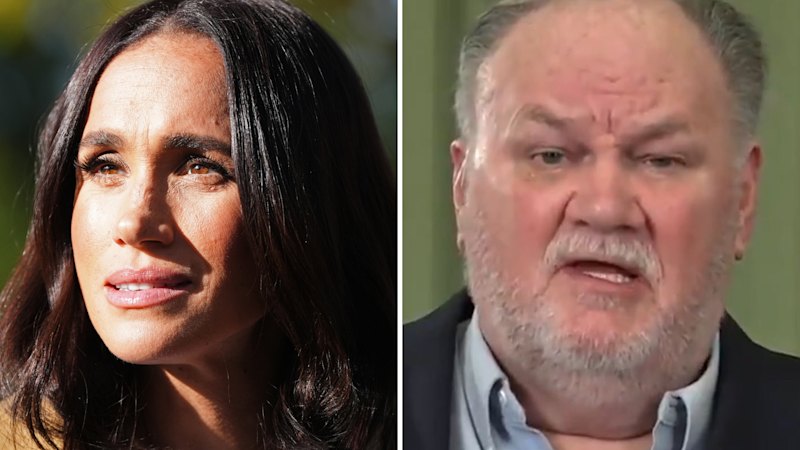
Thomas Markle, the estranged father of Meghan Markle, the Duchess of Sussex, has not been arrested or charged with a crime. The viral headlines circulating across social media feeds and low-tier content farms claiming law enforcement took the former lighting director into custody are completely fabricated. No police records, court dockets, or credible news organizations in the United States, Mexico, or the United Kingdom support the allegation.
The rumor is a textbook case of engagement bait, engineered to exploit the long-running public rift between the Duchess of Sussex and her biological father. By pairing a recognizable name with the high-stakes shock value of a criminal arrest, anonymous digital operators generate millions of clicks, ad impressions, and algorithmic traction out of thin air.
Anatomy of a Manufactured Royal Scandal
To understand why a completely false headline about Thomas Markle spreads so effortlessly, you have to look at the mechanics of modern celebrity clickbait. In the tabloid ecosystem, certain public figures act as guaranteed traffic magnets. The British Royal Family sits at the very top of that pyramid, and the fractured relationship between Meghan Markle and her father remains one of the most heavily monetized subplots in modern media history.
When a user scrolls past a headline reading "Meghan Markle’s estranged father arrested and charged," the brain registers two immediate triggers. First, familiarity. Millions of people have followed the saga since May 2018, when Thomas Markle staged paparazzi photographs ahead of the royal wedding in Windsor and subsequently missed the ceremony due to heart surgery. Second, escalation. A criminal charge suggests a dramatic, irreversible turning point in a story that has otherwise stagnated into repetitive television interviews and court filings.
The platforms hosting these stories rarely look like traditional newspapers. Instead, they operate as content arbitrage networks. Operators purchase cheap social media ads or game recommendation algorithms on platforms like Facebook, X, and YouTube. The click leads to a cluttered webpage loaded with programmatic display ads, auto-playing video players, and pagination tricks that force the reader to click "Next" ten times just to read three paragraphs of recycled biographical filler. By the time the reader realizes there is no actual arrest report, the publisher has already collected its ad revenue.
Why Fact-Checking Fails to Stop the Spread
In a traditional newsroom, an allegation of an arrest requires primary verification before a single word goes to print. Reporters pull booking logs from the relevant county sheriff's office, check municipal court databases, or obtain an on-the-record confirmation from a police public information officer. In Thomas Markle’s case, those checks would involve authorities in Rosarito, Baja California—where he has lived in retirement for years—or jurisdictions in Southern California where he maintains ties.
None of those agencies have issued a booking sheet or criminal complaint involving Markle.
Yet the absence of evidence does very little to slow down a viral rumor. Social media algorithms are built to reward emotional reaction, not accuracy. A sensational lie triggers outrage, schadenfreude, and heated debate in the comments section. Every angry reply or skeptical share signals to the platform's ranking system that the post is engaging, pushing it into thousands of additional feeds. Corrections, when they appear at all, generate a fraction of the engagement and almost never reach the same audience.
A History of Real Legal Battles and Media Friction
Part of the reason audiences fall for fake arrest stories is that the Markle family has been embroiled in genuine, high-profile legal disputes for years. When real lawsuits make headlines regularly, the public loses track of where civil litigation ends and criminal law begins.
The most significant legal battle occurred in the High Court of England and Wales, where Meghan Markle sued Associated Newspapers Limited, the publisher of the Mail on Sunday and MailOnline. The lawsuit centered on the February 2019 publication of a private, handwritten letter Meghan had sent to her father in August 2018, pleading with him to stop speaking to the press.
In 2021, the British courts ruled decisively in Meghan’s favor, finding that the publication of the letter was unlawful and constituted a misuse of private information and copyright infringement. Throughout that legal process, private text messages, witness statements, and intimate family details were entered into the public record. Thomas Markle aligned himself with the publisher's defense, stating he released parts of the letter to defend his reputation after friends of the Duchess spoke anonymously to People magazine.
Separately, Meghan’s half-sister, Samantha Markle, filed a high-profile defamation lawsuit in Florida federal court, alleging that Meghan made false and malicious statements during her 2021 televised interview with Oprah Winfrey and in the biography Finding Freedom. A federal judge ultimately dismissed Samantha Markle’s claims with prejudice in 2024, ruling that the statements in question were protected opinions or substantially true.
For a casual news consumer, the distinction between a civil defamation dismissal in Tampa, a privacy ruling in London, and a fabricated criminal arrest in Mexico blurs together. The ambient noise of constant courtroom drama primes the public to believe almost any legal headline attached to the family name.
The Vulnerability of Aging Public Figures in the Clickbait Era
There is also a distinctly human dimension to these hoaxes that gets lost in the rush for clicks. Thomas Markle is an elderly man in his eighties who has suffered documented, severe health crises. In 2018, he underwent heart surgery just days before his daughter's wedding. In May 2022, he suffered a major stroke that left him temporarily unable to speak, requiring speech therapy and prolonged medical care.
Fabricating criminal charges against an octogenarian with a fragile medical history is not a victimless prank. False arrest rumors carry real-world consequences for the individuals targeted, ranging from immediate reputational damage to acute psychological stress. Friends, neighbors, and medical caregivers are suddenly forced to field frantic phone calls asking if the rumors are true.
Furthermore, once a false claim is indexed by search engines and scraped by automated news aggregators, it becomes nearly impossible to scrub from the internet. Years from now, an automated background check or a casual search of his name may still surface cached versions of the fabricated arrest headline.
How to Spot Fabricated Celebrity Arrest Stories
Navigating the modern information environment requires a healthy dose of skepticism, particularly when a story involves a polarizing public figure. When evaluating a shocking claim like a sudden celebrity arrest, a few basic journalistic verification habits can immediately expose a hoax:
- Check the source URL and masthead. Legitimate breaking news of a major celebrity arrest will always be carried by established wire services like the Associated Press, Reuters, or major national outlets with verifiable editorial boards and correction policies. If the story only appears on a domain you have never heard of, treat it as false.
- Look for jurisdictional specifics. Real arrest reporting includes concrete details: the exact arresting agency, the location of the booking, the specific statutory charges, bail amounts, and a scheduled arraignment date. Hoax articles rely on vague phrasing like "taken into custody earlier this week" or "facing serious charges" without naming a single police department or courthouse.
- Inspect the imagery. Clickbait farms routinely use manipulated thumbnails—poorly photoshopped mugshots, generic stock photos of handcuffs, or decades-old red carpet photos desaturated to look grim.
- Search the exact charge. A quick search of the alleged crime alongside the person's name will immediately reveal whether credible journalists have confirmed the story or if it exists solely inside a closed loop of spam websites.
The Economics of Outrage
The persistence of the Thomas Markle arrest rumor highlights an uncomfortable truth about the digital media economy. As long as programmatic advertising pays out based on raw pageviews rather than editorial accuracy, bad actors will continue to manufacture fake crises around famous names.
The mechanics are simple and repeatable. Take a famous surname, attach a felony, buy cheap distribution, and cash the check before the truth catches up. Until ad networks enforce strict penalties against domains that publish fabricated legal claims, the rumor machine will keep spinning, turning private family estrangements into public spectacles built entirely on fiction.